
Epoxy for Concrete: Floor Coatings, Garage Floors, Outdoor Epoxy and Costs
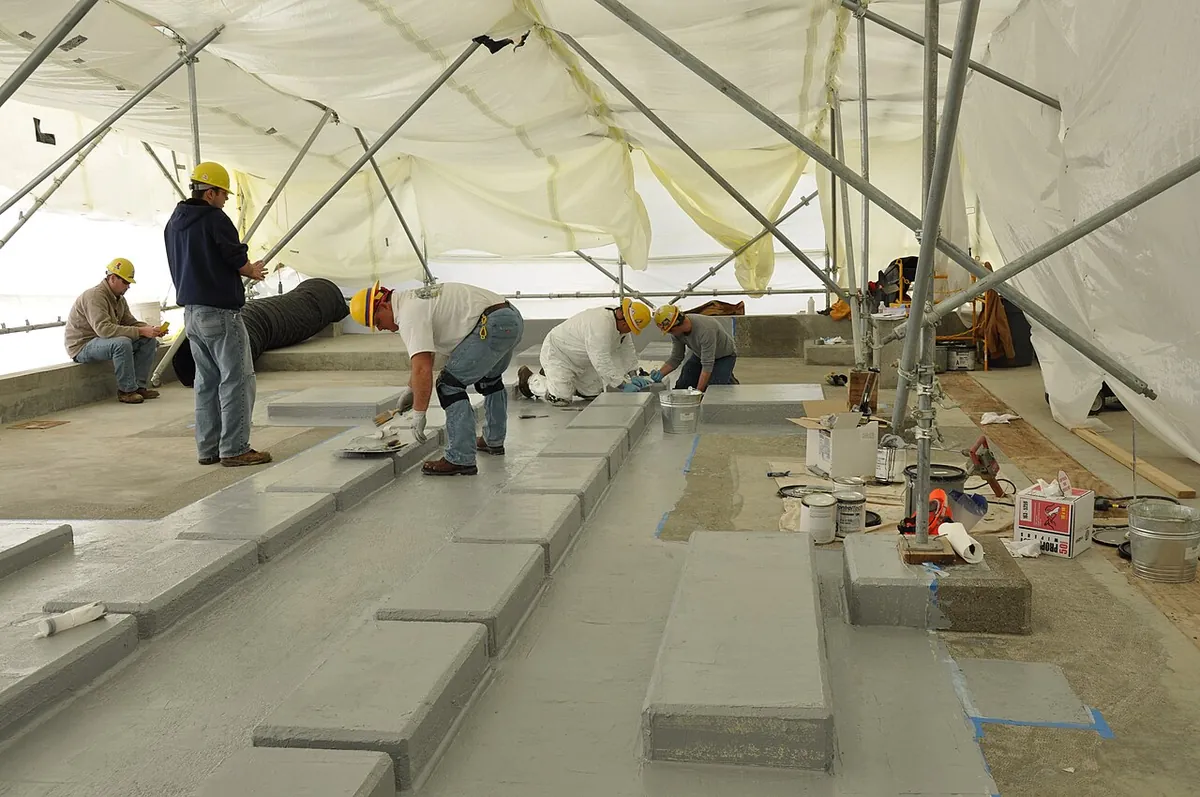
Photo: PEO ACWA, Wikimedia Commons, CC BY 2.0
Quick Answer
Epoxy for concrete is a two-part resin and hardener that bonds to concrete and cures into a hard, glossy, chemical-resistant coating. The best epoxy coatings for concrete floors are 100% solids systems applied 10 to 20 mils thick over a primer, often with color flakes and a UV-stable polyaspartic or polyurethane top coat. Water-based DIY kits are cheaper but much thinner. Success depends on preparation: grind the concrete to an open profile, clean it, fill cracks and test for moisture. A professional concrete garage floor coating usually costs about $4 to $12 per square foot; DIY kits cost about $1 to $3 per square foot. Plain epoxy yellows in sunlight, so outdoor concrete epoxy needs a UV-resistant top coat or a different coating type.
Epoxy is one of the most popular ways to protect and dress up a concrete floor. In garages, it resists oil, road salt and hot tires and makes the floor easy to sweep. In basements, it seals dust and brightens the room. In warehouses, factories, labs and hospitals, epoxy concrete floors stand up to forklifts, chemicals and constant cleaning. The crew in the photo above is applying an epoxy coating over concrete floors and curbs in an industrial plant, troweling it into corners and edges where the floor meets walls and equipment pads. At home, the same products, scaled down, turn a dull gray slab into a clean, colorful surface.
This guide explains how epoxy for concrete works, the types of epoxy coatings for concrete floors, garage floor coating systems, outdoor concrete epoxy and its limits, how to prepare and apply epoxy on concrete step by step, how long it lasts, common problems, and costs. It focuses on coatings; for gluing and crack repair, see concrete adhesive and epoxy concrete crack repair.
What Is Epoxy for Concrete?
Epoxy is a thermosetting resin. It comes in two parts, part A, the resin, and part B, the hardener. When they are mixed, a chemical reaction starts that turns the liquid into a hard solid within hours, with full cure in about a week. Unlike paint, which dries as water or solvent evaporates and leaves a thin film, epoxy cures through the chemical reaction, so it can be applied thick and becomes very hard and dense. On concrete, epoxy penetrates the surface pores and bonds mechanically and chemically to the concrete, creating a strong, seamless coating that resists abrasion, impact, oil, many chemicals and water. Because the reaction starts the moment the parts are mixed, epoxy has a limited pot life, from a few minutes to about an hour, and must be applied quickly. See concrete coating cost.
Types of Epoxy for Concrete Floors
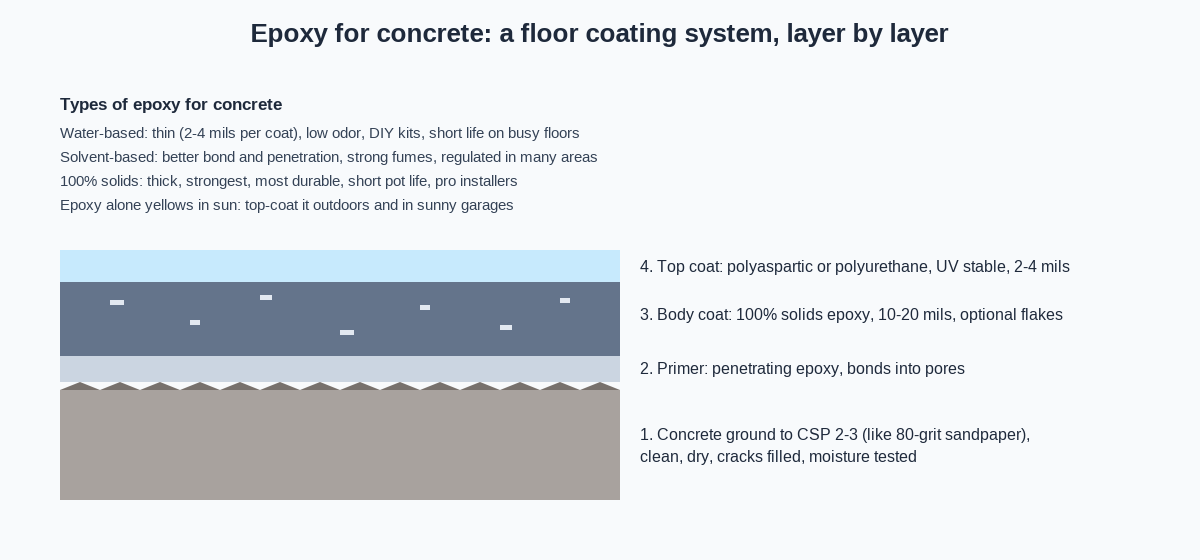
There are three main families of epoxy coatings for concrete floors, shown in the diagram above. Water-based epoxy contains water as a carrier, so it is thin, low-odor and easy to apply. Each coat is only about 2 to 4 mils thick when dry, and many DIY garage kits are water-based. They are better than paint but wear faster under hot tires and heavy use. Solvent-based epoxy uses solvents to thin the resin, which helps it penetrate and bond, but it has strong fumes and is restricted in many areas because of volatile organic compound rules. 100% solids epoxy contains no water or solvent, so everything you apply becomes coating. It goes on thick, often 10 to 20 mils in a single coat, and is the strongest and most durable option, used by professional installers. It has a short pot life, a strong odor during application, and needs careful mixing and fast work.
Most quality epoxy floor coating systems for concrete use several layers: a penetrating epoxy primer that soaks into the pores and locks the coating to the concrete, a thick body coat, often broadcast with decorative vinyl flakes or quartz sand, and one or two top coats. The top coat may be epoxy, but increasingly it is a polyaspartic or polyurethane, which resists UV yellowing, scratches better, and keeps its gloss longer. Moisture-tolerant primers are used on slabs with some vapor drive. Self-leveling epoxies, applied 1/16 to 1/4 inch thick, create very flat, seamless floors for industry, and epoxy mortars, troweled up to 1/4 inch or more, repair and resurface heavily damaged floors.
Concrete Garage Floor Coating
The garage is the most common place for an epoxy floor at home. A concrete garage floor coating protects the slab from oil, brake fluid, antifreeze, road salt and water, all of which stain or damage bare concrete. It resists hot tire pickup, where heat softens the coating and tires peel it up, if the coating is thick and well bonded. It makes the floor bright and easy to clean, reflects light, and gives the garage a finished, showroom look. Popular garage systems use a primer, a colored epoxy base coat broadcast with full or partial vinyl flakes, and a clear polyaspartic top coat. Flakes hide dirt, add texture and slip resistance, and give a granite-like look. Solid colors in gray, tan or white with light flakes are classic; metallic epoxies with swirling pearl pigments create dramatic, marble-like floors. See concrete garage floor repair.
Concrete coatings for garage floors fall into a few product families. Epoxy-only systems are the most common and affordable. Polyaspartic and polyurea systems cure faster, sometimes allowing a one-day installation, and resist UV, but cost more and have very short working times. Hybrid systems use an epoxy base with a polyaspartic top coat to combine the strengths of both. Penetrating sealers and stains are not coatings at all, but they protect concrete with less change in appearance. Any coating for garage concrete floors needs good preparation to last: most garage floor failures trace back to peeling caused by poor prep, moisture, or applying over sealed or contaminated concrete.
Epoxy Coatings for Concrete Floors Indoors
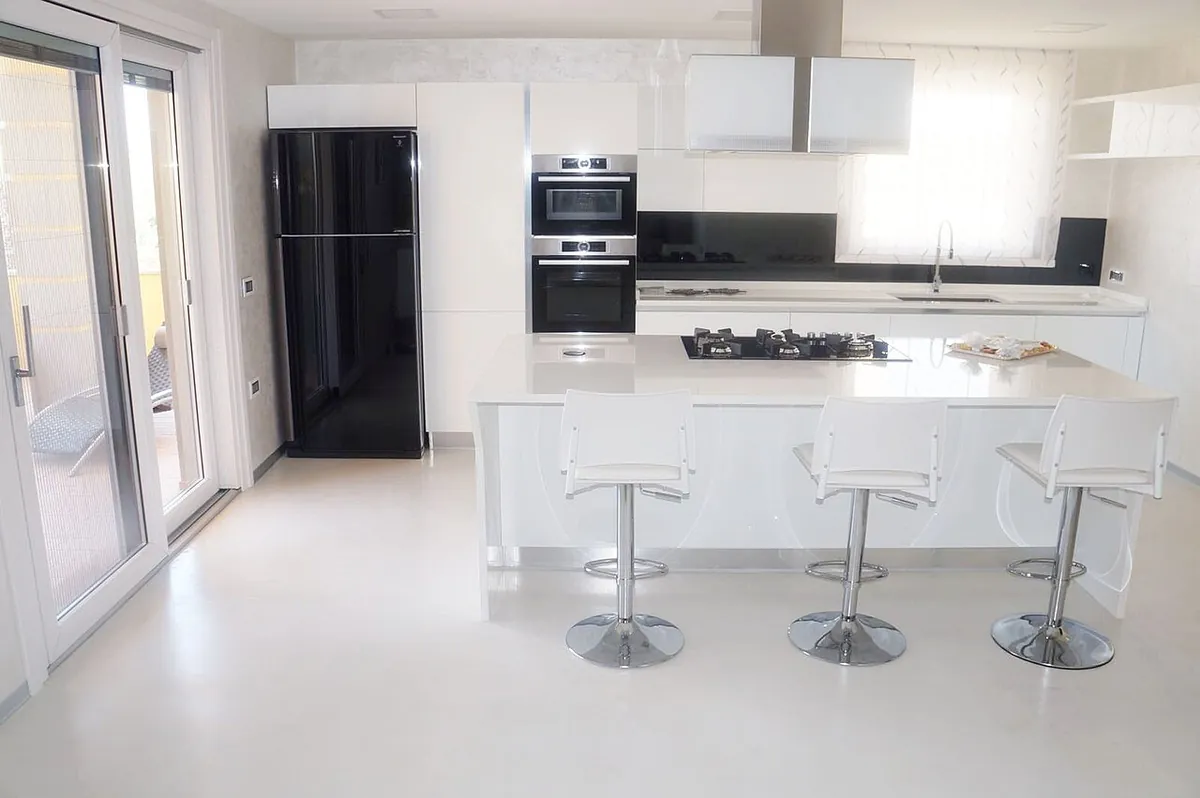
Photo: Pavimento Moderno, Wikimedia Commons, CC BY-SA 4.0
Beyond garages, epoxy coatings for concrete floors are used in basements, workshops, laundry rooms, home gyms, commercial kitchens, shops, offices and even living spaces. In homes with concrete slabs, a seamless resin floor like the glossy white kitchen floor above gives a clean, modern, gallery-like look with no grout lines. In basements, epoxy seals concrete dust, brightens the space and makes cleanup easy, but basements often have moisture coming up through the slab, so moisture testing and a moisture-tolerant primer are essential. In commercial and industrial spaces, epoxy floors handle forklifts, carts, chemicals and constant washing, and are often required for hygiene in food plants and hospitals. Self-leveling and mortar systems give flat, durable surfaces for these heavy uses. Anti-slip aggregates are added in wet areas and ramps. See concrete floors in homes and polished concrete cost.
Choosing Concrete Floor Epoxy Coatings
With so many products on the market, choosing concrete floor epoxy coatings can be confusing. Start with the space and how hard it will be used. A light-use basement or laundry room can do well with a good water-based concrete floor epoxy coating and a clear top coat. A two-car garage with daily traffic, winter salt and hot tires needs a thicker 100% solids system with a polyaspartic top coat. A workshop with dropped tools, rolling carts and oil needs high impact and chemical resistance, often a thicker body coat and quartz broadcast. A commercial kitchen or food plant needs a system rated for hot water, cleaning chemicals and slip resistance, which may be a urethane cement rather than an epoxy. Read the technical data sheet for each product: it lists solids content, recommended thickness, abrasion resistance, chemical resistance, pot life, cure times and the surface prep required. Products with higher solids and thicker recommended films generally last longer.
Color and finish matter too. Concrete epoxy floor coatings come in solid colors, flake blends, quartz blends and metallic pigments. Light colors brighten dark spaces but show tire marks; mid grays and tans hide dirt well; flake blends hide dust and small imperfections best. Gloss finishes look striking and are easy to clean but show scratches and can be slippery when wet; satin top coats hide scratches better. Ask for a sample board in your lighting before choosing.
Epoxy Coating for Concrete Floor in Basements
An epoxy coating for concrete floor areas in basements needs special care because basement slabs often carry moisture from the soil, especially in older homes without a vapor barrier under the slab. Before coating, test moisture with the plastic sheet method or professional meters, check for efflorescence, the white powder that signals water moving through the concrete, and fix any water problems such as leaks, poor grading or failed drainage. Use a moisture-tolerant or moisture-mitigating primer rated for the measured moisture level. Keep the basement heated and ventilated during application and cure, since cool, damp air slows curing and can cause blushing. A light color with a satin finish brightens a basement without glare. In finished basements, epoxy floors can be softened with area rugs; in utility areas, the seamless surface makes cleanup after water heater leaks or laundry spills easy. See efflorescence on concrete.
Epoxy Floor Covering for Concrete in Commercial Spaces
Many businesses choose an epoxy floor covering for concrete because it combines durability, hygiene and appearance at a reasonable cost. Retail shops use decorative flake and metallic systems for a polished look. Restaurants and commercial kitchens use slip-resistant epoxy or urethane cement floors with coved bases that run up the walls, leaving no seams for dirt and bacteria. Warehouses and factories use thick epoxy coatings with painted safety lines and zones. Hospitals, labs and clean rooms use seamless epoxy systems that withstand constant disinfection. Auto shops, aircraft hangars and fire stations use systems rated for fuel, oil and hot tires. For commercial projects, the coating installer usually specifies the system, tests the slab for moisture and strength, and schedules work around business hours, sometimes using fast-curing polyaspartic or methyl methacrylate systems to reopen within hours. Commercial installations should meet slip-resistance and safety standards and come with a written warranty.
Maintaining Concrete Garage Floor Coatings
Concrete garage floor coatings last longest with simple care. Sweep or dust mop regularly, since grit acts like sandpaper under tires and shoes. Wash with a mild, pH-neutral cleaner and a soft mop or deck brush; avoid soap-based cleaners that leave a slippery film and harsh acids that dull the finish. Wipe up oil, brake fluid and chemicals soon. Use mats under vehicles that drip and under workbenches where tools fall. In snowy climates, rinse road salt off regularly and squeegee meltwater out of the garage. Protect the coating from sharp metal stands, jack stands and furniture feet with pads. When the top coat dulls after years of use, a professional can lightly sand it and apply a fresh top coat, which renews the floor for a fraction of the cost of a new system.
Outdoor Concrete Epoxy
Outdoor concrete epoxy is a common request for patios, pool decks, porches, steps and driveways, but standard epoxy has serious limits outside. Sunlight's UV rays yellow and chalk most epoxies within months, especially clear or light colors. Temperature swings and moisture moving through slabs on grade can cause blistering and peeling. Glossy epoxy can be very slippery when wet. For these reasons, epoxy for outdoor concrete is usually limited to covered areas such as porches and carports, or used as a base coat under a UV-stable polyaspartic or polyurethane top coat with slip-resistant aggregate. Many contractors prefer other systems outdoors: polyaspartic coatings, acrylic sealers, penetrating sealers, concrete stains, or cementitious overlays and microcement, which breathe and hold up better in sun and freeze-thaw. Pool decks usually get acrylic or cementitious coatings that stay cooler and less slippery. See concrete pool deck resurfacing, concrete sealer and concrete staining.
Preparing Concrete for Epoxy
Preparation is the single most important part of any epoxy floor coating for concrete. Epoxy will only stick as well as the surface it is bonded to. Start by clearing the area and repairing damage. Fill cracks with epoxy crack filler or polyurea joint filler, and repair spalls and pits with epoxy mortar or a concrete patch. Remove oil and grease with a degreaser, scrubbing and rinsing several times; deep oil stains may need special cleaners or grinding out. Remove old paint, sealers, curing compounds and adhesives, since epoxy will not bond to them. See how to remove oil stains from concrete and how to remove paint from concrete.
Next, profile the surface. Smooth, troweled concrete, especially garage floors, is too dense and slick for good adhesion. Professionals diamond-grind the floor with a walk-behind grinder and vacuum, or shot-blast it, to open the pores and create a texture called a concrete surface profile, CSP 2 to 3 for most coatings, similar to medium sandpaper. Acid etching with diluted muriatic or citric acid is a cheaper DIY method, but it gives weaker, less consistent results and leaves residues if not rinsed well. Grinding is strongly preferred. After profiling, vacuum the floor thoroughly, because dust ruins adhesion. See concrete grinding and concrete etching.
Finally, check moisture. Moisture moving up through a slab can push epoxy off the surface, causing bubbles and peeling. Tape a 2 by 2 foot square of plastic sheet to the floor for 24 hours; if the concrete under it darkens or droplets form, moisture is present. Professionals use calcium chloride tests or in-slab relative humidity probes and follow the coating maker's limits. New concrete must cure at least 28 days before coating. If moisture is high, use a moisture-mitigating epoxy primer rated for the measured level. See vapor barrier under concrete and is concrete waterproof.
How to Apply Epoxy on Concrete
Plan the job for the right conditions. Most epoxies need concrete and air temperatures between about 55 and 90 degrees Fahrenheit, with the slab at least 5 degrees above the dew point so condensation does not form. Avoid applying in direct sun on hot days, which shortens pot life and can cause bubbles. Ventilate well and wear a respirator for solvent-based or 100% solids products, along with gloves and eye protection.
Mix only what you can apply within the pot life. Combine part A and part B in the exact ratio, then mix with a drill and paddle at low speed for two to three minutes, scraping the sides. Many installers pour the mixed epoxy into a second clean bucket and mix again to avoid unmixed material, which stays soft. Pour the mixed epoxy onto the floor in a ribbon right away, since epoxy left in the bucket heats up and cures faster.
Apply the primer first with a squeegee and roller, working it into the pores. When it becomes tacky or as directed, apply the body coat, spreading it with a notched squeegee to the right thickness and back-rolling with a 3/8 inch nap roller to even it out. Cut in edges with a brush. Wear spiked shoes to walk on wet epoxy. If you are using flakes, broadcast them by hand while the body coat is wet, tossing them up so they fall evenly; for full broadcast, keep adding until the floor is covered. After the base cures, scrape off loose flakes, vacuum, and apply the clear top coat. Maintain a wet edge throughout to avoid lap marks.
Let the coating cure. Light foot traffic is usually allowed after 12 to 24 hours, and vehicle traffic after 3 to 7 days, depending on the product and temperature. Full chemical resistance takes about a week. Polyaspartic systems may allow traffic much sooner. Keep the area ventilated during curing.
How Long Does Epoxy on Concrete Last?
Lifespan depends on the product, thickness, prep and use. Thin water-based epoxy kits in busy garages may last 2 to 5 years before wearing through in tire paths. Professionally installed 100% solids epoxy systems with polyaspartic or polyurethane top coats typically last 10 to 20 years in homes, and longer in light-use areas. In industrial settings, thicker systems last many years but are often recoated periodically. Top coats can be lightly sanded and recoated every few years to refresh gloss and protection, extending the life of the system. See how long concrete lasts.
Common Epoxy Problems
Peeling and delamination are the most common problems, usually caused by poor prep, moisture, contamination or applying epoxy over sealers or paint. Hot tire pickup occurs when hot tires soften thin coatings and pull them up, more common with thin water-based products. Bubbles and pinholes come from air escaping from porous concrete, applying in rising temperatures, or mixing too fast. Fish eyes, small craters, come from contamination such as oil or silicone. Blushing, a cloudy or greasy film, appears when humidity or cold affects the cure. Soft or sticky spots indicate unmixed material or wrong ratios. Yellowing happens in sunlight. Slipperiness when wet is common with glossy finishes without aggregate. Most of these problems are prevented by good preparation, correct mixing, proper conditions and choosing the right system for the space.
DIY or Professional?
Applying epoxy for concrete yourself saves money, and DIY kits have improved, but the job is less forgiving than painting. The hardest parts are prep, which needs a rented diamond grinder and vacuum to do properly, and timing, since thick epoxy cures in the bucket within minutes on a warm day. DIY is reasonable for a small, dry garage or basement floor with a water-based or easy-to-use kit, done carefully on a mild day with a helper. Professional installation makes sense for large areas, slabs with moisture or old coatings, 100% solids or polyaspartic systems, decorative metallics, and commercial floors. Professionals own industrial grinders, test moisture, and usually back their work with a warranty against peeling. Ask what the warranty covers, for how long, and whether it excludes moisture, hot tires or chemical damage.
Epoxy Concrete Floor Costs
DIY water-based garage floor kits cost about $100 to $500 for a one or two car garage, or roughly $1 to $3 per square foot, plus grinder rental and supplies. Professional epoxy coatings for concrete floors in homes typically cost $4 to $12 per square foot, depending on prep, system and finish: about $4 to $7 for a basic two-coat system with flakes, $6 to $10 for a full flake system with polyaspartic top coat, and $8 to $15 or more for metallic and decorative finishes. A typical two-car garage, about 400 to 500 square feet, often costs $2,000 to $5,000 professionally coated. Commercial and industrial epoxy systems range from about $3 to $15 per square foot depending on thickness and performance requirements. Extensive crack repair, moisture mitigation and removal of old coatings add cost. See concrete coating cost and concrete cost per square foot.
Epoxy vs Other Concrete Floor Finishes
Epoxy is only one way to finish concrete. Polished concrete grinds and densifies the slab itself, giving a durable, low-maintenance shine with no coating to peel, at a similar or slightly higher cost. Penetrating sealers protect against water and stains without changing the look much and are easy to reapply. Acid and water-based stains add color but need a sealer on top. Microcement and overlays add a new decorative layer of cement. Tile and other floor coverings add another surface entirely. Epoxy stands out for chemical resistance, a seamless easy-clean surface, color options and high gloss. For garages and workshops, it is usually the most practical choice; for living areas, polished concrete or microcement may suit better. See concrete densifier, microcement and concrete floor coverings.
Frequently Asked Questions
What is the best epoxy for concrete floors?
A 100% solids epoxy over a primer, with a polyaspartic or polyurethane top coat, gives the most durable result.
Can you put epoxy on outdoor concrete?
Plain epoxy yellows and can peel in sun and moisture. Use a UV-stable top coat, or choose polyaspartic, acrylic or cement-based coatings outdoors.
How long does epoxy take to cure on concrete?
Usually 12 to 24 hours for foot traffic, 3 to 7 days for vehicles, and about a week for full cure.
Do I need to grind concrete before epoxy?
Grinding is the most reliable prep. Acid etching can work for DIY kits but gives weaker bonds.
How much does a concrete garage floor coating cost?
About $4 to $12 per square foot professionally, or roughly $2,000 to $5,000 for a two-car garage.
Sources
- International Concrete Repair Institute: surface profiles (CSP) and coating prep
- American Concrete Institute: moisture in concrete slabs and floor coatings
- AMPP (formerly SSPC/NACE): protective coatings standards
- OSHA: silica dust during grinding
Related Guides
- Concrete primer — types, prep and application
- Concrete tub — concrete bathtubs and bathrooms
- Concrete densifier — silicate hardeners for floors
- Concrete floor coverings — flooring options over slabs
- Concrete polisher — planetary grinders, hand polishers, pads and rental prices