
Concrete Bench Guide: Outdoor Concrete Benches, Garden Benches, DIY and Costs
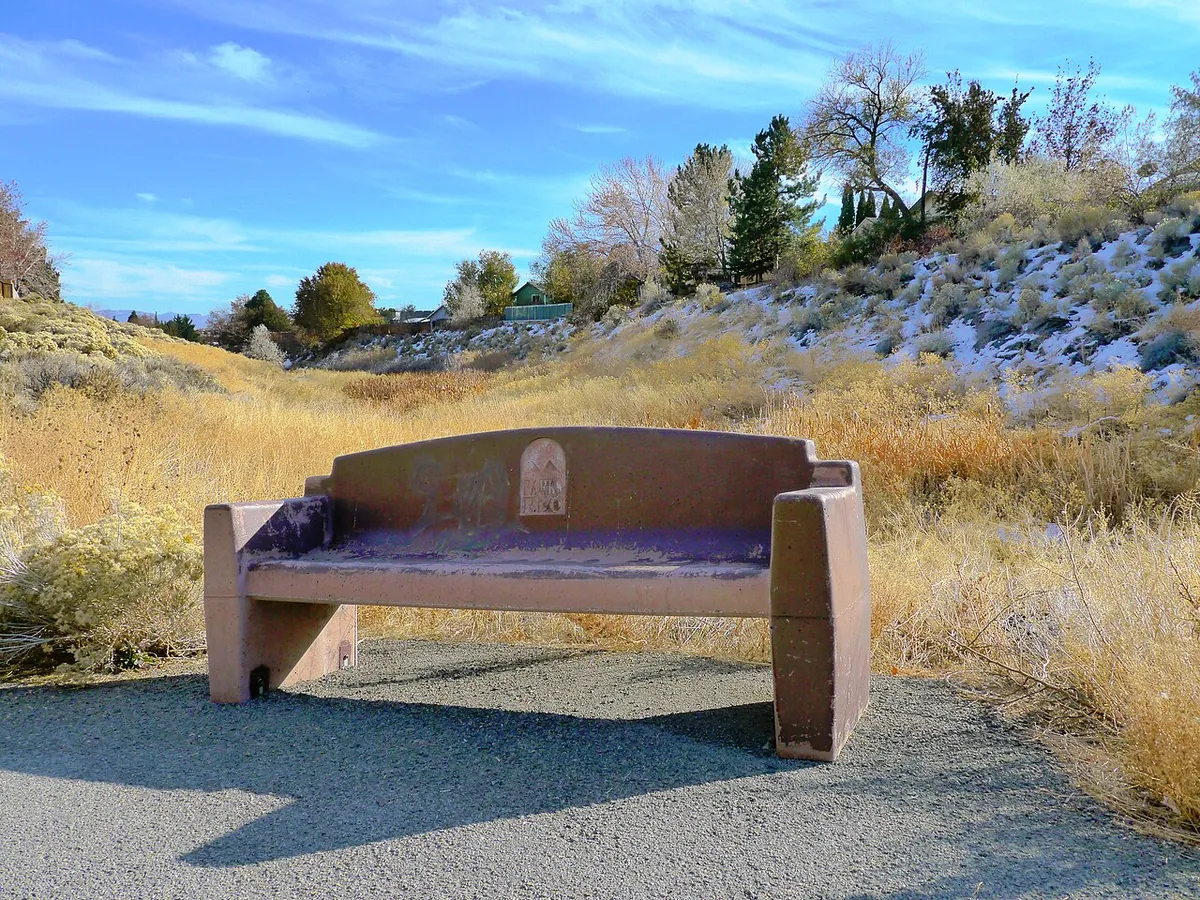
Photo: Rick Obst, Wikimedia Commons, CC BY 2.0
Quick Answer
A concrete bench is a seat cast from reinforced concrete, either precast in a mold and delivered, or formed and poured in place. Standard outdoor concrete benches have a seat about 16 to 18 inches high and 15 to 20 inches deep, are 4 to 8 feet long, and weigh roughly 300 to 1,200 pounds. Precast concrete garden benches cost about $200 to $1,200, while commercial park benches and custom designs cost $800 to $4,000 or more. A DIY bench with two concrete legs and a wood or concrete seat costs about $80 to $300 in materials. Concrete benches are heavy, durable and almost maintenance-free; seal them to resist stains, add wood seats for comfort, and set them on a level, solid base.
Walk through almost any park, campus, cemetery, plaza or garden and you will find concrete benches. They are everywhere because they last for decades, resist vandals and weather, and need almost no care. The precast bench in the photo above, sitting beside a gravel trail in a Nevada park with a cast medallion on its backrest, is typical: one solid piece, heavy enough that nobody will carry it off, still serving long after wood benches nearby would have rotted. At home, an outdoor concrete bench adds permanent seating to patios, gardens, fire pit areas and pool decks, and fits both formal and modern landscapes.
This guide covers the types of concrete benches, sizes and weights, concrete garden benches with wood seats, concrete chairs and concrete table and bench sets, how to build a concrete bench yourself, how to install and anchor one, how to seal and care for it, how to make it comfortable, and what concrete benches cost.
Types of Concrete Benches
Concrete benches come in several forms. The traditional precast garden bench has two pedestal legs and a slab seat, sometimes with a backrest, cast in molds with decorative details like scrolls, leaves or lion feet. These classic concrete garden benches are sold by statuary yards and garden centers in plain gray, stained or painted finishes. Contemporary precast concrete benches are simple blocks, slabs and cantilevered shapes with smooth or sandblasted finishes, used in plazas, campuses and modern gardens. Many combine a concrete base with a wood, composite or metal seat. Cast-in-place concrete benches are formed and poured on site, often as part of a retaining wall, planter, fire pit or patio edge, creating built-in seating. Seat walls, low concrete or block walls about 18 inches tall with a cap, double as benches along patios and paths. Concrete chairs and single seats are made as precast units for parks, transit stops and outdoor rooms. And picnic-style concrete table and bench sets combine a table with attached or separate benches. See concrete coffee table and precast concrete.
Concrete Bench Sizes and Weight
Comfortable outdoor seating follows a few standard dimensions. Seat height of 16 to 18 inches above the ground suits most adults. Seat depth of 15 to 18 inches works for a backless bench; benches with backs often have slightly deeper seats, around 18 to 20 inches, and a backrest angled back about 100 to 110 degrees from the seat. Length depends on how many people will sit: allow about 24 inches per person, so a 4 foot bench seats two, a 6 foot bench seats three, and an 8 foot bench seats four. Armrests at 7 to 10 inches above the seat help older users stand up. Accessible designs often include benches with backs and arms and clear space beside the bench for a wheelchair.
Weight is the defining feature of a concrete bench. Concrete weighs about 145 pounds per cubic foot, so a simple 6 foot backless bench with a 3 inch thick seat slab and two legs weighs roughly 400 to 600 pounds, and a large bench with a back can weigh 800 to 1,500 pounds. Many precast benches come in three or more pieces, legs, seat and back, each light enough for two or three people to handle, then assembled on site. Heavy one-piece benches are delivered by truck with a crane or forklift. The weight that makes moving hard also makes concrete benches stable and theft-resistant, which is why parks love them. See how much a yard of concrete weighs.
Concrete Garden Benches With Wood Seats
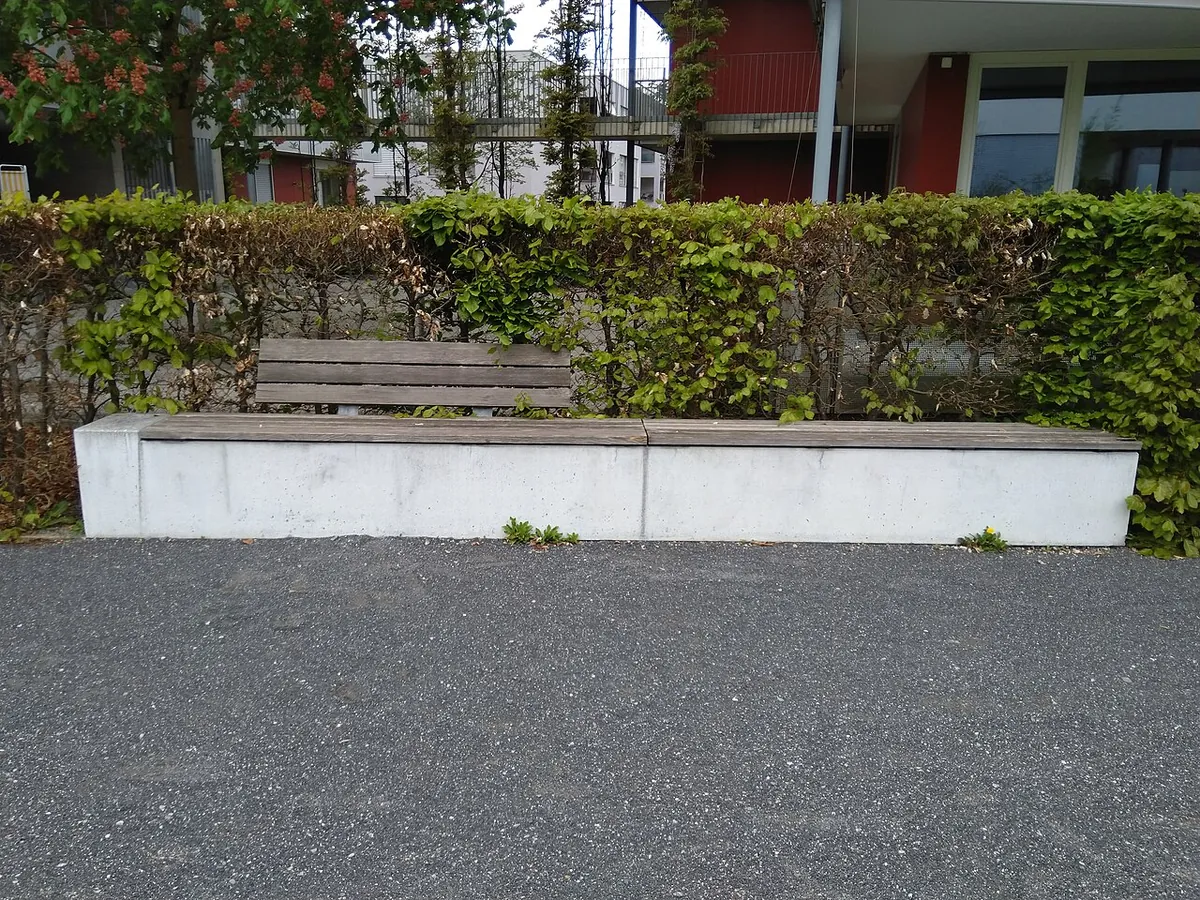
Photo: Dafadllyn, Wikimedia Commons, CC BY-SA 4.0
A popular way to make concrete benches more comfortable is to top them with wood, like the long bench in a Bern park above, where a smooth concrete base carries a wooden seat and a short backrest. Wood is warmer in winter and cooler in summer than bare concrete, dries quickly after rain, and is softer to sit on. Durable hardwoods such as ipe, teak, cumaru and white oak, or thermally modified wood and composite boards, last for many years outdoors. The wood is fastened to the concrete with stainless steel brackets and concrete anchors, with small gaps between boards for drainage, and spacers between the wood and concrete so water does not sit under the boards. This style suits both modern and natural gardens. Concrete garden benches with wood seats are also easy to refresh: replace or refinish the boards every 10 to 20 years while the concrete base lasts indefinitely. See concrete bolts and types of concrete anchors.
Concrete Seating in Public Spaces
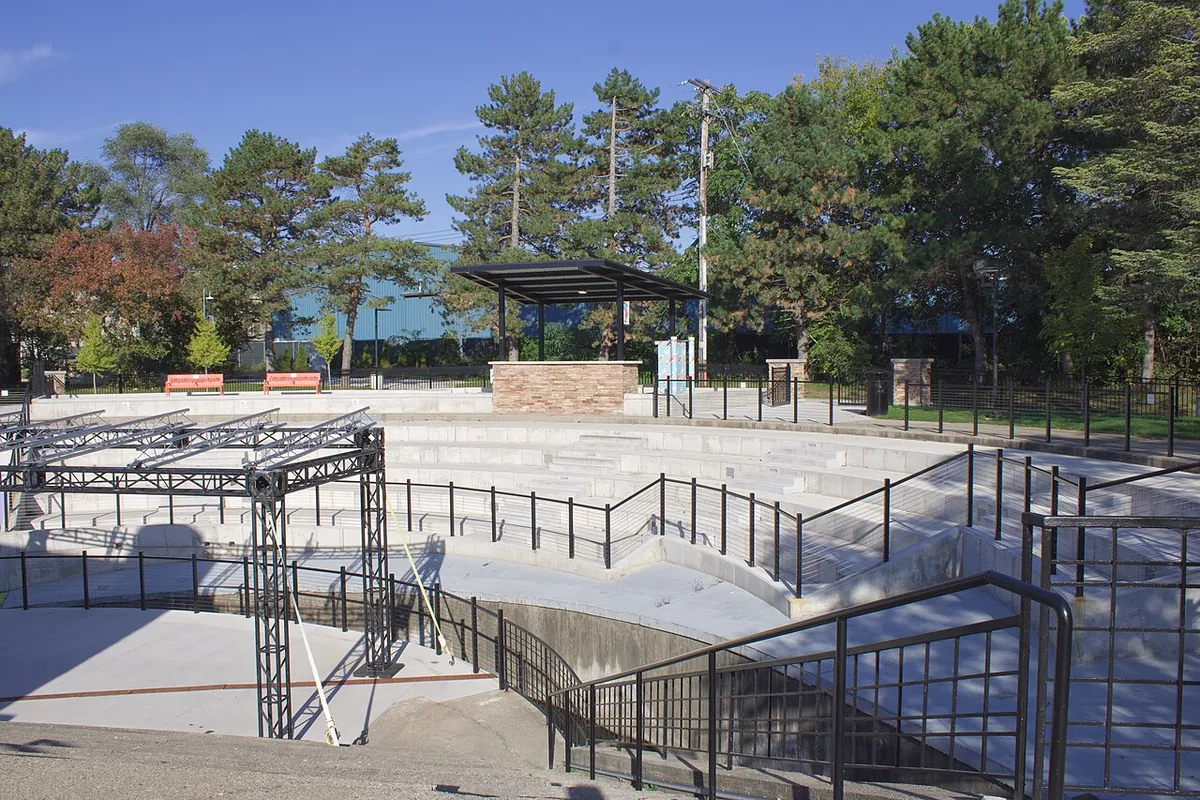
Photo: Aenet, Wikimedia Commons, CC BY 4.0
In parks and civic spaces, concrete benches often become part of the landscape itself. Tiered concrete seating around an amphitheater, like the curving rows above surrounding a small outdoor music stage, gives hundreds of people somewhere to sit without a single loose piece of furniture. Long concrete seat walls frame plazas, line paths and hold back planting beds. Skateparks, schools and transit stations rely on concrete benches because they resist vandalism, graffiti can be cleaned off, and they cannot be stolen. Designers soften them with wood tops, rounded edges, planting and shade trees, and some add skate deterrents, small metal knobs that stop skateboard grinding on edges. For home landscapes, the same ideas scale down: a curved concrete seat wall around a fire pit, built-in benches along a terraced slope, or a long bench cast into the edge of a patio. See concrete fire pit and concrete retaining walls.
Concrete Chairs
Concrete chairs are less common than benches but growing in popularity in modern landscape design. Precast concrete chairs come as solid sculptural blocks, cantilevered seats, Adirondack-style shapes and lounge forms. Their heavy weight keeps them stable in wind, and they suit roof terraces, plazas, pool decks and minimalist gardens. Because concrete is hard and cold, most concrete chairs are paired with cushions or wood inserts for comfort at home. A single concrete chair can weigh 150 to 400 pounds, so place it where you want it to stay. GFRC versions, made of thin glass-fiber reinforced concrete shells, weigh far less and are easier to move, which makes them practical for balconies and decks with weight limits. See glass fiber reinforced concrete.
Concrete Table and Bench Sets
A concrete table and bench set gives a patio, park or schoolyard a permanent outdoor dining spot. Classic sets are precast picnic tables with attached benches or separate benches on each side. Modern sets pair a long concrete table with two matching benches or a mix of benches and chairs. Concrete tables and benches suit outdoor kitchens, pool areas, community gardens and campgrounds. Plan a level concrete pad or compacted gravel base at least 3 feet larger than the set on all sides so people can sit and stand easily. Delivery usually needs a truck with a lift or crane. Many families choose a concrete table and bench set for backyard fire pit areas, since the weight and fire resistance make them ideal near flames. See concrete pads and concrete patio ideas.
Choosing Concrete Benches for Outdoors
When choosing concrete benches for outdoors, start with how the bench will be used. A bench for a quiet garden corner can be small, decorative and backless, since people sit for a few minutes to enjoy the view. A bench on a patio or around a fire pit should have a back or be placed against a wall, since people sit there for hours. A bench at a front entry is often used to take off shoes or set down bags, so a simple, sturdy slab at standard height works well. A bench in a public or semi-public space, such as a shared courtyard, a church yard or a business frontage, should be heavy, anchored, easy to clean and comfortable for older people, which usually means a back and arms. Think about the view from the bench, not just the view of it: place it where someone would actually want to sit and look.
Match the style to the house and landscape. Traditional homes suit classic precast concrete garden benches with curved legs and gentle details. Modern homes suit clean rectangular benches, cantilevered seats and concrete with wood tops. Cottage gardens suit weathered, mossy benches tucked among plants. Coastal and desert gardens suit pale, sand-colored concrete that stays cooler in sun. Also check how the bench will be delivered and placed. A 1,000 pound bench cannot be carried through a side gate, so measure access paths and plan for a three-piece bench or crane delivery if needed.
Concrete Table and Benches for Outdoor Dining
A concrete table and benches make a durable outdoor dining area that never needs to be stored for winter. For a family of four to six, a table about 6 feet long and 30 to 36 inches wide with two 6 foot benches works well. Benches should be about 10 to 12 inches lower than the tabletop, so a 29 to 30 inch table pairs with 17 to 18 inch benches. Leave about 30 to 36 inches between the table edge and any wall or planting behind the benches so people can step over and sit down. Concrete tables and benches can be precast as a matching set, built from cast legs and wood tops, or poured in place as part of an outdoor kitchen. Add a shade structure, such as a pergola or large umbrella with a weighted base, because concrete in full sun gets hot. Sealing the table surface makes cleanup after meals much easier. See cinder block outdoor kitchen and concrete table.
Precast vs Cast-in-Place Benches
Precast concrete benches are made in a plant or statuary yard in reusable molds. They have consistent quality and finish, are ready to use on delivery, and cost less for standard designs. Their limits are the designs available in catalogs and the weight that can be shipped and placed. Cast-in-place benches are formed and poured where they will stay. They can be any shape and length, curve around fire pits or follow terraces, and tie directly into foundations, walls and patios. They cost more per foot because of the formwork and labor, and they cannot be moved later. Many projects combine both: precast benches in open areas and cast-in-place seat walls along patios and planters. For DIY builders, small precast-style benches made in home-built molds are the most practical, while long built-in benches are usually a contractor job.
Concrete Benches in Cold Climates
In freezing climates, outdoor concrete benches face freeze-thaw cycles, snow, ice and deicing salts. Benches made with air-entrained, low water-cement ratio concrete resist these conditions best. Seal benches before winter so they absorb less water. Make sure water drains off the seat and does not pool in recesses or around bolt holes, where it freezes and spalls the surface. Do not pile salty snow from paths onto benches. Wood seats should be raised slightly off the concrete on spacers so they dry out between storms. With these steps, concrete benches survive decades of winters with little more than occasional cleaning. See pouring concrete in cold weather and does salt damage concrete.
How to Build a Concrete Bench
A simple DIY concrete bench uses two cast concrete legs and a seat of wood or cast concrete. Here is a practical method that suits most homeowners.
Design the bench. Choose the length, seat height and depth. A simple design is a 5 to 6 foot seat, 16 to 18 inches high, with two legs about 14 inches wide and 4 inches thick. Sketch the parts and decide whether the seat will be wood boards, a single wood slab, or a cast concrete slab.
Build the forms. Make leg molds from melamine board or plywood with smooth faces, screwed together and caulked at the inside corners for clean edges. For a concrete seat, build a shallow mold the size of the seat, 2.5 to 3.5 inches deep. Coat all inside faces with form release or vegetable oil. See how to build concrete forms.
Add reinforcement. Cut rebar or welded wire mesh to fit inside the molds with about 1 inch of cover on all sides. The seat slab needs reinforcement near the bottom, where it is in tension when someone sits on it; #3 rebar every 4 to 6 inches running the length of the seat works well. Fiber in the mix helps control small cracks. See rebar in concrete and fiber-reinforced concrete.
Mix and pour. Use a high-strength bagged concrete or countertop mix with small aggregate. Mix to a thick, workable consistency, fill the molds in layers, vibrate by tapping the sides or using an orbital sander against the forms, and screed the tops flat. If the wood seat will be bolted to the legs, set threaded inserts or anchor bolts in the wet concrete at the correct spacing. See how to mix concrete and high-strength concrete.
Cure and demold. Cover the castings with plastic and keep them damp for at least five to seven days. Then remove the forms carefully, ease sharp edges with a rubbing stone, and let the pieces cure a few more days before assembly. See how long concrete takes to cure.
Assemble. Set the legs on a level base, place the seat on top, and fasten wood seats with stainless brackets and anchors. For a concrete seat, set it on the legs with a bed of construction adhesive or mortar, or pin it with stainless rods set in epoxy. Check level and stability. Seal the concrete. See concrete adhesive.
Even simpler designs use stacked concrete blocks for legs with a wood seat slid through the block cores, a popular weekend project that costs well under $100. For a more permanent look, coat the block legs with a cement render or stucco. See concrete blocks.
Installing an Outdoor Concrete Bench
Every outdoor concrete bench needs a level, firm base. On lawns, a bench sitting on soil sinks unevenly and tips. Set it on a concrete pad, pavers on compacted gravel, or individual footings under each leg. A pad also keeps grass from growing up against the bench, which makes mowing easier. For public spaces or windy, exposed sites, anchor the bench to the pad with stainless steel dowels or brackets set in epoxy, which also prevents theft. Place benches where people actually want to sit: in partial shade, with a view, near paths, against a hedge or wall for a sense of shelter, and with enough space in front for legs and feet. Keep benches a few feet back from walkways so people sitting do not block traffic. Allow drainage away from the bench so water does not pool under the seat. See concrete walkway ideas.
Sealing and Caring for Concrete Benches
Concrete benches need little care, but a few steps keep them looking good. Seal the concrete with a breathable penetrating sealer to reduce stains from leaves, berries, food and drinks, and to slow freeze-thaw damage in cold climates. Reseal every two to three years. Clean with water, mild soap and a soft brush; use oxygen bleach or a concrete cleaner for algae and mildew. Avoid acids, which etch the surface. Pressure washing works on plain benches but can damage painted or detailed pieces. In winter, brush off snow and keep deicing salts away from the bench. Small chips can be repaired with epoxy putty or a concrete patch. Wood seats need cleaning and oiling once or twice a year, depending on the species. See concrete sealer, how to clean concrete and concrete patching compound.
Making Concrete Benches Comfortable
Bare concrete is hard, holds cold in winter and gets hot in sun. Several design choices make outdoor concrete benches more pleasant. Add wood seats or slats. Use cushions in weatherproof fabric on home benches. Choose lighter colors that stay cooler in sun, or place benches in partial shade. Round or chamfer edges so they do not dig into legs. Add a backrest and armrests for longer sitting. Slope the seat very slightly back and toward the front edge so water drains off. For public seating, provide some benches with backs and arms for older people, and some without for flexible use.
Memorial Concrete Benches
Concrete benches are a common choice for memorials in parks, cemeteries, schools and home gardens. A memorial bench can carry a cast-in inscription, a bronze or granite plaque set into the backrest or seat edge, or an engraved panel. Because concrete lasts for generations and needs little care, it suits a lasting tribute. Many towns run memorial bench programs where families sponsor a bench for a set fee that covers the bench, installation and a plaque. When ordering a memorial concrete bench, check the lettering method, the plaque material, and how the bench will be anchored and maintained over time.
Concrete Bench Costs
Prices depend on size, design, finish and delivery. Small precast concrete garden benches without backs cost about $200 to $500. Larger benches with backs, decorative details or color cost about $400 to $1,200. Commercial-grade outdoor concrete benches for parks and campuses cost about $800 to $4,000, more for custom shapes, integrated wood and steel, or skate deterrents. Concrete table and bench sets cost about $1,000 to $4,000. Concrete chairs cost about $300 to $1,500 each. Delivery and placement typically add $100 to $500 locally, more for crane placement. DIY benches cost about $80 to $300 in materials, depending on whether the seat is wood or concrete. Built-in cast-in-place benches and seat walls cost about $100 to $300 per linear foot installed. See concrete cost per square foot.
Design Ideas for Concrete Benches
Concrete benches can be much more than gray slabs. A curved concrete bench wrapping around a fire pit creates a cozy gathering spot. A long floating bench, cantilevered from a wall with hidden steel, looks light despite its weight. Benches built into terraced retaining walls make steep yards usable. A bench topped with warm wood and lit from underneath with LED strips glows at night. Colored concrete, exposed aggregate or polished finishes tie benches to patios and paths. Planter benches combine seating and planting in one cast unit. A simple low concrete bench at the end of a garden path gives a focal point and a reason to walk there. See how to color concrete, exposed aggregate concrete and decorative concrete.
Common Mistakes
The most common mistakes with concrete benches are setting them on soft soil, where they sink and tip; choosing benches that are too low or too deep for comfort; using unreinforced seat slabs that crack under load; skipping sealing, which leads to stains and freeze damage; placing benches in full sun with no shade, making them too hot to use; ignoring delivery logistics for very heavy pieces; and fastening wood seats with plain steel hardware that rusts and stains the concrete. Take care with the base, size, reinforcement and hardware, and a concrete bench will outlast almost everything else in the garden.
Frequently Asked Questions
How much does a concrete bench weigh?
A typical 4 to 6 foot garden bench weighs about 300 to 600 pounds; large benches with backs can weigh 800 to 1,500 pounds.
What is the standard height of an outdoor bench?
Seat height is usually 16 to 18 inches, with a seat depth of 15 to 20 inches.
Do concrete benches need to be sealed?
Sealing is recommended to reduce stains and freeze-thaw damage. Reseal every two to three years.
Can I make a concrete bench myself?
Yes. Cast two reinforced concrete legs in simple forms and top them with a wood or concrete seat.
How long do concrete benches last?
Well-made concrete benches commonly last 30 to 50 years or more outdoors.
Sources
- National Precast Concrete Association: precast site furnishings
- US Access Board: accessible outdoor benches and seating
- Portland Cement Association: concrete durability
- American Society of Landscape Architects: outdoor seating design
Related Guides
- Concrete burial vault — vaults, grave liners and cost
- Concrete tub — concrete bathtubs and bathrooms
- Concrete fountain — tiered fountains, pumps and care
- Concrete raised beds — block, poured and beds on concrete
- Concrete sink — vessel, integral and kitchen sinks
- Cinder block outdoor kitchen — building a block grill island
- Concrete flower pots — sizes, weights, prices and extra large planters for outside
- Concrete slide — hillside and playground slides, plus concrete sliders (knee boards)