
Concrete Densifier Guide: How It Works, Types, Application and Cost
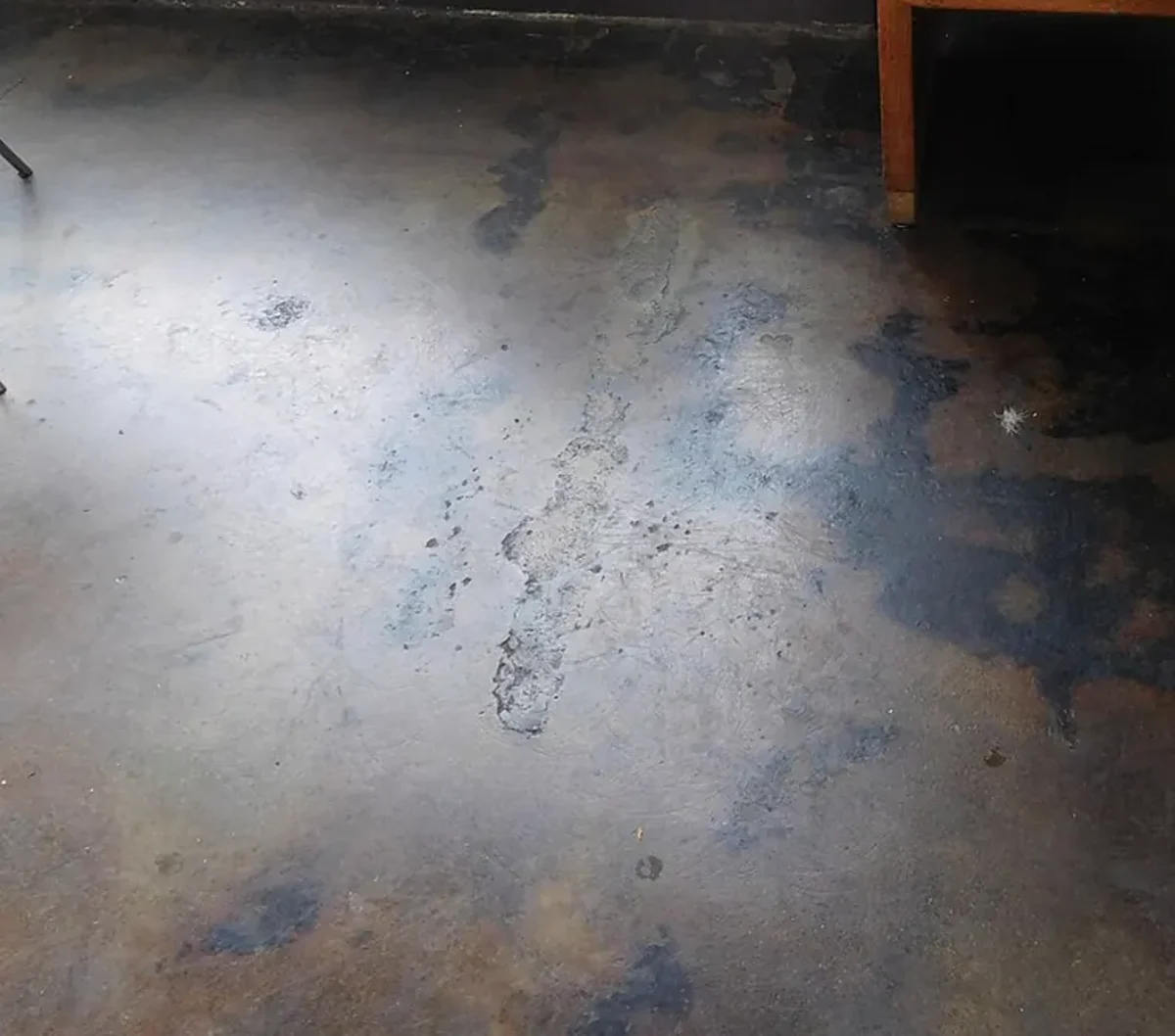
Photo: Robert Ashworth, Wikimedia Commons, CC BY 2.0 (cropped)
Quick Answer
A concrete densifier is a liquid, usually a sodium, potassium or lithium silicate or colloidal silica, that soaks into concrete and reacts with the free lime inside to form extra calcium silicate hydrate, the same binder that makes concrete strong. The result is a harder, denser, less dusty and more abrasion-resistant surface that takes a better polish and resists staining somewhat better. Concrete densifiers do not form a film, so they do not peel and do not make floors slippery, but they are not a full stain-proof sealer. They are used on warehouse and garage floors, dusting slabs, and in nearly every polished concrete system. Coverage is about 200 to 400 square feet per gallon, and materials cost roughly $0.10 to $0.40 per square foot; professional application runs about $0.50 to $2 per square foot.
Concrete floors in warehouses, garages, shops and basements often wear in a predictable way: the surface dusts, scuffs and wears down under forklifts, carts, tires and foot traffic, and fine gray powder settles on everything. A concrete densifier is one of the simplest, longest-lasting fixes. It works inside the concrete rather than on top, permanently hardening the surface layer. Concrete densifiers are also the secret behind the hard, glossy finish of polished concrete floors like the restored floor in the photo above, an old filling station slab that was cleaned, ground, densified and polished for a new use.
This guide explains what a concrete densifier does, how the chemistry works, the main types, when to use one, how to apply it, how densifiers fit into polishing, how they compare with sealers and hardeners, common mistakes and costs.
What a Concrete Densifier Does
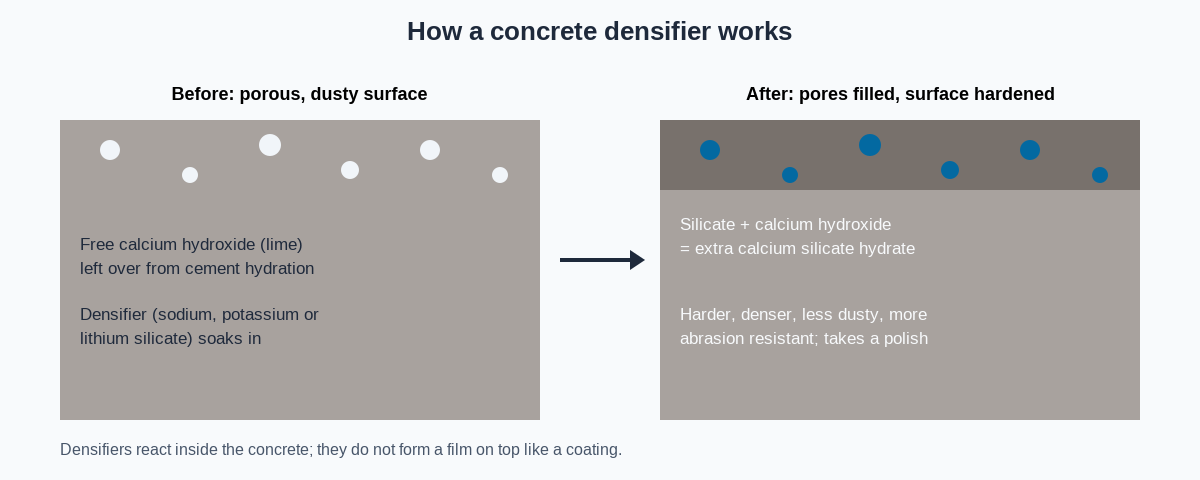
When cement hydrates, it forms two main products: calcium silicate hydrate (C-S-H), the gel that binds concrete together and gives it strength, and calcium hydroxide, also called free lime, which fills some of the pores but adds little strength. Calcium hydroxide is relatively soft and soluble, and near the surface it contributes to dusting and efflorescence. A concrete densifier contains dissolved silicates or very fine silica particles. As the diagram shows, when the concrete densifier penetrates the surface, the silica reacts with the calcium hydroxide to form additional C-S-H inside the pores. That new binder fills and tightens the pore structure in the top few millimeters of the slab, making it harder, denser and more resistant to abrasion, dusting and liquid penetration.
Because the reaction happens within the concrete, a concrete densifier does not change the look of the floor much on its own, other than sometimes darkening it slightly or adding a subtle sheen when burnished. It does not form a coating that can peel, wear through or become slippery. The hardening is essentially permanent, although the surface can still be worn away by very heavy abrasion over many years. See what is concrete made of and concrete dust.
Types of Concrete Densifier
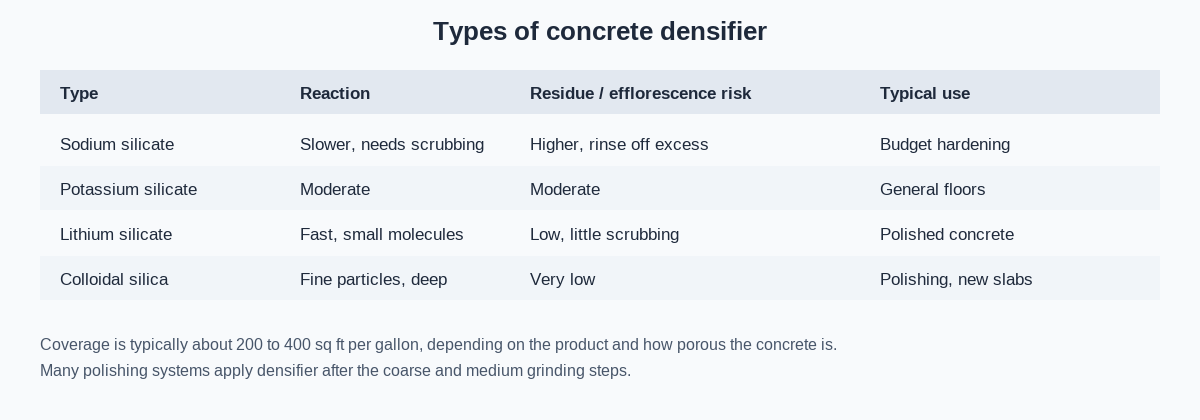
Sodium silicate. The oldest and least expensive concrete densifier, used for decades to harden warehouse floors. Sodium silicate has larger molecules and reacts more slowly. Excess product can leave a white residue or contribute to efflorescence if not scrubbed in and rinsed off, so application usually involves wetting, scrubbing and removing surplus material.
Potassium silicate. Similar to sodium silicate, with somewhat better penetration and lower efflorescence risk. Used as a general-purpose densifier.
Lithium silicate. The most popular concrete densifier for modern floors and polishing. Lithium silicate has smaller molecules, penetrates easily, reacts quickly, leaves little residue, and usually needs little or no scrubbing or rinsing. It is less likely to cause alkali-silica reaction concerns because lithium is used to mitigate ASR. It costs more than sodium silicate but saves labor.
Colloidal silica. Very fine silica particles suspended in water rather than dissolved silicates. Colloidal silica densifiers penetrate deeply, react with available lime, and leave almost no residue. They are widely used in polishing systems and on new concrete.
Many products combine silicates with additives that add stain resistance or sheen. Some are sold as densifier-sealers, which harden the surface and add a light protective treatment in one step. The chart above summarizes the differences.
When to Use a Concrete Densifier
Dusting floors. Concrete that sheds dust when swept or driven on, often because of a weak surface from troweling bleed water, late finishing or poor curing, can be dramatically improved with a concrete densifier.
Warehouses and industrial floors. Densifiers increase abrasion resistance under forklifts, pallet jacks and carts, and keep dust out of products and equipment.
Garage and shop floors. A densified garage floor is harder, less dusty and easier to sweep. It does not block oil stains as well as a coating, but it does not peel under hot tires. See concrete garage floor repair.
Polished concrete. Densifier is a standard step in grinding and polishing, hardening the surface so it can take a higher gloss and resist wear. See polished concrete cost.
Retail, schools and public buildings. Low-maintenance densified and polished floors are popular where foot traffic is heavy and coatings would wear.
New slabs. Some concrete densifiers can be applied to new concrete as part of curing, or soon after, to build surface hardness from the start.
Concrete densifiers are less useful on concrete that already has a sealer, coating or curing compound that blocks penetration; on very dense, hard-troweled surfaces that cannot absorb liquid; and on exterior surfaces where the main goal is water and salt repellency, where a penetrating silane or siloxane sealer is usually better. See concrete sealer.
How to Apply a Concrete Densifier
1. Check the concrete. Most products can be applied to concrete at least 7 to 28 days old; some can be applied to fresh concrete as soon as it can be walked on. Do a water drop test: if water soaks in and darkens the concrete, the concrete densifier can penetrate. If it beads, remove sealers, coatings or curing compounds first by grinding.
2. Clean thoroughly. Remove dirt, oil, grease and dust. Degrease stained areas, scrub with a floor machine and neutral cleaner, rinse, and let the floor dry. On existing floors, grinding opens the surface and gives the best penetration. See how to clean concrete floors and concrete grinding.
3. Apply evenly. Spray the concrete densifier with a low-pressure pump sprayer or apply it with a microfiber pad or mop, keeping the floor wet with product for the time the label specifies, often 15 to 30 minutes. Work in manageable sections.
4. Work it in. For sodium and potassium silicates, scrub the concrete densifier into the surface with a broom or floor scrubber as it begins to thicken, and keep it wet. Lithium and colloidal silica products usually just need to be spread evenly.
5. Remove excess. Before it dries, remove puddles and excess product with a squeegee or mop. Excess silicate left on the surface can dry to a white, slippery or hazy residue. For sodium silicate, rinsing with water is often required.
6. Let it react. Keep traffic off for the time specified, often a few hours, and allow full hardening over several days to weeks as the reaction completes.
7. Burnish or polish (optional). Burnishing with a high-speed floor machine and fine pads brings up a sheen on densified floors.
Concrete Densifier in Polished Concrete
In a typical polishing system, the floor is ground with coarse metal-bonded diamonds to remove the top layer and flatten it, then honed with finer diamonds. The concrete densifier is usually applied after the coarse or medium grinding steps, once the surface is open and porous, so it can penetrate deeply. The floor is then polished with progressively finer resin-bonded diamonds. The surface treated with concrete densifier is much harder, so it can be polished to a higher, longer-lasting gloss. A final guard or stain-resistant sealer is often applied on top. Without densifier, many concretes polish poorly and dull quickly. See types of concrete finishes and concrete floors in homes.
Concrete Densifier vs Sealer vs Hardener
The terms are often confused. A concrete densifier reacts chemically inside the concrete to make it harder and denser. A sealer protects the concrete from water, oil and stains, either by penetrating and repelling (silanes and siloxanes) or by forming a film (acrylics, epoxies, urethanes). Some sealers add little hardness, and some densifiers add little stain protection, which is why polished floors often get both. The word hardener is used in two ways: as another name for chemical densifiers, and for dry-shake hardeners, which are cement-based powders containing hard aggregates such as quartz or metal that are broadcast onto fresh concrete and troweled in to create a very wear-resistant surface on industrial floors. Concrete densifiers can be applied to existing floors; dry-shake hardeners must be applied during placement. See how to seal concrete and epoxy for concrete.
How a Concrete Densifier Changes a Floor
The difference a concrete densifier makes is easy to see and feel. Before treatment, a dusting floor leaves a gray film on shoes and dark rubber marks wherever tires turn, and sweeping never seems to end. After a concrete densifier has reacted for a few days, the surface feels harder and smoother, sweeping picks up far less dust, and scratching it with a key or coin leaves a lighter mark. Many facility managers notice that forklifts and carts roll more easily and that floor cleaning machines leave a cleaner, more even surface. On polished floors, the concrete densifier allows the diamonds to cut a crisp, reflective finish rather than tearing out soft paste. Industry tests, such as abrasion resistance tests that measure how much material is worn away by rotating cutters or wheels, typically show densified concrete losing noticeably less material than untreated concrete of the same mix. The effect is greatest on weak, porous, dusting surfaces and smallest on concrete that is already very dense and hard troweled.
Choosing a Concrete Densifier
Choosing the right concrete densifier depends on the floor, the job and who is applying it. For polishing, most contractors choose a lithium or colloidal silica concrete densifier, because these penetrate quickly, leave little residue and fit easily between grinding steps. For a large warehouse floor that is dusting and will not be polished, a sodium or potassium silicate concrete densifier can be more economical, provided the crew scrubs it in and removes the excess. For homeowners treating a garage or basement floor, a ready-to-use lithium silicate concrete densifier is the easiest choice, since it is applied with a sprayer and microfiber pad and rarely needs rinsing. Look at the product data sheet for concrete age requirements, coverage rates, dwell time, the number of coats, and whether the concrete densifier is compatible with any sealer you plan to apply afterward. Products labeled as densifier-sealers combine hardening with some stain resistance and can save a step on light-duty floors.
Concrete Densifier on New Concrete
Applying a concrete densifier to new concrete has advantages. The concrete is still rich in calcium hydroxide, so the reaction is strong, and the surface treated with concrete densifier is protected against early wear from construction traffic. Some products are designed to be applied as soon as the slab can be walked on after finishing, doubling as a curing aid; others require 7, 14 or 28 days. On new slabs that will be polished, the concrete densifier is usually applied during the polishing process rather than right after the pour. Avoid applying a concrete densifier over a curing compound, which blocks penetration; if a curing compound was used, it must be removed or allowed to wear off before densifying. On new concrete, follow the product instructions carefully, because applying a concrete densifier too early on some mixes can interfere with finishing or curing. See concrete curing compound and how long does concrete take to cure.
Concrete Densifier on Old Floors
Old floors often benefit the most from a concrete densifier, especially those that have been dusting for years. The key is getting the product into the concrete. First remove any old paint, coatings, sealers, adhesives and heavy stains, usually by grinding with diamond tooling, which also removes weak surface paste. Then clean the floor thoroughly and let it dry. Apply the concrete densifier generously so the concrete absorbs as much as it can, keep the surface wet for the specified time, and remove the excess. On very porous or soft old floors, a second coat of concrete densifier after the first has reacted can add more hardness. Some contractors grind lightly between coats. After densifying, a light burnish or a guard coat gives a clean, low-maintenance finish. Old floors with cracks, spalls and joints should be repaired before densifying, since a concrete densifier does not fill cracks or repair damage. See how to fix cracks in concrete and concrete patching compound.
Maintaining a Densified Concrete Floor
A floor treated with a concrete densifier is easy to maintain. Sweep or dust mop regularly to remove grit, which acts like sandpaper underfoot. Clean with a pH-neutral floor cleaner and an auto-scrubber or mop, avoiding acidic cleaners, which can etch the surface, and strong alkaline degreasers used repeatedly, which can dull it. Burnish periodically with a high-speed machine and fine pads to restore sheen on polished floors. Clean spills promptly, especially oil, wine, juice and chemicals, because a concrete densifier improves stain resistance but does not make concrete stain-proof. Reapply a guard or sealer when water no longer beads on the surface. Over many years, heavy traffic lanes may wear; they can be lightly reground, densified again and polished to renew the floor. Because the concrete densifier itself does not peel, maintenance is much simpler than with coatings that must be stripped and recoated.
Safety When Using a Concrete Densifier
Silicate densifiers are water based and nonflammable, but they are alkaline and can irritate skin and eyes. Wear gloves, safety glasses and protective clothing when spraying or spreading a concrete densifier, and avoid breathing spray mist. Keep it off glass, aluminum, painted surfaces and finished wood, where it can etch or leave hard-to-remove deposits; mask them before you start, and wipe off any overspray immediately with water. Excess concrete densifier on the floor can become slippery while wet, so keep people off until it is removed and dry. Dispose of leftover product and rinse water according to the label and local rules, not into storm drains.
Concrete Densifier for Garages and Basements
Homeowners often look at a concrete densifier as a simple alternative to epoxy for garage and basement floors. A densified garage floor will not peel under hot tires, will not blister from moisture coming up through the slab, and does not need recoating every few years. It reduces dust from tires and foot traffic, makes sweeping easier, and gives the bare concrete a clean, slightly sheened look, especially if it is burnished afterward. What a concrete densifier will not do is hide stains, cracks and color variations, or make the floor oil-proof, so many homeowners follow it with a penetrating sealer or guard for stain resistance. In basements, where moisture vapor often comes up through the slab, a concrete densifier is a breathable treatment that will not trap moisture the way some film-forming coatings can, which makes it a good option for floors left exposed or prepared for area rugs. For a more decorative look, stains or dyes can be applied before the concrete densifier and polished. See concrete staining and vapor barrier under concrete.
Concrete Densifier vs Epoxy Coating
A concrete densifier and an epoxy coating solve different problems. Epoxy forms a thick, colored, highly stain-resistant film on top of the concrete, hiding imperfections and making the floor easy to wipe clean, but it can peel, chip, yellow in sunlight, and fail if moisture comes up through the slab, and it needs recoating over time. A concrete densifier works inside the concrete, never peels and needs little maintenance, but leaves the natural look of the concrete, including its stains and color variations, and offers less stain protection. For warehouses, retail floors and polished concrete, the concrete densifier route is usually more durable and economical over the long term. For garages where the owner wants color, a showroom look and maximum stain resistance, epoxy or polyaspartic coatings are often preferred. See epoxy for concrete and concrete coating cost.
How Many Coats of Concrete Densifier?
Most floors need one coat of concrete densifier, applied generously enough that the concrete stays wet with product for the dwell time on the label. Very porous, weak or dusting floors may benefit from a second coat once the first has reacted, usually after 24 hours or more, and some polishing systems apply concrete densifier twice, once after coarse grinding and again after honing. Dense, hard-troweled floors may absorb very little, and extra coats on them only leave residue. A simple test helps: after the first coat has dried, sprinkle water on the surface. If it soaks in quickly and darkens the concrete, it can usually take more concrete densifier; if it sits on top longer than before, the pores are well filled. Always remove excess concrete densifier between coats rather than letting it build up on the surface.
Concrete Densifier Results You Can Expect
It helps to set realistic expectations. A concrete densifier will make the surface harder and much less dusty, improve abrasion resistance, give a better base for polishing, and add some resistance to water and stains. It will not change the color much, hide stains or cracks, level an uneven floor, or make the concrete waterproof or oil-proof. On a dusting floor, the change is often dramatic; on a floor that was already dense and well finished, the change is subtle. Combined with grinding, polishing and a guard coat, a concrete densifier is a key part of one of the most durable and low-maintenance floor systems available.
Common Mistakes
Applying over a sealer or curing compound. The concrete densifier cannot penetrate and will sit on the surface, leaving residue.
Leaving excess on the surface. Puddles dry into white, sometimes slippery deposits that are hard to remove. Squeegee or rinse excess.
Expecting a stain-proof floor. Densifiers improve resistance but do not stop oil and acids. Add a sealer or guard if stains are a concern.
Applying too much product. More is not better; the concrete can only absorb and react with so much.
Skipping cleaning. Dirt and oil block penetration and leave uneven results.
Using the wrong concrete densifier. A sodium silicate concrete densifier on a polishing job, or a product not meant for the concrete age, can leave residue or weak results. Match the concrete densifier to the job, read the data sheet, and test a small area first. A test patch of concrete densifier on an out-of-the-way corner shows how the floor absorbs it, how long it stays wet and how the surface looks once dry, before you treat the whole floor with concrete densifier.
Concrete Densifier Cost
Concrete densifier products and concrete densifiers sold as concentrates typically cost about $25 to $80 per gallon for concentrated or ready-to-use products, with lithium and colloidal silica at the higher end. At 200 to 400 square feet per gallon, material cost is roughly $0.10 to $0.40 per square foot per coat. Professional densifier application on a clean floor typically runs $0.50 to $2 per square foot, including cleaning and application, more if grinding is required. As part of a full polished concrete system, densifying is included in the overall price, typically $3 to $12 per square foot depending on gloss level and condition. For a 500 square foot garage, DIY materials usually cost under $200. See concrete coating cost.
Frequently Asked Questions
What does a concrete densifier do?
It reacts with free lime in concrete to form extra binder, making the surface harder, denser, less dusty and more wear resistant.
Is a concrete densifier the same as a sealer?
No. A concrete densifier hardens the concrete from within; a sealer protects against water and stains. Many floors use both.
Which concrete densifier is best?
Lithium silicate and colloidal silica are popular for ease of use and low residue; sodium silicate is cheaper but needs more work.
How long does a concrete densifier last?
The hardening is essentially permanent, though very heavy wear can eventually abrade the densified layer.
Can I use a concrete densifier on an old floor?
Yes, if it is clean and porous. Remove sealers and coatings first, ideally by grinding.
Sources
- American Concrete Institute: ACI 310R guide to decorative concrete and polishing
- Portland Cement Association: concrete floor surface treatments
- Concrete Network: concrete densifiers and polished floors
- ASTM International: abrasion resistance test methods for concrete