
Concrete Floors in Homes: Pros, Cons, Finishes, Costs and Care
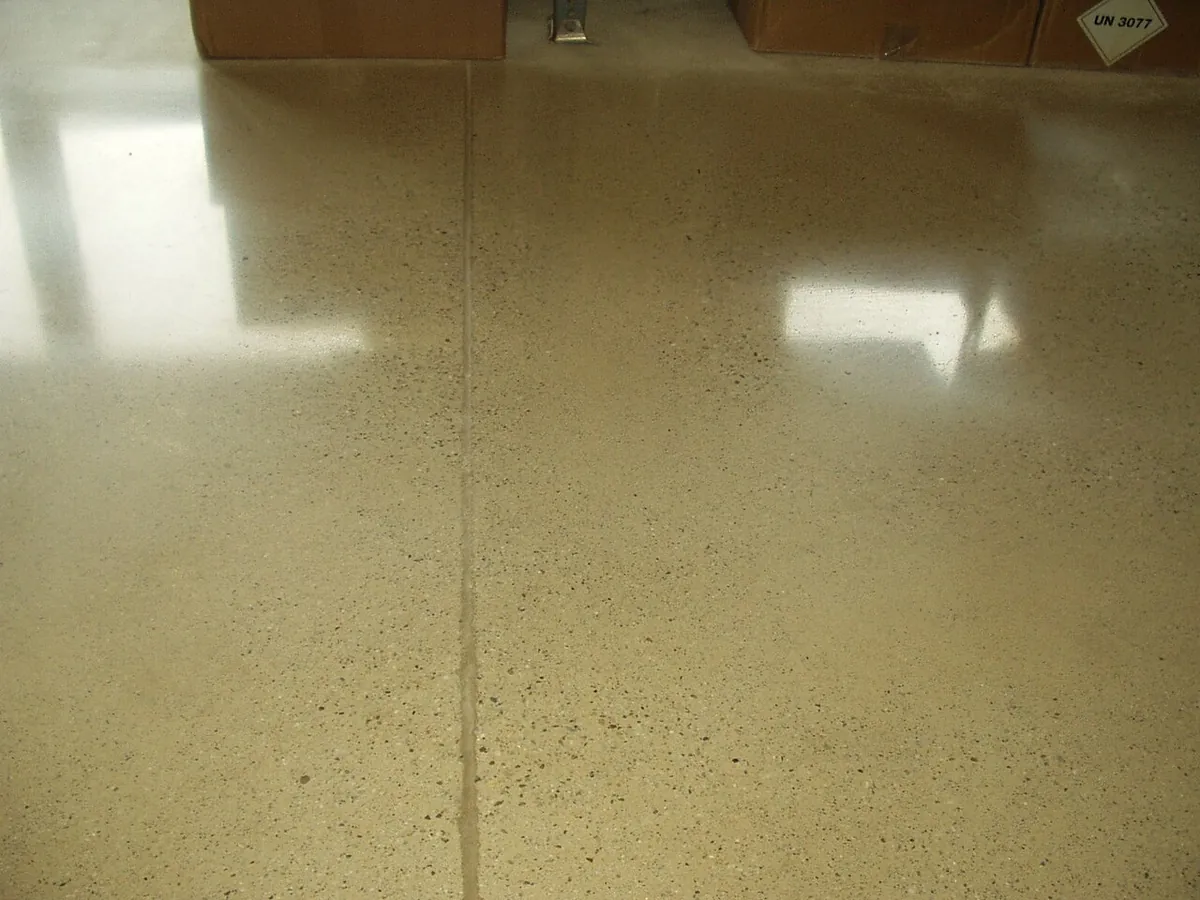
Photo: PConcrete, Wikimedia Commons, CC BY-SA 3.0
Quick Answer
Concrete floors in homes are slabs that are ground and polished, stained, dyed, sealed or coated to serve as the finished floor. They are very durable, easy to clean, good with radiant heating, hypoallergenic and often affordable when the slab already exists, typically about $3 to $12 per square foot for polishing or staining an existing slab, more for decorative work or overlays. Downsides are hardness underfoot, a cool feel without heating, possible hairline cracks, and echo in large rooms. Polished concrete floors for homes range from a satin to a shiny concrete floor finish. Concrete works well in kitchens, bathrooms, basements, living areas and garages, with the right finish and sealer for each.
Once seen mainly in warehouses and garages, concrete has become a popular finished floor in houses of every style, from modern lofts to farmhouses and slab-on-grade ranch homes. Many homes already have a concrete slab under carpet, tile or vinyl, and exposing and finishing it can create a durable, attractive floor at a lower cost than many alternatives. New homes built on slabs can have the floor finished as part of construction.
This guide explains the types of concrete floors in homes, the pros and cons, finish options from polished to stained and decorative, how concrete floors work in kitchens, bathrooms and garages, comfort and warmth, costs, refinishing existing slabs, and how to care for concrete floors indoors.
Why Concrete Floors in Homes Are Popular
Several trends have made concrete floors in homes common. Modern and industrial interior styles favor simple, natural materials. Slab-on-grade construction is widespread in warm regions, so many houses already have a concrete floor in house construction under the finished flooring. Radiant floor heating, which works especially well in concrete, has grown more common. Homeowners with allergies or pets value hard floors with no carpet fibers or grout joints. And improved grinding, polishing, staining and sealing techniques make it possible to get a beautiful finish from ordinary slabs.
A concrete floor in home settings can look sleek and modern with a high polish, warm and rustic with earth-tone stains, or crafted and artistic with dyes, saw cuts and decorative overlays. It can run continuously from room to room without thresholds, which makes small homes feel larger and open plans feel unified.
Types of Indoor Concrete Floor Finishes
Polished concrete is the slab itself, ground with progressively finer diamond tooling, treated with a chemical densifier, and polished to the desired sheen, from matte to a mirror-like shiny concrete floor. It is the most durable and lowest-maintenance finish and is the standard look for polished concrete floors in homes. The amount of grinding determines how much aggregate shows: a cream finish shows little or no stone, a salt-and-pepper finish shows fine aggregate, and a full exposure shows larger stones.
Stained concrete uses acid stains, which react with the concrete to create mottled, variegated colors in browns, tans, greens and blues, or water-based stains and dyes, which give a wider color range and more uniform color. Stained floors are sealed or waxed, or stained and then polished. See concrete staining.
Sealed concrete is the simplest: a cleaned or lightly ground slab sealed with a penetrating sealer or a film-forming acrylic or polyurethane. It is common in basements and budget projects.
Decorative concrete floors include saw-cut patterns, stenciled designs, scored tiles, inlays, and overlays such as microtoppings and self-leveling decorative toppings, which can go over damaged slabs or other surfaces. See micro cement floor and concrete overlay cost.
Coated concrete uses epoxy, polyaspartic or urethane coatings, sometimes with decorative flakes or metallic pigments. Coatings are common in garages and basements and give a seamless, durable surface. See concrete coating cost.
Pros of Concrete Floors in Homes
The advantages are strong. Concrete floors are extremely durable: a polished slab resists scratches, dents and wear far better than wood, laminate or vinyl, and can last the life of the house. They are easy to clean, with no carpet to trap dust and no grout to stain; a dust mop and occasional damp mop are usually enough. They suit people with allergies, since hard, sealed surfaces do not harbor dust mites or mold the way carpet can. They pair perfectly with radiant heating, because concrete stores and releases heat evenly. They are cost-effective when the slab already exists, since there is no new flooring material to buy. And they are versatile in style, from industrial to warm and rustic, and can run seamlessly through a home.
Cons of Concrete Floors in Homes
Concrete floors indoors also have real drawbacks. They are hard underfoot, which can be tiring to stand on for long periods and unforgiving for dropped dishes, toddlers and older people prone to falls; rugs and anti-fatigue mats help. They can feel cool without radiant heat, especially on slabs on grade in cold climates. Hairline cracks are common in concrete and usually show through polished and stained finishes; many people accept them as character, but those who want perfection may be disappointed. Hard floors reflect sound, so large rooms can echo without rugs and soft furnishings. Moisture coming up through slabs on grade can cause problems with some sealers and coatings, and must be checked before finishing. Finally, the look depends on the existing slab: patches, old adhesive marks and color variations can show in polished and stained floors, so expect some character rather than uniformity.
Concrete Kitchen Floor
A concrete kitchen floor is a popular choice for modern and industrial kitchens, and it can be just as practical in farmhouse and traditional designs with warm stain colors. A polished or well-sealed concrete floor in kitchen spaces handles spills, dropped pots and heavy foot traffic, and it pairs well with concrete or stone countertops. The main concerns are hardness, since dropped glasses and plates will break and cooks standing for long periods may want an anti-fatigue mat, and stains from oil, wine, vinegar, citrus and tomato sauce, which can etch or stain if the sealer or polish is not maintained. A good penetrating stain guard on polished concrete, or a quality sealer, wiped spills and pH-neutral cleaners keep concrete floors in kitchen areas looking good.
If you are renovating, check what is under the existing kitchen flooring before deciding. A slab with lots of old adhesive or tile setting material may need heavy grinding or an overlay rather than simple polishing. A cement kitchen floor overlay or microtopping can also go over sound tile where tearing out is impractical. In new construction, plan for a polished concrete floor kitchen design from the start: protect the slab during building, plan cabinet layouts around joints, and decide on the polish level and aggregate exposure before the pour.
Concrete Bathroom Floor
A concrete bathroom floor gives a clean, spa-like look and has no grout lines to scrub. Polished concrete and sealed concrete both work; microcement is popular when the bathroom has an existing tile floor or when walls and shower will match the floor. A cement bathroom floor must handle water, so seal it well and choose a finish with enough texture or an anti-slip additive to reduce slipping when wet, especially in front of showers and tubs. Polished concrete can be slippery when wet at high sheen, so a honed or satin finish is often better for concrete floors for bathrooms. Underfloor heating makes a concrete floor in bathroom spaces comfortable on cold mornings. For showers, a concrete or microcement finish must sit on a proper waterproofing system with the correct slope to the drain. See is concrete waterproof.
Concrete Floors in Basements and Living Areas
Basements are often where homeowners first try an indoor concrete floor, because the slab is already there. A ground-and-sealed or polished basement floor is durable, handles occasional dampness better than carpet or wood, and is easy to clean. Test for moisture before choosing a finish; slabs on grade can transmit moisture vapor that blisters some coatings. In living rooms and bedrooms, concrete floors in house designs are softened with large area rugs, warm colors, and wood or textile furnishings. Radiant heat makes concrete floors in home living areas comfortable in winter. See vapor barrier under concrete.
Concrete Garage Floors
The garage is where most homes already have a concrete floor. Garage floor concrete takes vehicle loads, hot tires, oil, road salt and dropped tools, so the finish needs to be tough. Common options for concrete garage flooring are a clear penetrating sealer, which protects against stains and salt with little change in look; an epoxy or polyaspartic coating, often with decorative flakes, which gives a seamless, easy-clean, showroom look; and polished concrete, which is hard-wearing but can stain from oil without a guard and can be slippery when wet. A cement garage floor in poor condition may need crack repair, patching or resurfacing first. When choosing a concrete floor for garage use, consider hot tire pickup, which affects some cheaper coatings, and slip resistance when the floor is wet from snow or rain. See concrete garage floor repair and concrete coating cost.
Concrete garage floors also benefit from good drainage and slope toward the door, and from control joints that keep cracks in straight lines. If you are pouring a new garage slab, ask for a hard troweled finish, proper curing, and a vapor barrier under it, which makes future coatings more reliable. For any concrete floor, garage or otherwise, sealing early prevents oil stains that are hard to remove later.
Polished Concrete Floors in Homes

Photo: BECOTREAT, Wikimedia Commons, CC BY-SA 4.0
Polished concrete floors in homes are made by grinding the slab with metal-bond diamonds to remove the surface and flatten it, applying a liquid densifier, usually a lithium or sodium silicate, that reacts with the concrete to harden the surface, then polishing with progressively finer resin-bond diamonds up to the chosen sheen, and finally applying a stain guard. The same process works for polished cement floors in homes with older slabs, though patches and old adhesive marks will show. The result can range from a soft satin to a reflective, shiny concrete floor. Polished concrete floors home buyers see in new builds are often finished this way during construction. See concrete grinding and polished concrete cost.
Decorative Concrete Flooring Options
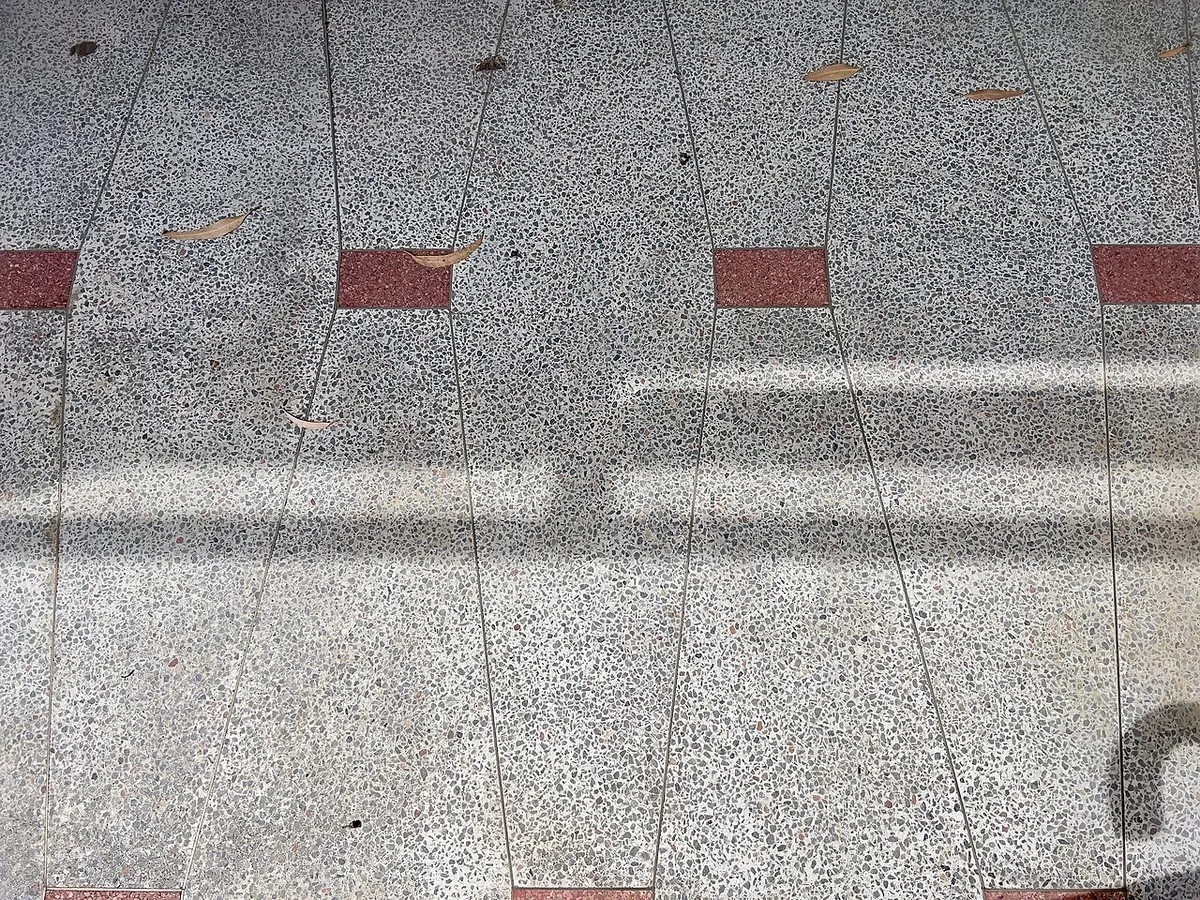
Photo: Kgbo, Wikimedia Commons, CC BY-SA 4.0
Decorative concrete flooring goes beyond plain gray. Options include acid and water-based stains for color; dyes that can be mixed into polished floors for vivid tones; saw cuts or scored lines that create tile, diamond or plank patterns; stenciled designs and borders; exposed decorative aggregates and glass chips in polished floors; inlays of colored concrete, metal or stone, like the floor pictured above; and overlays such as microtoppings, self-leveling decorative toppings and stamped overlays. Decorative concrete floors can imitate stone, tile or even wood, or celebrate concrete's own character. Decorative cement floors are also common in older homes, where vintage cement tiles or colored cement floors are restored and sealed. Talk to a decorative concrete contractor about samples, because color and pattern look different on each slab. See stenciled concrete and how to color concrete.
Cost of Concrete Floors in Homes
Costs vary with the condition of the slab, the finish and the region. As a rough guide, sealing an existing slab costs about $1 to $3 per square foot; basic grinding and polishing about $3 to $8; stained and sealed floors about $3 to $10; high-gloss or decorative polished floors with dyes and patterns about $8 to $15 or more; and overlays and microcement about $8 to $30. Removing old flooring, adhesives and tile, and repairing cracks and damage, adds cost. New construction slabs designed for polishing can be economical because the floor finish is part of the slab work. Compared with hardwood, quality tile or luxury vinyl plank, a concrete floor in home renovations is often competitive or cheaper, especially when the slab already exists.
Comfort, Warmth and Sound
Concrete has a reputation for being cold and hard. Hardness is real, so area rugs, runners and anti-fatigue mats are wise in kitchens and living areas. Warmth depends on climate and heating: in warm climates, a cool concrete floor is a benefit; in cold climates, slab-on-grade floors without insulation feel cold, and radiant heating in or under the slab transforms comfort, since concrete holds heat well. Insulation under new slabs helps too. Sound bounces off hard floors, so rugs, curtains and soft furniture reduce echo in rooms with concrete floors indoors. See concrete slab thickness.
Exposing an Existing Slab Under Carpet or Tile
Many homeowners discover they can have a concrete floor without pouring anything, by removing carpet, vinyl or tile and finishing the slab underneath. The process starts with a test patch: pull up a corner of carpet in a closet or hidden area to see the slab's condition. Expect tack strip holes around the edges, paint splatters, old adhesive, patches where plumbing was run, and cracks. After the old flooring is removed, the slab is scraped and ground to remove adhesive, then cracks and holes are filled, and the floor is polished, stained or sealed.
The result has character: tack strip holes, patches and cracks usually show to some degree. Some people love this lived-in look; others prefer an overlay or microtopping over the slab for a uniform appearance. A polishing contractor can grind a sample area so you can see what your slab will look like before committing the whole house.
Refinishing Concrete Floors
Concrete floor refinishing restores worn, stained or dull floors without replacing them. For polished floors, refinishing concrete floors usually means cleaning, light honing or re-polishing with fine diamond pads, and reapplying a stain guard; this can bring back the shine on floors that have dulled in traffic lanes. For stained and sealed floors, refinishing often means stripping the old sealer or wax, cleaning, touching up color with stain, and resealing. For coated floors, the old coating may be abraded and recoated, or ground off if it is peeling.
Cement floor refinishing in older homes, such as basement floors, porches and vintage colored cement floors, often starts with deep cleaning and removing old paint or sealers, then repairing cracks and spalls, and finishing with a penetrating sealer or a new decorative stain. Professional refinishing typically costs much less than new flooring, and some light work, such as cleaning and resealing, is DIY-friendly. See how to resurface concrete and concrete sealer.
Concrete Indoor Floors and Moisture
Moisture is the hidden issue with concrete indoor floors, especially slabs on grade and basements. Concrete is porous, and water vapor can move up through a slab from the soil, particularly if there is no vapor barrier under it. This moisture can cause film-forming sealers and coatings to blister, white haze to appear under sealers, and adhesives for rugs or other floors to fail. Before finishing an indoor cement floor, test for moisture with a simple plastic sheet test or, better, calcium chloride or relative humidity tests used by flooring installers. Polished concrete with a penetrating densifier handles moisture vapor better than film coatings, because it lets the slab breathe. For damp basements, fix outside drainage first. See vapor barrier under concrete and is concrete waterproof.
Cement Floors in Home Design
Cement floors in home design are not new. Many older houses have colored cement floors in porches, kitchens and basements, often red or green, and many Mediterranean and Latin American homes have patterned cement tiles. Today, cement floors appear in modern farmhouse, Scandinavian, industrial and minimalist interiors. Pair them with warm wood, textiles and plants to balance the hardness, or lean into the industrial look with metal and open shelving. A neutral gray or warm beige polished floor works with most decor and furniture, while stained floors in earth tones add warmth.
Do Concrete Floors Add Home Value?
Opinions vary by market. In modern, urban and warm-climate markets, well-finished concrete flooring in home listings is often seen as a stylish, low-maintenance feature. In more traditional markets, some buyers still prefer wood or carpet in living areas and bedrooms. A concrete floor home buyers notice positively is one that is clearly finished on purpose, polished, stained or decorative, not a bare slab that looks unfinished. Concrete is also easy to cover later with rugs or another floor if tastes change, which reduces the risk.
Caring for a Home Concrete Floor
Caring for a home concrete floor is simple. Dust mop or vacuum regularly, because grit is the main cause of wear and scratches. Damp mop with warm water and a pH-neutral cleaner; avoid vinegar, ammonia, bleach and acidic or harsh alkaline cleaners, which can etch polished concrete and damage sealers. Wipe up spills, especially acidic foods and drinks, promptly. Use felt pads under furniture, mats at entrances, and rugs in high-traffic areas. Polished floors may benefit from periodic burnishing with a high-speed buffer and a fresh stain guard every few years; sealed floors need resealing every few years depending on traffic. A well-maintained concrete floor in home living spaces can look good for decades.
Choosing the Right Finish for Each Room
Match the finish to how each room is used. For living rooms and bedrooms, a polished satin finish or stained and sealed floor with rugs works well. For kitchens, polished concrete with a stain guard or a high-quality sealer that resists food stains. For bathrooms, a honed or satin polish or a textured sealer to reduce slipping. For basements, polished or penetrating-sealed concrete that tolerates moisture vapor. For garages, a penetrating sealer or epoxy or polyaspartic coating. For entries and mudrooms, a durable finish with good slip resistance and mats. Many homes use one finish throughout for continuity and adjust only the sealer or sheen in wet areas. A decorative concrete floor in an entry, such as a stained medallion or saw-cut pattern, can be a striking feature in an otherwise simple design.
Planning Concrete Floors in a New Home
If you are building, decide early that the slab will be the finished floor, because it changes how the slab is built. Tell the builder and concrete contractor so they can place a vapor barrier and insulation under the slab, set radiant heating tubes if wanted, specify a mix and aggregate that will look good when polished, place control joints in a pattern that suits the room layout, and protect the slab from paint, drywall mud, plumbing cuts and equipment during construction. Many polishing contractors recommend a first grind before walls go up, then final polishing near the end of the job. Planning ahead costs little and makes the finished floor far better than polishing a slab that was never meant to be seen. Ask for a small sample panel or mockup with your chosen polish level and color before the main floor is done, so everyone agrees on the look. Put the finish specification in the contract, including sheen, aggregate exposure, stain colors and who protects the floor during the rest of the build. Clear specifications are the best way to make sure concrete floors in homes come out looking the way the owners imagined when they first chose a concrete finish for their new house.
DIY or Professional?
Simple sealing of a clean slab, and cleaning and resealing an existing finish, are reasonable DIY projects. Acid staining can be done by careful DIYers who practice on test areas, though results are unpredictable. Polishing requires heavy grinders, diamond tooling, dust control and skill, and is usually best left to professionals; a poorly ground floor can look patchy and wavy. Overlays and microcement also require experience. Get quotes from contractors who specialize in decorative and polished concrete, and ask to see floors they have done in homes, not only commercial spaces.
Frequently Asked Questions
Are concrete floors good for homes?
Yes, for durability, easy cleaning, allergies and radiant heat, but they are hard and can feel cool without heating; rugs help.
How much do polished concrete floors cost in a home?
Often about $3 to $8 per square foot for basic polishing of an existing slab, more for decorative work or heavy preparation.
Do concrete floors crack?
Hairline cracks are common in concrete. They can be filled and often blend in, and many owners accept them as character.
Can you put concrete floors in a bathroom?
Yes, sealed or polished with a slip-resistant finish, and with proper waterproofing in showers.
Sources
- American Concrete Institute: ACI 310R decorative concrete and ACI 302.1R floors
- Portland Cement Association: concrete floors and radiant heating
- American Society of Concrete Contractors, Concrete Polishing Council
- U.S. Department of Energy: radiant heating
Related Guides
- Micro cement floor — seamless microcement flooring over tile or concrete
- How to wash cement floor — best way to clean concrete floors
- Concrete coffee table — DIY, dining, outdoor and picnic concrete tables
- Concrete tile — cement floor tiles, concrete look and outdoor tiles
- Epoxy for concrete — floor coatings, garages and outdoors
- Decorative concrete — types, finishes and costs
- Concrete primer — types, prep and application
- Concrete nailer — powder, gas and battery tools
- Concrete house construction — ICF, block, poured and prefab homes
- How to lay tile on concrete — floors, patios and grouting
- Concrete tub — concrete bathtubs and bathrooms
- Heated concrete floor — hydronic and electric floor heating
- Concrete sink — vessel, integral and kitchen sinks
- Chicken coop concrete floor — slabs, bedding and predators
- How to smooth concrete — troweling and smoothing hardened concrete
- How to hang pictures on concrete walls — hooks, plugs and concrete screws
- Concrete densifier — silicate hardeners for floors
- Concrete floor coverings — flooring options over slabs
- Concrete slab leak repair — signs, detection and repair options under slabs
- Concrete polisher — planetary grinders, hand polishers, pads and rental prices
- Stamped concrete floors — indoor patterns, overlays vs new slabs, sealers and cost
- Concrete board — backer board for shower walls and tile floors, installation and waterproofing