
Concrete Garage Floor Repair: How to Fix Cracks, Pits, Spalls and Sunken Slabs
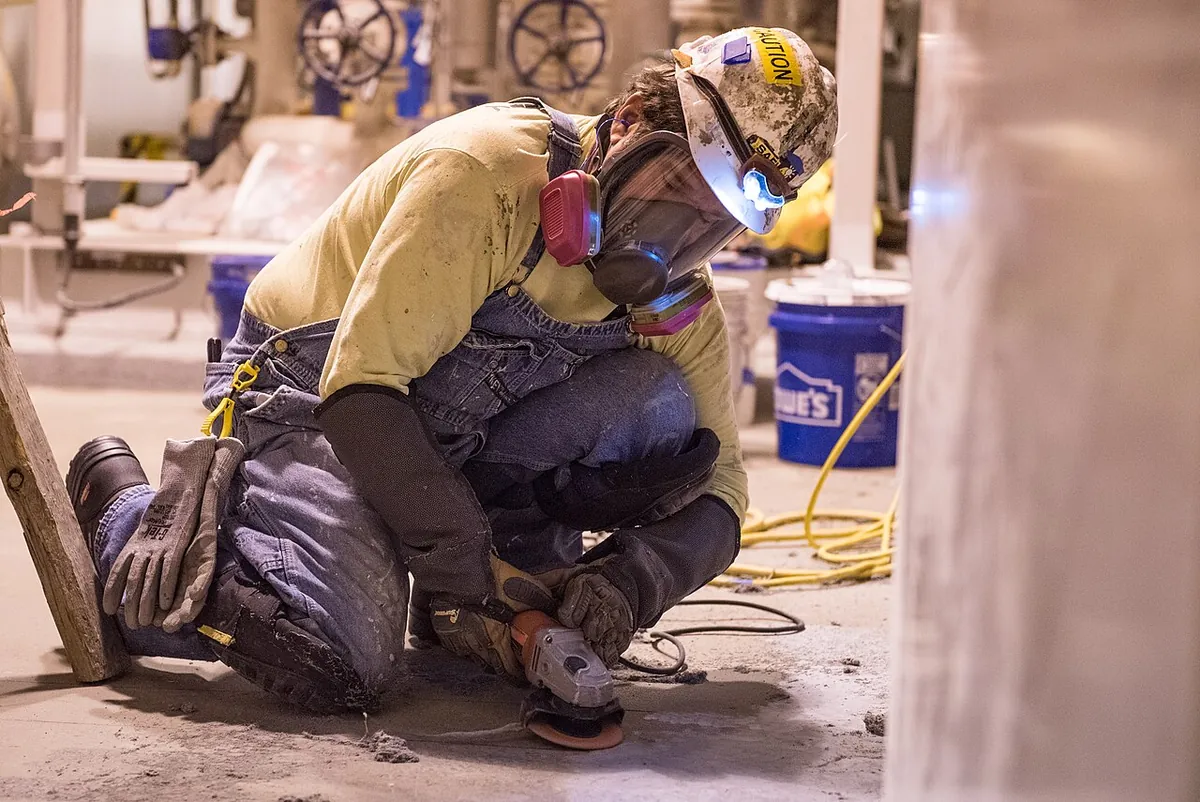
Photo: PEO ACWA, Wikimedia Commons, CC BY 2.0.
Quick Answer
Most concrete garage floor repair is DIY-friendly. Seal or fill cracks with an epoxy or polyurea crack filler (or a flexible polyurethane sealant if they move), patch chips, holes and spalls with a polymer-modified repair mortar or epoxy patch, and fix a pitted, worn surface by grinding and applying a resurfacer or a floor coating. A section that has sunk near the garage door needs lifting with mudjacking or foam, or replacing. DIY repairs usually cost $20 to $150 in materials; professional resurfacing runs about $3 to $5 per square foot, coatings about $4 to $10 per square foot, and replacing a garage slab about $6 to $14 per square foot including removal.
A concrete garage floor takes more punishment than any other concrete in a house. Cars drip oil and salty slush, tools get dropped, jacks and stands dig in, and the section by the door freezes and thaws all winter. Sooner or later almost every garage needs some cement floor repair. The good news is that most problems are surface problems, and a concrete garage floor repair costs far less than replacing the slab.
This guide covers the common problems you will find, how to fix each one, how to prepare a floor for a coating after repair, what garage floor concrete repair costs, and when it is time to replace the slab instead.
Common Garage Floor Problems
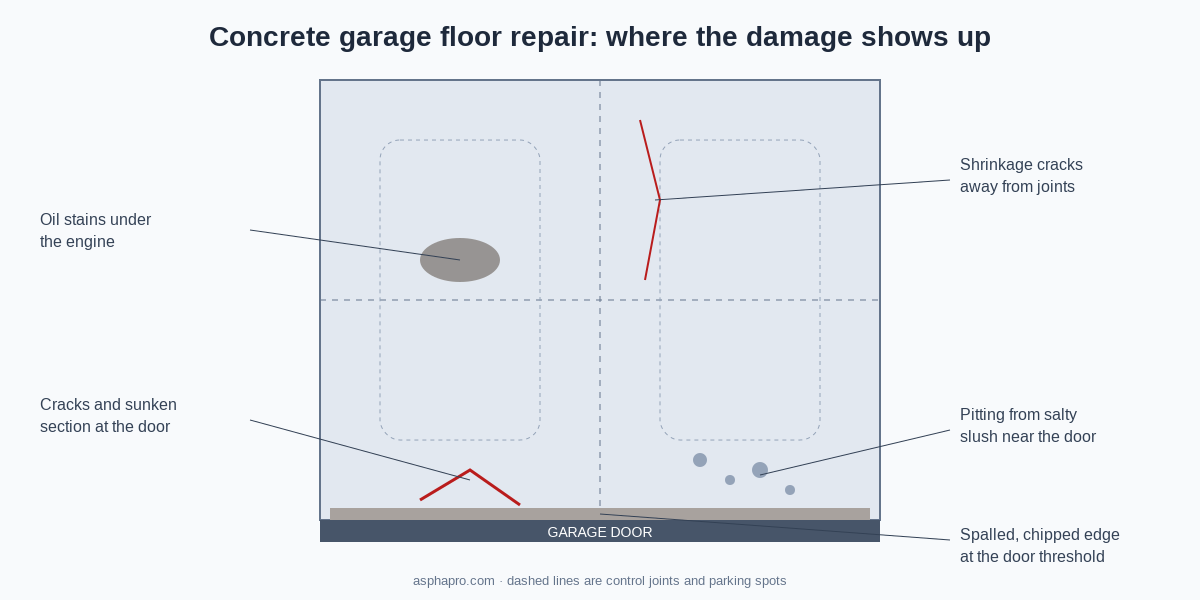
- Cracks. Shrinkage cracks are normal, especially where the slab was not jointed well. Wider cracks, or cracks with one side higher, point to settlement.
- Pitting and scaling. Salt brine from cars eats at the surface paste, leaving a pitted, sandy surface in the parking spots and near the door. See concrete pitting.
- Chips, gouges and spalls. Dropped tools, jack stands and plow blades chip the surface, and the threshold at the door often spalls.
- Oil and fluid stains. Oil soaks in and weakens coatings; it must be cleaned before most repairs. See how to remove oil stains from concrete.
- Sunken slab near the door. Water from the driveway and roof softens the soil at the front of the garage, and that part of the slab drops.
- Peeling paint or coatings. Old paints and cheap coatings peel where hot tires sit, especially over moisture or poor prep.
- Dusting. A weak, powdery surface that never stops shedding dust, often from a poorly finished or cured slab.
Before You Start: Inspect the Concrete Garage Floor and Plan
Garage floor cement repair goes better with a plan. Empty the garage, sweep, and inspect the floor in good light:
- Mark every crack, chip and hole with chalk.
- Measure crack widths and note whether any edges are uneven.
- Tap the floor with a hammer to find hollow-sounding areas.
- Tape a square of plastic to the floor for a day to check for moisture; darkening under the plastic means moisture is coming up through the slab, which matters for coatings and epoxy repairs.
- Decide on the final finish: bare and sealed, painted, coated with epoxy or polyaspartic, or covered with tiles or mats. The finish affects which repair products you should use.
How to Repair Concrete Floor Cracks in a Garage
Hairline and shrinkage cracks
If the floor will stay bare, many hairline cracks can be left alone or sealed with a penetrating sealer. If you plan a coating, fill them with a low-viscosity epoxy or polyurea crack filler so they do not show through. Chase the crack with a grinder or crack-chasing blade if the filler needs room to get in, vacuum it, fill it, and grind it flush after it cures.
Wider cracks
For cracks up to about 1/4 inch that are stable, fill with an epoxy crack filler, adding dry sand for wider gaps. For cracks that open and close with the seasons, which is common at the front of a garage, a flexible polyurethane sealant is safer; a rigid filler will crack again. Our guide to how to repair concrete cracks covers products by crack width.
Cracks with one side higher
A lip at a crack means settlement or heaving. Small lips can be ground flush. Larger drops need the slab lifted or replaced; filling the crack alone leaves a trip hazard and a weak spot.
Control joints
Saw-cut control joints are meant to crack. If you coat the floor, many installers fill joints with a flexible joint filler or leave them open and let the coating follow them, rather than filling them with rigid epoxy.
Fixing Chips, Holes and Spalls
Fixing cement floors that have chips and holes is mostly about good patching technique:
- Chip out all loose concrete around the damage until you reach solid concrete.
- Saw-cut or chisel the edges square, unless you use a feather-edge product.
- Vacuum thoroughly and degrease any oily areas.
- For cement-based patch: dampen the area, then press in a polymer-modified repair mortar and trowel it flush. For epoxy patch: keep the area dry, mix exactly, and fill.
- Cure as directed, then grind or sand flush if you plan a coating.
The threshold at the garage door is the most common spalled spot. Patch it with a repair mortar rated for vehicle traffic, and consider sealing the joint between the garage slab and the driveway with a flexible sealant so water stops getting under the edge. Our guide to concrete patching compound compares patch products.
Repairing a Pitted or Worn Concrete Garage Floor
When the surface is pitted, scaled or dusty over large areas, spot patching is not enough. You have two main options:
- Resurface: clean and pressure-wash or grind the floor, fill deep pits, then apply a thin cement-based resurfacer over the whole floor. This gives a new concrete surface that can be sealed or coated later.
- Grind and coat: grind the floor to sound concrete, fill pits and cracks with epoxy patch, then apply an epoxy or polyaspartic coating system. The coating covers the repairs and protects the floor from salt and oil.
Grinding is the key step in both. A floor grinder with diamond tooling removes weak paste, old paint and contaminants and opens the surface so new materials bond. Many rental stores carry floor grinders with dust shrouds that connect to a vacuum; use them to control silica dust.
Fixing a Sunken Concrete Garage Floor
A slab that has dropped near the door, or a floor that slopes the wrong way and holds water, needs leveling or replacement:
- Mudjacking pumps a cement slurry under the slab through small holes to lift it. It typically costs about $3 to $6 per square foot.
- Polyurethane foam lifting uses smaller holes and a lightweight foam, about $5 to $25 per square foot.
- Replacing the front section of the slab makes sense if it is broken into pieces.
See our guide to concrete leveling cost. Whatever you do, fix the water problem too: gutters, downspouts and driveway drainage that send water toward the garage door.
Garage Floor Concrete Repair Before a Coating
Many people repair a garage floor because they want an epoxy or polyaspartic coating. The repair and prep are what make the coating last:
- Degrease oil spots and test for moisture.
- Grind the whole floor to open the surface; acid etching is a weaker, cheaper alternative used in some kits.
- Fill cracks and holes with the coating system's epoxy or polyurea filler.
- Grind repairs flush and vacuum everything.
- Apply the coating in the temperature and humidity range the maker specifies.
Our guide to concrete coating cost covers epoxy and polyaspartic prices, typically about $4 to $10 per square foot installed.
Fixing a Dusty Garage Floor
Some garage floors shed a fine gray powder no matter how often you sweep. This dusting usually means the top of the slab is weak, often because water was added during finishing, the surface was finished while bleed water was on it, or it was not cured. Fixing cement floors that dust is one of the easier jobs:
- Light dusting: clean the floor and apply a penetrating densifier (a lithium or sodium silicate product). It reacts with the concrete and hardens the surface, then seal it if you like.
- Heavy dusting: grind off the weak layer to harder concrete, then densify, resurface or coat the floor.
Dusting also shows up after acid etching done too strong, so follow the label if you etch a floor before painting.
Removing Peeling Paint and Old Coatings
Peeling garage floor paint is one of the most common reasons people start a cement floor repair. Hot tires soften one-part paints and pull them up, and moisture under the slab pushes coatings off. Before any repair or new finish, the loose material has to go:
- Scrape off everything that is loose with a floor scraper.
- Test what remains: if a utility knife lifts it easily, it must come off.
- Grind the floor with a diamond grinder to remove remaining paint and open the surface; chemical strippers work on small areas but are messy on a whole floor.
- Vacuum thoroughly, then repair cracks and holes.
See our guide to removing paint from concrete for strippers and grinding methods.
Repairing Oil-Soaked Concrete
Years of oil drips can soak deep into a garage floor. Oil-soaked concrete is not usually weak, but nothing sticks to it, so patches and coatings fail on it. To repair concrete floor areas soaked with oil:
- Scrub with a strong concrete degreaser and hot water, then rinse; repeat until water beads less.
- Use a poultice on old, deep stains to pull oil up from the pores.
- For coatings, many installers grind the stained area deeper and use an oil-tolerant primer.
- Test by dripping water on the cleaned spot: if it soaks in and darkens the concrete, most of the oil is gone.
Garage Floor Slope and Drainage
Concrete garage floors are normally built with a slight slope toward the door so water from cars drains out, and building codes in many areas require a floor that slopes to the door or to a drain. If water now pools in the middle of the floor, part of the slab may have settled or been poured flat. Fixes include grinding high spots, filling low spots with a patch or self-leveling compound rated for garage use, lifting settled sections, or adding a trench drain at the door. Water sitting on the slab and running under the door threshold is a leading cause of the sunken, cracked front edge on so many garage floors.
Choosing a Finish After Garage Floor Concrete Repair
| Finish | Pros | Cons |
|---|---|---|
| Bare concrete + penetrating sealer | Cheap, easy, breathable, not slippery | Repairs and stains stay visible |
| One-part garage floor paint | Cheap and easy | Peels under hot tires; short life |
| Two-part epoxy coating | Hard, covers repairs, resists oil | Needs good prep and dry slab; can yellow in sun |
| Polyaspartic or polyurea coating | Fast cure, UV stable, durable | Higher cost; usually installed by pros |
| Interlocking tiles | Hide damage, no curing, DIY | Can trap moisture and dirt underneath |
| Containment mats | Catch salty slush and oil | Cover only the parking spots |
For a quick look at prices, see our guide to concrete paint and concrete coating cost.
A Weekend Plan for Garage Floor Repair
Here is a realistic plan for a DIY concrete garage floor repair on a two-car garage with cracks, a few chips and oil stains, ending with a sealer:
- Friday evening: empty the garage, sweep, and tape plastic squares on the floor for a moisture test.
- Saturday morning: degrease oil stains, scrub and rinse; let the floor dry. Check the moisture squares.
- Saturday afternoon: chip and clean the chips and holes, chase and vacuum the cracks.
- Saturday late afternoon: fill cracks and patch holes; let everything cure overnight.
- Sunday: sand or grind repairs flush, vacuum, and apply a penetrating sealer, or wait the time the coating system asks before coating.
If you plan a full epoxy or polyaspartic coating, add a day for grinding the whole floor and more cure time before parking on it.
Garage Floor Repair Concrete for Workshops and Lifts
Home workshops and garages with car lifts put heavier loads on the floor. Lifts are usually anchored with bolts into the slab, and lift makers often specify a minimum slab thickness and concrete strength, commonly around 4 inches or more of 3,000 psi concrete for light lifts and more for heavier ones. If your slab is thin, cracked or broken where the lift will sit, cutting out that area and pouring a thicker pad is a common approach. Never anchor a lift into cracked or patched concrete without checking the lift maker's requirements. For general anchoring advice, see types of concrete anchors.
A Worked Example: Two-Car Garage Floor
A 22 × 22 foot garage floor (484 square feet) has two hairline cracks, one 1/8-inch crack across the middle, a spalled area at the door threshold, pitting in both parking spots and an old oil stain. The slab is level and dry.
- Degrease and poultice the oil stain.
- Grind the whole floor with a rented grinder and dust shroud.
- Fill the cracks with a polyurea crack filler and the pits and threshold with an epoxy patch.
- Grind repairs flush and vacuum.
- Apply a two-part epoxy coating with color flakes and a clear topcoat.
DIY, this might cost a few hundred dollars for the grinder rental and repair products plus the coating kit. A professional install with full repairs would likely run about $2,000 to $4,800 at $4 to $10 per square foot.
Hiring a Pro for Garage Floor Cement Repair
Ask any contractor to explain how they will handle each problem: cracks, holes, the sunken threshold and oil. Good questions include:
- Will you grind the floor or acid etch it?
- What crack filler and patch do you use, and are they part of the coating system?
- Will you test for moisture first?
- How will you handle control joints?
- What warranty do you offer against peeling and hot-tire pickup?
What Concrete Garage Floor Repair Costs
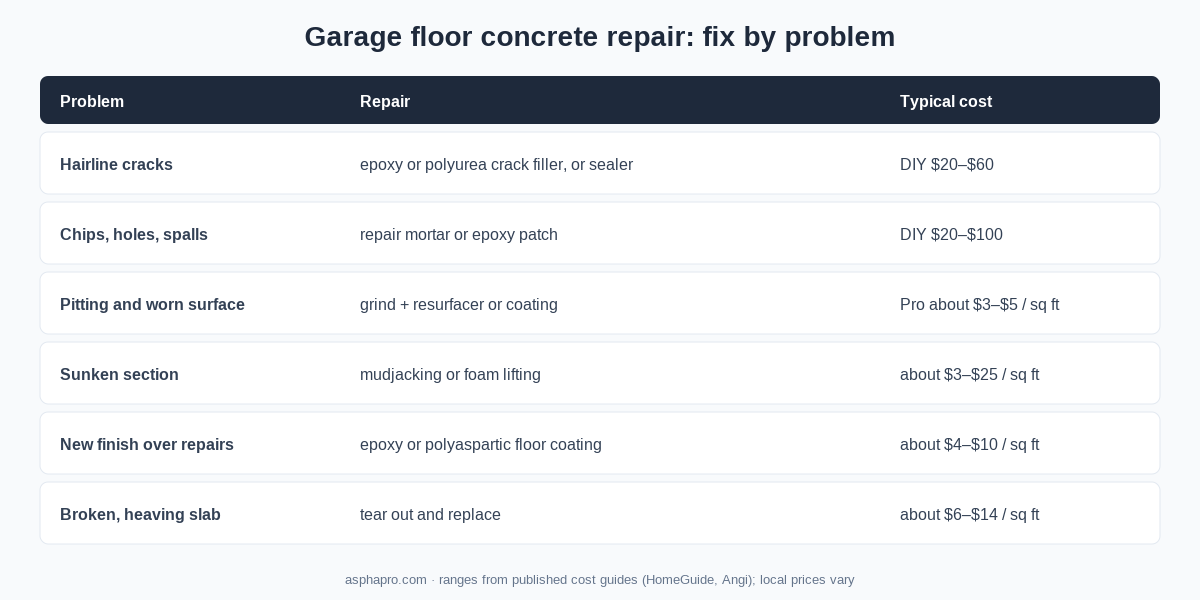
| Repair | Typical cost |
|---|---|
| DIY crack filler and patch materials | About $20 to $150 |
| Floor grinder rental | Often about $100 to $250 per day, plus tooling |
| Professional crack repair and patching | Often a few hundred dollars per visit |
| Professional resurfacing | About $3 to $5 per square foot |
| Epoxy or polyaspartic coating installed | About $4 to $10 per square foot |
| Mudjacking a sunken section | About $3 to $6 per square foot |
| Replacing a garage slab | About $6 to $14 per square foot including removal |
For a typical two-car garage of about 400 to 500 square feet, professional resurfacing runs roughly $1,200 to $2,500 and a coating roughly $1,600 to $5,000. These ranges come from published cost guides and match our concrete repair cost and coating guides.
Repair or Replace a Garage Floor?
Repair is the right call when the slab is mostly level and in one piece. Consider replacement when:
- The floor is broken into many pieces or heaving.
- Large areas sound hollow or crumble.
- The slope is wrong and water runs toward the house.
- You need a thicker slab for a lift, heavy equipment or a workshop.
Replacement means removing the old slab, fixing the base, and pouring new concrete, often with a vapor barrier. It also gives you the chance to add a floor drain, correct the slope toward the door, and pour a thicker slab where you will park heavy vehicles or install a lift. Plan on the garage being out of use for a week or more while the new slab cures, and longer before heavy vehicles go on it. See concrete slab cost and concrete removal cost.
Cement Floor Repair Products Compared
The garage floor aisle at a home center holds dozens of products. Here is how the main cement floor repair products compare for a concrete garage floor:
| Product | Use it for | Garage floor notes |
|---|---|---|
| Polyurea or epoxy crack filler | Cracks before a coating | Fast, grindable, part of most coating systems |
| Polyurethane self-leveling sealant | Moving cracks and the door joint | Flexible; not for areas that will be coated over |
| Polymer-modified repair mortar | Spalls, holes, threshold edges | Cement-based; cure before coating |
| Epoxy patch or epoxy mortar | Holes and gouges under heavy wear | Strong and fast; needs a dry floor |
| Concrete resurfacer | Pitted, scaled, worn garage floors | Gives a new surface; seal or coat later |
| Densifier | Dusting floors | Hardens the surface; no film |
Garage Floor Concrete Repair Checklist
Use this list to make sure a garage floor concrete repair is done in the right order, whether you do it yourself or hire someone:
- Find the cause of each problem: settling, water, salt, oil or impact.
- Fix water problems first: gutters, downspouts, driveway slope and the joint at the door.
- Lift or replace any sunken section before patching or coating.
- Degrease oil and remove peeling paint and coatings.
- Test for moisture coming up through the slab.
- Grind or clean the surface so repairs bond.
- Fill cracks with the right product for movement and finish.
- Patch chips, holes and the threshold with a traffic-rated repair product.
- Resurface or coat if the whole concrete garage floor is pitted or worn.
- Seal or protect the finished floor, and rinse salt off in winter.
Following this order is the difference between a cement garage floor repair that lasts many years and one that has to be redone next spring. Skipping straight to paint or a coating without fixing the floor underneath is the most common and most expensive mistake.
Repair Concrete Floor Problems Inside the House
The same methods apply to basement and slab-on-grade floors inside a home, with two differences. First, moisture matters more, because flooring, carpet and wood will trap it and grow mold; test before you cover a repaired floor. Second, flatness matters more, because tile and vinyl show every bump. For floor concrete repair indoors, use a floor patch or self-leveling underlayment designed for the flooring you plan, and follow the flooring maker's flatness and moisture limits.
Common Mistakes in Cement Garage Floor Repair
- Patching over oil. Oil keeps patches and coatings from sticking. Degrease first.
- Skipping the moisture test before epoxy repairs or coatings.
- Using rigid filler in moving cracks at the front of the slab.
- Painting over a damaged floor with one-part garage paint; it peels under hot tires.
- Working in the cold. Most patches and coatings need the slab above about 50°F.
- Ignoring drainage. A sunken threshold will sink again if water keeps soaking the base.
How to Keep a Concrete Garage Floor in Good Shape
- Rinse salty slush out of the garage during winter thaws, or use containment mats under the car.
- Clean oil drips promptly with an absorbent and degreaser.
- Seal bare concrete with a penetrating sealer every few years, or protect it with a coating.
- Use plywood or pads under jack stands and heavy equipment.
- Walk the floor once a year and handle small cracks and chips right away; a small garage floor concrete repair today prevents a big one later.
- Keep a spare tube of crack filler and a small bag of repair mortar on the shelf for quick fixes.
- Seal the joint at the garage door and keep water away from the front of the slab.
Frequently Asked Questions
How do you repair a concrete garage floor?
Clean and degrease the floor, fill cracks with a crack filler or sealant, patch chips and holes with repair mortar or epoxy patch, and resurface or coat the floor if the surface is pitted or worn. Lift or replace sunken sections.
What is the best garage floor cement repair product?
For holes and spalls, a polymer-modified repair mortar or an epoxy patch. For cracks, an epoxy or polyurea crack filler if stable, or a flexible polyurethane sealant if they move.
Can you resurface a garage floor?
Yes. After cleaning and patching, a thin cement-based resurfacer gives a new surface. Pros typically charge about $3 to $5 per square foot.
How much does concrete garage floor repair cost?
DIY repairs usually cost $20 to $150 in materials. Professional patching often costs a few hundred dollars, resurfacing about $3 to $5 per square foot, and replacement about $6 to $14 per square foot.
Should I repair cracks before epoxy coating a garage floor?
Yes. Fill cracks and holes with a compatible filler, grind them flush, and grind the whole floor before coating.
How do I repair concrete floor pitting from road salt?
Clean and grind the floor, fill deep pits, then resurface or coat it. Rinse salt off regularly afterward or use containment mats.
Sources
- HomeGuide: Garage Floor Coating Cost
- HomeGuide: Concrete Resurfacing Cost
- HomeGuide: Mudjacking Cost
- Angi: What You Need to Know About Concrete Repair
- U.S. General Services Administration: Types of Cracks in Concrete and Typical Causes
Related Guides
- How to resurface concrete — products, steps and fixing surface cracking
- Concrete expansion joint guide — filler, caulk and where joints go
- Post tension concrete slab guide — how tendons work, cost and drilling safety
- Concrete moisture barrier guide — vapour barriers under slabs and on floors
- Concrete dust — silica risks, safe exposure and dusting slabs
- Concrete trowel — trowel finishes and technique
- Concrete grinding — floor grinders, discs, scarifiers and how-to
- Concrete etching — acid washing and etching safely
- Concrete floors in homes — pros, cons, finishes and costs indoors
- Concrete ramp — slope rules, design and cost
- How to wash cement floor — best way to clean concrete floors
- Concrete parking blocks — wheel stops: sizes and installation
- How to remove concrete anchors — wedge, sleeve, screw and epoxy anchors
- Concrete bolts — expansion, lag and anchor bolt sizes
- Epoxy for concrete — floor coatings, garages and outdoors
- Concrete trench drain — channel drains, grates, install and cost
- Concrete primer — types, prep and application
- Concrete catch basin — storm inlets, sizes and install
- Heated concrete floor — hydronic and electric floor heating
- Concrete densifier — silicate hardeners for floors
- Concrete floor coverings — flooring options over slabs
- Concrete slab leak repair — signs, detection and repair options under slabs
- Concrete polisher — planetary grinders, hand polishers, pads and rental prices
- Concrete disposal — concrete dumpster rental, recycling yards, landfill fees and washout