
Concrete Tools: The Pouring and Finishing Tools You Need, Step by Step
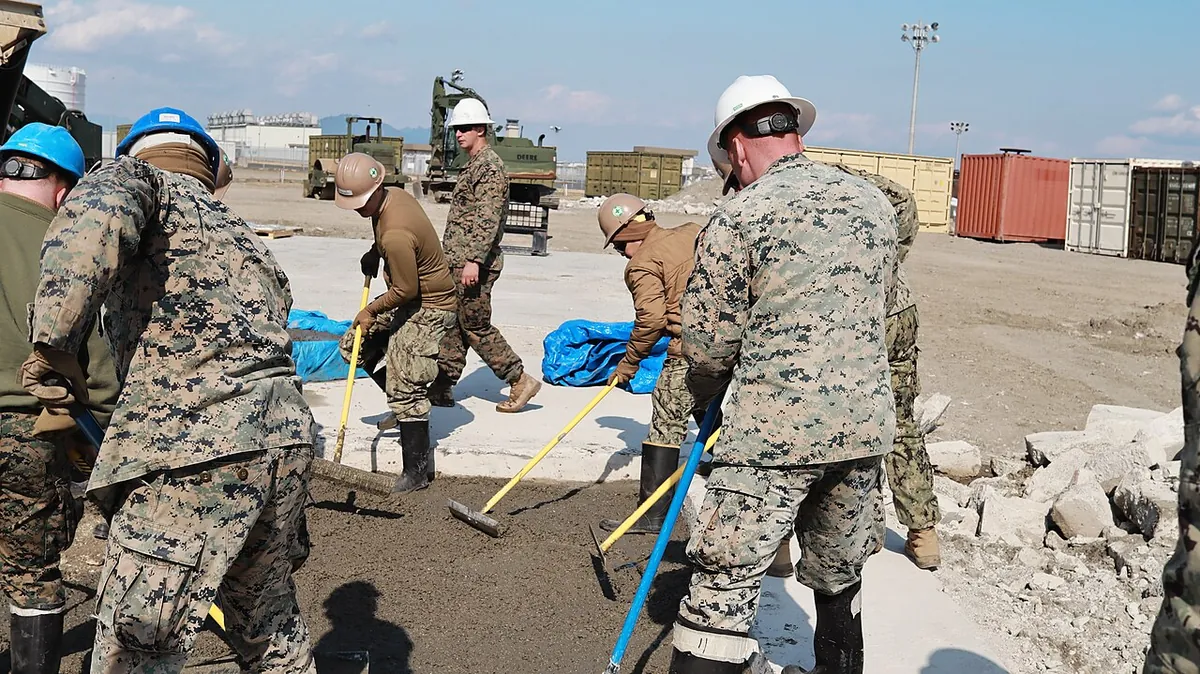
Photo: U.S. Navy, Seaman Juan Paolo Nacpil, Wikimedia Commons, public domain
Quick Answer
The basic concrete tools for a slab, walk or driveway are: concrete pouring tools to move and spread the concrete (wheelbarrow or concrete buggy, square shovel, concrete rake or concrete come along, and a vibrator for thick work); a screed to strike it off; a bull float and hand floats to level it; a concrete edger to round the edges and a concrete groover to cut control joints; trowels or a power trowel for smooth finishes; and a concrete broom for a non-slip broomed concrete surface. A starter set of hand concrete finishing tools costs roughly $150 to $400; larger and powered tools such as power trowels and power buggies are usually rented.
Concrete is unforgiving. Once the truck arrives, you have a few hours at most to place, level and finish the slab, and every step needs the right tool in the right hands at the right moment. Having the correct concrete tools ready before the pour is as important as ordering the right mix. A missing edger or a bull float that is too short can turn a good slab into one with ragged edges, low spots and random cracks.
This guide walks through the concrete tools used on a typical flatwork job in the order they are used: pouring and spreading, screeding, floating, edging and jointing, troweling, brooming and decorative finishing, plus curing and safety gear. It also covers what to buy versus rent, typical costs, and how to clean and care for your tools.
Concrete Pouring Tools
Concrete pouring tools move the concrete from the truck to the forms and spread it roughly to height. On small jobs this is mostly muscle; on large ones it is pumps and power equipment.
Wheelbarrow
A heavy-duty contractor wheelbarrow, 6 cubic feet or larger with a pneumatic tire, is the simplest way to move concrete where the truck chute cannot reach. A 6 cubic foot wheelbarrow holds about a fifth of a cubic yard, but most people can only push about half to two thirds of that safely when it is full of wet concrete, which weighs around 150 pounds per cubic foot. Plan for many trips and lay down plywood runways over soft ground.
Concrete Buggy
A concrete buggy is a large two-wheeled or motorized cart for moving concrete faster than a wheelbarrow. Manual buggies hold around 6 to 10 cubic feet and balance better than wheelbarrows. Power buggies are walk-behind or ride-on machines with a dumping hopper, carrying around half a cubic yard or more per trip, with tracks or wheels for rough ground. A power concrete buggy is worth renting when the truck cannot get close and there is too much concrete for wheelbarrows but not enough to justify a pump. Rental rates are usually charged by the day.
Square Shovel
A flat, square-point shovel moves concrete into corners and along forms and fills low spots. Avoid using pointed shovels, which do not push concrete well.
Concrete Rake and Concrete Come Along
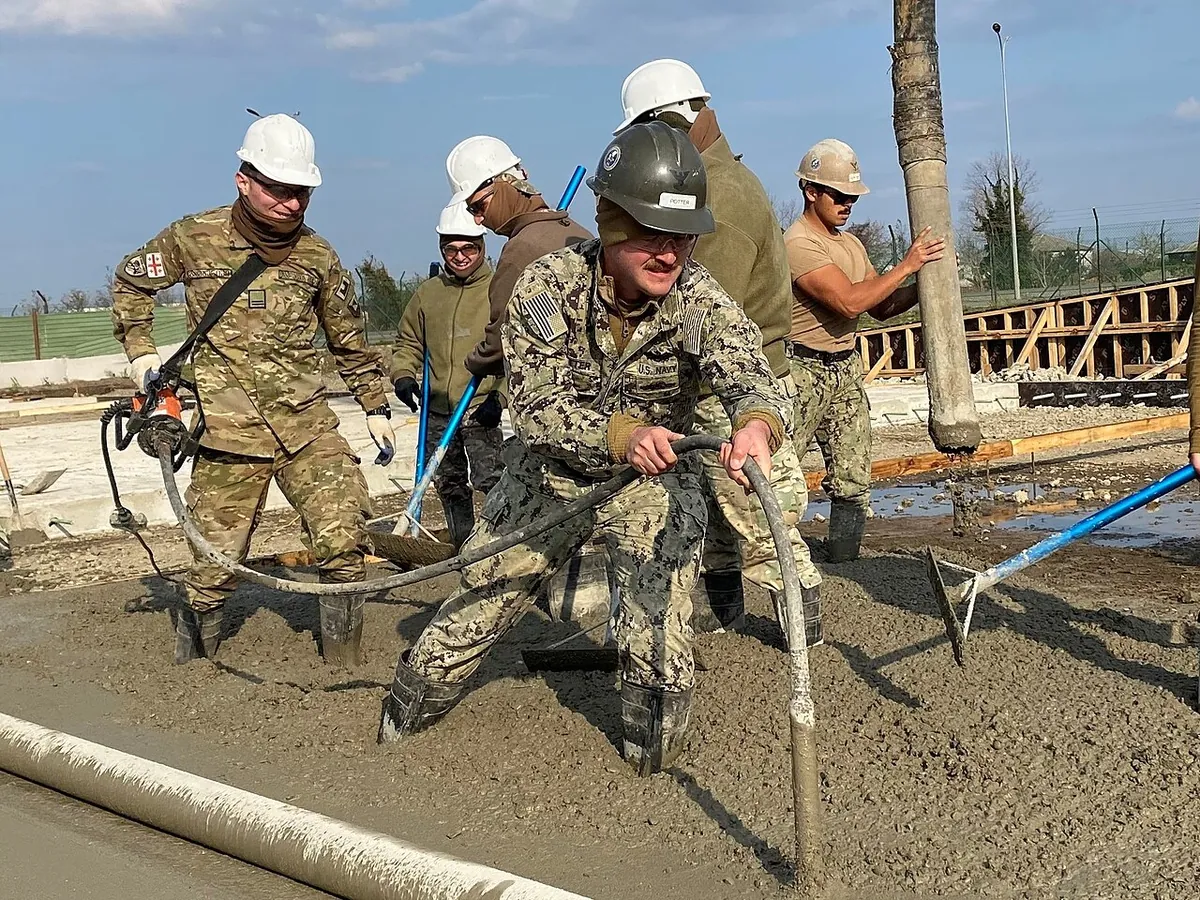
Photo: U.S. Navy, Wikimedia Commons, public domain
A concrete rake has a wide, flat blade, often with a hook or teeth on the back edge, attached to a long handle. A concrete come along, also called a placer or spreader, has a solid blade like a hoe with a straight edge. Both are used to pull and push concrete into place and level it roughly before screeding. Concrete rakes with teeth on one side are also used to pull wire mesh up into the middle of the slab during placement. Do not use a garden rake; the tines separate the stones from the paste.
Concrete Vibrator
For walls, footings, thick slabs and anything with dense rebar, an internal vibrator, a vibrating head on a flexible shaft, removes trapped air and helps concrete flow around reinforcement. It is rarely needed for 4 inch slabs on grade but is essential for structural work. See honeycombing in concrete for what happens without it.
Other Pouring Equipment
Chute extensions let a ready-mix truck reach further into the forms, saving a lot of wheelbarrow work. A line pump or boom pump places concrete where trucks cannot reach at all; see concrete cement mixers for mixers and trucks. Rubber boots, gloves and knee boards round out the basic concrete pouring tools. Moving concrete by buggy, concrete placement goes much faster than by wheelbarrow, so on a mid-size job a single rented power buggy can keep up with one truck and save the crew's backs for finishing.
Screeding Tools
Screeding, or striking off, levels the concrete to the top of the forms or to grade stakes. It is the first of the concrete finishing tools to touch the surface.
Hand screed: a straight, rigid board or aluminum straightedge, usually 6 to 16 feet long, pulled across the forms in a sawing motion by one or two people. Aluminum screeds are lighter and stay straight; a straight 2x4 works on small jobs.
Vibrating or power screed: a screed blade with a small engine that vibrates it, making striking off faster and helping consolidate the surface. Popular on driveways and larger slabs.
Wet screed and laser screed: on large commercial floors, a laser-guided screed machine levels concrete to very tight tolerances. Smaller jobs use wet screeds, strips of concrete placed to grade as guides.
Floats: Bull Float, Darby and Hand Floats
Floats level ridges and low spots left by screeding, press stones below the surface, and bring up a little cement paste for finishing. They are the core concrete finishing tools for every slab.
Bull float: a wide, flat float, usually 36 to 48 inches long, on a long handle made of connecting sections so it can reach the middle of the slab. It is pushed away with the leading edge slightly raised, then pulled back. Magnesium bull floats are standard for air-entrained concrete because they do not tear the surface; wood bull floats open the surface on non-air-entrained mixes. See concrete flatwork for when floating happens in the sequence.
Darby: a shorter, hand-held float about 3 to 4 feet long for smaller areas, steps and areas the bull float cannot reach.
Hand floats: small rectangular floats, magnesium or wood, about 12 to 18 inches long, used while kneeling on knee boards to float edges, corners and the whole surface of small slabs after the bleed water has gone.
Channel float and check rod: a channel float is a stiffer, wider float for flattening; a check rod or highway straightedge is pulled across the surface to find and cut down high spots and fill lows on flatness-critical floors.
Fresno trowel: a large steel trowel on a long handle, used after the bull float to smooth the surface on driveways and walks without kneeling on the slab. It gives a smoother surface before brooming.
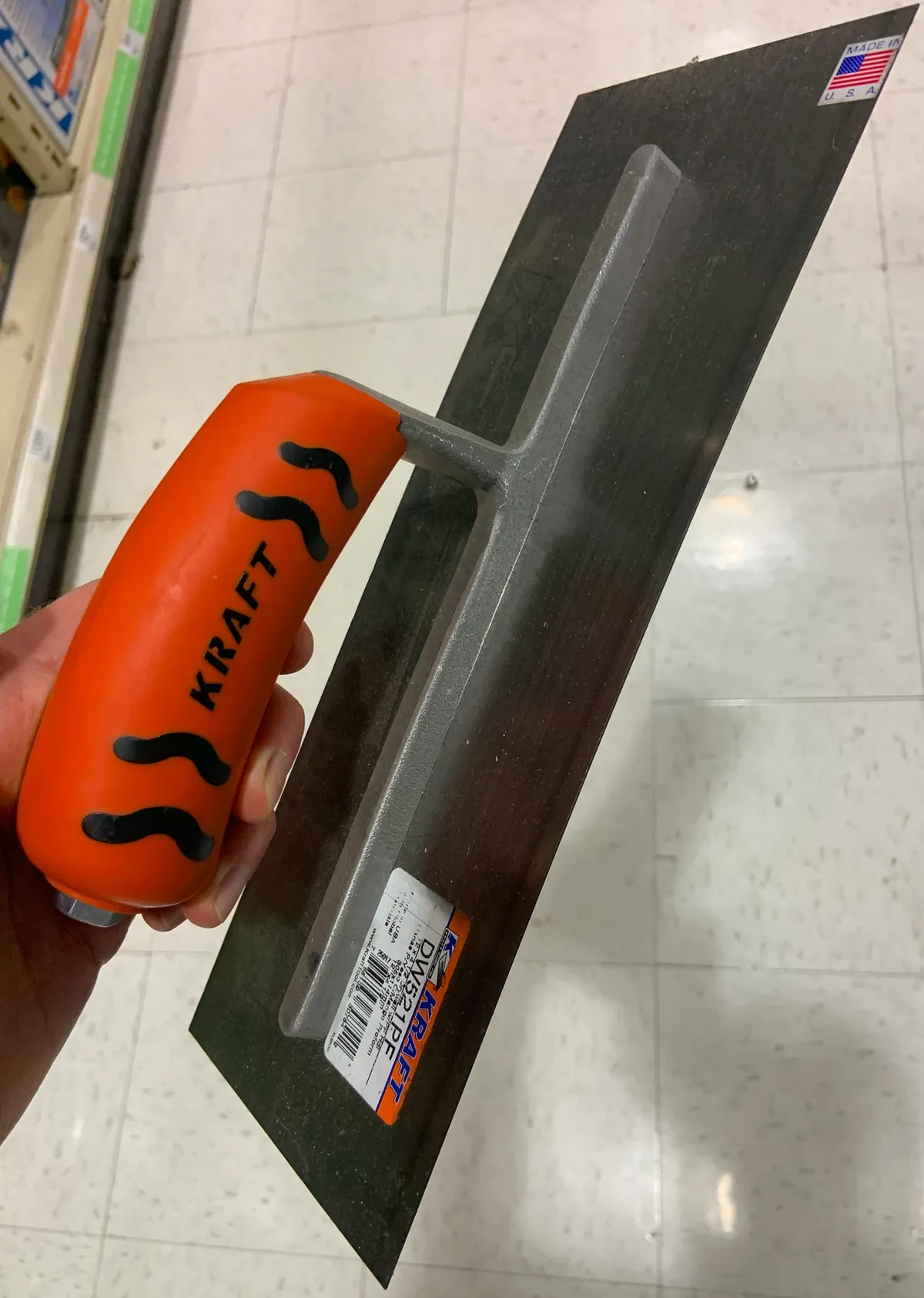
Photo: Wikideas1, Wikimedia Commons, CC0
Concrete Edger and Edging Tools
A concrete edger is a small steel or stainless hand tool with a flat bottom and a curved lip on one side. Run along the inside of the form, it rounds the edge of the slab into a smooth radius. Rounded edges resist chipping and spalling far better than sharp ones and give the finished slab a neat look. Concrete edgers come in several radius sizes, commonly 1/8, 1/4, 3/8 and 1/2 inch, and in lengths of about 6 to 10 inches. A 3/8 inch radius is a common choice for sidewalks and driveways.
Other concrete edging tools include walking edgers on long handles, which let you edge without kneeling, and step edgers or inside-corner edgers for steps and curbs. Edging is done after floating, once the bleed water is gone, and repeated after troweling or before brooming for a crisp line. A good concrete edging tool has a slightly upturned toe and heel so it does not dig in. Stainless steel concrete edgers cost more but do not rust and are easier to clean, which is why many finishers prefer them.
Concrete Groover
A concrete groover cuts control joints into the fresh slab so that shrinkage cracks form along straight lines instead of randomly. It looks like an edger with a blade, or bit, along the center of the bottom. The bit depth determines the joint depth, which should be at least one quarter of the slab thickness: 1 inch for a 4 inch slab, 1.5 inches for a 6 inch slab. Concrete groovers come in hand versions and walking versions with long handles, and with different bit widths and depths. Use a straight board as a guide to keep the joint straight.
For larger slabs, or where hand-tooled joints are not wanted, joints are sawed instead. Early-entry saws cut joints within a few hours of finishing, and conventional saws cut them within 6 to 18 hours. Concrete groovers are the right tool for walks, patios and driveways where joints are close and finishers want a rounded, tooled look. See control joints in concrete and concrete saw.
Trowels and Power Trowels
Steel finishing trowel: a flat steel blade, about 12 to 20 inches long, with a handle on top. Used after floating to compact and smooth the surface into a hard, dense finish. Several passes with the trowel, each with the blade tilted slightly more, produce a smooth or burnished surface for interior floors. Blue steel, stainless and pool trowels with rounded ends are common.
Margin and pointing trowels: small trowels for tight spots, corners and patching.
Power trowel: a machine with rotating steel blades, either walk-behind (24 to 46 inch diameter) or ride-on, used for large interior slabs and garage floors. It first runs with float pans to float the surface, then with blades for troweling. Power trowels are among the most common concrete finishing tools to rent, because they are expensive to own and used only on the day of the pour.
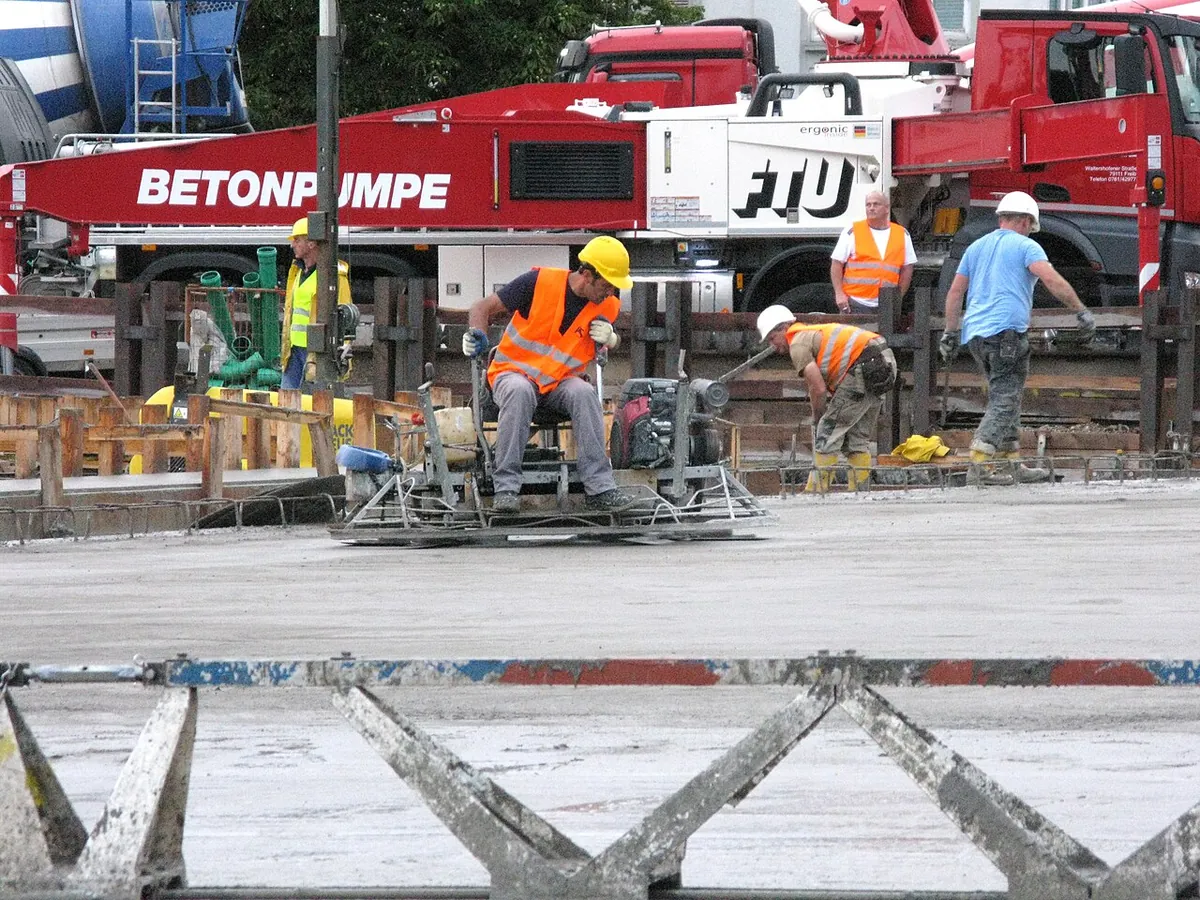
Photo: Andreas Schwarzkopf, Wikimedia Commons, CC BY-SA 3.0
Concrete Broom and Broomed Concrete
A concrete broom is a wide finishing broom, typically 24 to 48 inches, on a long handle with an adjustable bracket so the head can be tilted. Pulling it across the troweled surface leaves fine ridges that give traction, which is why broomed concrete is the standard finish for driveways, sidewalks, patios, ramps and pool decks. Bristle type controls the texture: soft horsehair or fine nylon brooms give a light texture, and stiffer poly or nylon brooms give a coarse texture for ramps and steep driveways.
For a uniform broomed concrete finish, pull the broom in one direction, usually across the direction of traffic or across the slope so water drains off, in straight, slightly overlapping passes from one side of the slab to the other. Rinse the bristles often so paste does not build up. Timing matters: too early and the broom tears the surface; too late and it barely marks it. See types of concrete finishes.
Decorative Concrete Tools
Stamped and textured concrete needs its own set of concrete tools: stamp mats in patterns such as slate, ashlar, brick or wood plank; flexible texture skins for edges; tampers to press the mats in; color hardener and release agent; and hand chisels for touch-ups. Exposed aggregate finishes use surface retarders, sprayers, stiff brooms and hoses or pressure washers. Most decorative tools are rented or owned by specialist contractors. See stamped concrete vs pavers and how to color concrete.
Curing and Safety Gear
After finishing, a pump sprayer applies curing compound, or the slab is covered with plastic sheeting or curing blankets. See concrete curing compound and concrete blankets. Personal gear belongs on every list of tools for concrete work: waterproof gloves, rubber boots, safety glasses, knee pads and knee boards, and long sleeves, because wet concrete is alkaline and can burn skin. See can concrete burn.
The Order Concrete Tools Are Used
On a typical broom-finished slab, the concrete tools come out in this order: wheelbarrow or buggy and shovel to move concrete; concrete rake or come along to spread it; screed to strike it off; bull float right after screeding; then a pause for bleed water to evaporate; edger along the forms; groover for control joints; hand float; fresno or steel trowel; edger and groover again to clean up the lines; concrete broom for texture; and finally the sprayer or plastic for curing. Interior floors skip the broom and get more trowel passes. Having all the tools laid out in that order before the truck arrives keeps the pour calm and on schedule.
Building a Concrete Finisher Tool Kit
Professional finishers build their kits over years, but the core is the same everywhere. Every concrete finisher tool bag holds a magnesium hand float, two or three steel trowels of different sizes, a concrete edger, a concrete groover, a margin trowel, knee boards, a sponge and a bucket. On the truck are the long-handled concrete tools: bull float with extra handle sections, fresno, concrete broom, two or three concrete come alongs or concrete rakes, screeds of several lengths, and a walking edger and groover. Add a power trowel and a power screed for bigger work, and you have most of what a flatwork crew uses day to day.
If you are buying your first set, start with the tools you cannot improvise. A good concrete finishing tool such as a magnesium float or a stainless edger lasts for years, while cheap versions bend, rust or leave marks. A concrete tool with a comfortable, solid handle matters more than it seems, because you will hold it for hours while kneeling on a board. Look for floats and trowels with handles that are riveted or bolted firmly, blades that are flat and straight, and edges that are slightly rounded so they do not dig in.
Matching the Tool to the Finish
The right tool for concrete finish texture depends on where the slab is and how it will be used. For outdoor walks, driveways and patios, the sequence ends with a broom, so you need floats, an edger, a groover and a concrete broom, but not a full set of steel trowels. For garage floors and interior slabs, the sequence ends with steel troweling, so trowels or a power trowel matter more. For decorative work, stamps, texture skins and color tools are added. Choosing concrete finish tools to match the job keeps you from buying tools you will never use.
Learning how to finish concrete: tools matter less than timing, but bad tools make good timing harder. A bull float that is too short leaves ridges in the middle of the slab; a steel trowel used too early on outdoor concrete seals in bleed water and leads to scaling; a worn edger leaves a ragged line. Professionals often say the finish is decided by when each concrete tool touches the surface, so watch the slab, not the clock.
Specialty Concrete Tools
A few more concrete tools are worth knowing about. Step tools include inside and outside step edgers for clean corners on stairs; see how to pour concrete steps. Jointers and slickers are used on mortar joints for block and brick. Hand tampers and jitterbugs push stones below the surface on stiff mixes, though most finishers now prefer not to use jitterbugs on air-entrained concrete. Magnesium and aluminum straightedges check flatness. Form stakes, form pins and string lines are setup tools rather than finishing tools, but every crew carries them; see how to build concrete forms. For cutting and drilling hardened concrete, saws, core drills and hammer drills are a separate category; see how to cut concrete and concrete drill bit.
Common Mistakes With Concrete Finishing Tools
The most common mistakes are using the wrong concrete finishing tools for the mix and using them at the wrong time. Using a steel trowel or a power trowel on outdoor air-entrained concrete closes the surface and traps air and water just below it, which leads to blisters, delamination and scaling. Starting to float or trowel while bleed water is still on the surface works water into the top layer and weakens it. Overworking the surface with floats and trowels brings up too much fine paste. Skipping the edger leaves sharp edges that chip. Running a groover too shallow, less than a quarter of the slab depth, lets the slab crack beside the joint instead of in it. And leaving concrete to harden on tools ruins them quickly. Avoid these, and even a basic set of concrete tools will give a good result.
Concrete Tools for Small DIY Jobs
Not every project needs a full set. For setting fence posts or a mailbox post with bagged concrete, you need little more than a post hole digger, a shovel, a level, a bucket and a margin trowel to slope the top. For a small pad, such as a 4 by 4 foot base for an air conditioner or a few stepping stones, a wheelbarrow, a hoe, a short screed board, a magnesium hand float, a small edger and a trowel are enough. Once you move up to a patio or walk of more than about 50 square feet, a bull float, a groover, a concrete broom and a concrete rake become worth having, because hand floating a large area from the edges is slow and tiring.
Kits sold at home centers often bundle a hand float, edger, groover and trowel together at a discount, which suits a first project. Check that the edger and groover in the kit match your slab: the groover bit should be deep enough for your slab thickness. See how to mix concrete, concrete fence posts and how to make concrete stepping stones for small project guides.
One last tip for any size of job: lay out every one of your concrete tools on a tarp near the forms before the truck is due, with handles assembled and a bucket of water ready for rinsing. Count heads too. Two people can handle a small pad, but a driveway needs at least four: one on the chute or buggy, one or two with rakes, and one ready with the screed and bull float.
Buy or Rent? Costs of Concrete Tools
For a homeowner doing one or two small projects, a basic set of hand concrete finishing tools is affordable. Typical price ranges at home centers and masonry suppliers are:
- Concrete edger or concrete groover: about $10 to $40 each; stainless versions cost more.
- Magnesium hand float: about $15 to $40.
- Steel finishing trowel: about $15 to $60.
- Bull float with handles: about $80 to $250.
- Concrete broom with handle: about $40 to $120.
- Concrete rake or come along: about $40 to $100.
- Aluminum screed: about $40 to $150 depending on length.
- Knee boards: about $30 to $70 a pair.
Powered concrete tools are better rented: power trowels, power buggies, vibrating screeds, concrete vibrators and saws are usually available by the day from rental stores. Many rental stores also rent bull floats and fresnos. For a single small patio, renting the large items and buying the small hand tools is usually the cheapest approach. Contractors buy everything, often in stainless or high-end versions, because the tools are used every day.
Cleaning and Caring for Concrete Tools
Clean every tool as soon as you finish with it, before concrete hardens on it. Rinse with water and scrub with a stiff brush, catching the rinse water in a bucket or lined pit rather than letting it run into drains; see concrete washout. Dry steel tools and wipe them with a little oil to prevent rust. If concrete has hardened on a tool, soak it in a concrete dissolver or tap it off carefully; see concrete dissolver. Store floats and trowels flat or hanging so the blades stay straight, and keep bull float handles together so you are not hunting for sections on pour day.
Frequently Asked Questions
What tools do you need to pour concrete?
At minimum: a wheelbarrow, square shovel, concrete rake or come along, screed board, bull float or darby, hand float, edger, groover, trowel and broom, plus gloves, boots and eye protection.
What is a concrete come along?
A come along is a placing tool with a flat, straight-edged blade on a long handle, used to push and pull concrete into place before screeding.
What size concrete edger should I use?
A 3/8 inch radius edger is a common choice for walks and driveways; smaller radii give a sharper look and larger ones resist chipping best.
When do you broom concrete?
After floating and troweling, when the surface is firm enough that the broom leaves clean marks without tearing out paste or stones.
Sources
- American Concrete Institute: ACI 302.1R guide to concrete floor and slab construction (finishing tools and sequence)
- Portland Cement Association: finishing concrete flatwork
- National Ready Mixed Concrete Association: Concrete in Practice series on finishing and joints
- OSHA: silica and concrete cutting tools
Related Guides
- Concrete washout — handling rinse water from trucks and tools
- Concrete flatwork — what flatwork is and how it is built
- Bull float concrete — when and how to use a concrete bull float
- Concrete trowel — trowel finishes and technique
- Concrete screed — hand, power and laser screeds
- Concrete vibrator — consolidating walls, footings and columns
- Concrete pump truck cost — boom and line pump prices
- Concrete mixer rental cost — mixer and buggy rental prices
- Stamped concrete patterns — slate, flagstone, brick, cobble and wood
- How to pour a concrete patio — DIY steps, calculator and cost
- Concrete nailer — powder, gas and battery tools
- Brushed concrete — broom finish and concrete brushes
- Concrete stakes — wood and steel form stakes
- Concrete chisel — hand and SDS chisels
- How to smooth concrete — troweling and smoothing hardened concrete
- Rock salt finish concrete — pitted decorative finish for pool decks and patios
- World of Concrete — the industry's annual trade show in Las Vegas
- Concrete worker — job duties, pay, training, safety and career path
- Concrete machines — mixers, placer booms, screeds, trowels, sprayers, saws and scrubbers
- Concrete slide — hillside and playground slides, plus concrete sliders (knee boards)