
Concrete Etching: What It Is and How to Acid Etch Concrete the Right Way
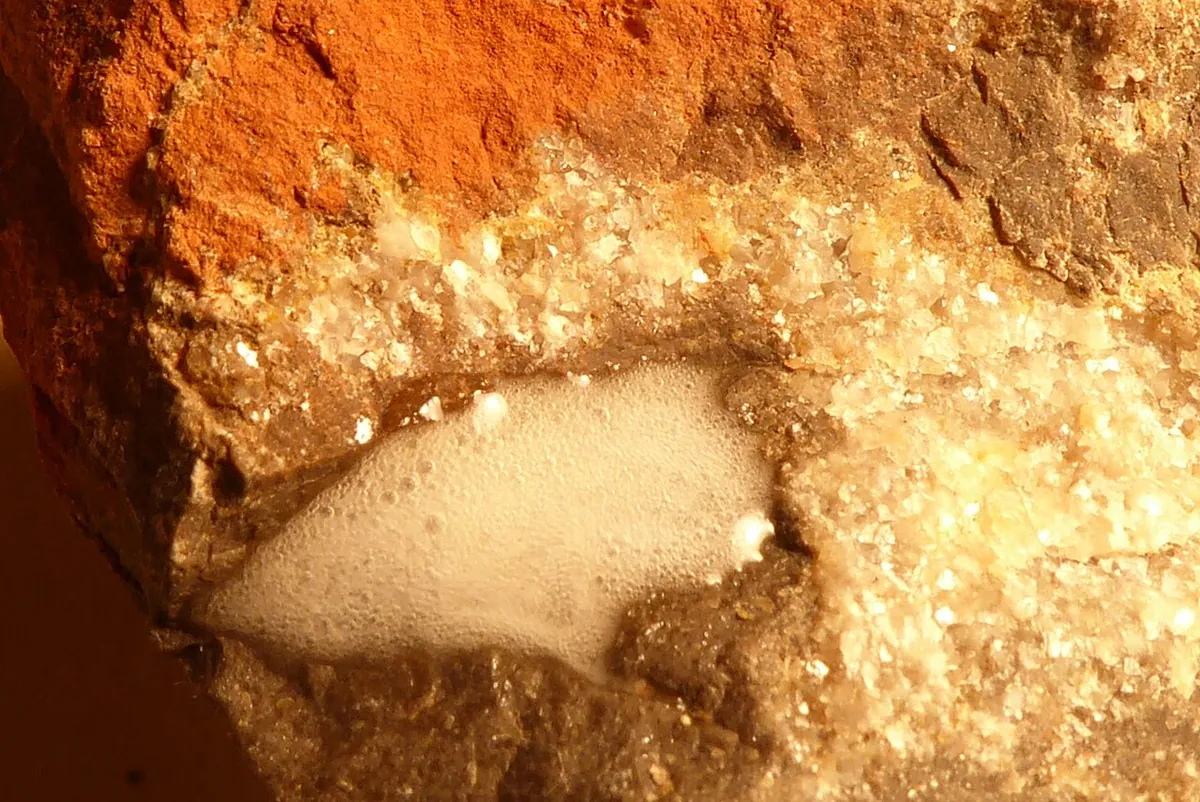
Photo: Rhetos, Wikimedia Commons, CC0
Quick Answer
Concrete etching means applying a diluted acid to a concrete surface to dissolve a thin layer of cement paste, open the pores and leave a slightly rough, sandpaper-like texture. It is done before sealing, staining, painting or coating so products can soak in and bond. To acid etch concrete, clean and degrease the slab, wet it, apply a diluted acid such as muriatic acid (often about 1 part acid to 10 parts water, always adding acid to water) or a safer citric, sulfamic or phosphoric etcher, scrub while it fizzes for a few minutes, then neutralize with a baking soda solution and rinse thoroughly. Wear goggles, acid-resistant gloves, boots and a respirator. Acid etching cannot remove sealers, paint or oil; for epoxy coatings, grinding is often the more reliable preparation.
If you have ever painted or coated a smooth concrete floor and watched the finish peel within months, poor surface preparation was likely the cause. Concrete, especially a slab that was troweled smooth, has a dense top layer of cement paste that coatings and stains cannot grip or penetrate well. Concrete etching removes that weak, smooth skin and opens the surface so new materials can bond. It is one of the oldest and cheapest ways to prepare concrete, and it is still widely used for garage floors, basements, patios and decorative work.
This guide explains what concrete etching does, when it is needed, the acids you can use, how to etch concrete step by step, how to neutralize and test the surface, the safety precautions that matter, common mistakes, and when mechanical preparation such as grinding is the better choice.
What Is Etching Concrete?
What is etching concrete in simple terms? Hardened concrete contains calcium compounds, mainly calcium hydroxide and calcium silicate hydrate in the cement paste, plus calcium carbonate at the surface where the paste has reacted with air. Acids react with these compounds and dissolve them, giving off bubbles of carbon dioxide where carbonate is present, as the fizzing stone in the photo above shows. In concrete etching, a diluted acid spread on a slab eats away a thin layer of paste, exposing fine sand grains and opening the capillary pores. The result is a surface with a texture often compared to medium-grit sandpaper.
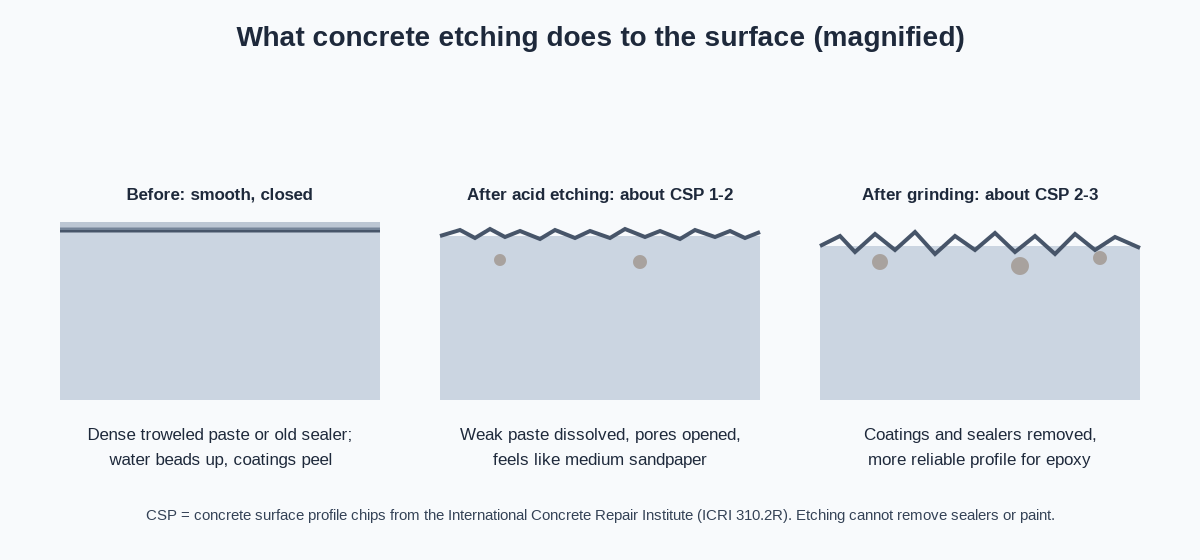
Contractors describe surface roughness using the International Concrete Repair Institute's concrete surface profile scale, from CSP 1, nearly flat, to CSP 10, very rough. Acid etching concrete typically produces about CSP 1 to 2, enough for penetrating sealers, stains, thin paints and some thin coatings. Thicker coatings and overlays usually need CSP 2 to 5, which requires grinding, shot blasting or scarifying. See concrete grinding.
When Do You Need to Etch Concrete?
You need to etch concrete when a smooth, dense or chalky surface would prevent a new product from penetrating or bonding. Common cases are before applying a penetrating or film-forming sealer to a smooth troweled slab; before acid staining or water-based staining, so the stain soaks in evenly; before painting concrete with floor paint; before thin coatings such as one-part epoxy kits for garages, if the manufacturer allows etching; and to clean and brighten old concrete, remove light efflorescence, or remove cement haze from new pavers or brick. Many products state on the label whether etching is required or whether grinding is preferred. Follow the label.
A simple test tells you whether a slab needs concrete etching. Sprinkle water on the surface. If it soaks in and darkens the concrete within a minute or two, the surface is open enough for most sealers and stains. If the water beads up or sits on top, the surface is too dense or has a sealer on it, and needs etching or, if it is sealed, mechanical removal.
Acids Used to Wash Concrete
Photo: Danny S., Wikimedia Commons, CC BY-SA 3.0
Several acids are used to wash concrete, and they differ in strength, safety and side effects.
Muriatic acid is a commercial grade of hydrochloric acid, usually about 31 percent strength, sold at hardware and pool stores. Using muriatic acid, concrete etches quickly and cheaply, and it has long been the standard for acid washing. It is also the most hazardous: it gives off corrosive fumes, burns skin and eyes, damages metals and plants, and leaves chloride residues that must be rinsed away thoroughly, especially near reinforcing steel. Typical dilutions for muriatic acid on concrete range from about 1 part acid to 10 parts water for normal etching, up to 1 to 4 for very dense surfaces, always following the product label. Always add acid to water, never water to acid.
Phosphoric acid etchers, common in commercial concrete and masonry cleaners, are milder, produce fewer fumes and are often sold premixed as etching solutions for garage floors. Sulfamic acid comes as a dry powder that is mixed with water; it is safer to store and handle, produces little fume, and is popular for cleaning and light etching. Citric acid based etchers are the gentlest and most environmentally friendly option, sold in kits for DIY floor coatings; they etch more slowly and lightly, which is often enough for paints and sealers.
For most homeowners, a premixed or powdered safer acid to wash concrete is the better starting point; use muriatic acid only if the safer products do not open the surface enough, and only with full protective equipment and good ventilation.
How to Etch Concrete, Step by Step
Here is how to etch concrete with an acid etcher on a garage or basement floor, or an outdoor slab.
First, check the surface. Make sure there is no existing sealer, paint or coating; acid will not etch through them. Do the water drop test. Look for oil and grease stains. Fix cracks and holes after etching, using materials compatible with your final coating.
Second, clean and degrease. Sweep and vacuum the floor, then scrub with a concrete degreaser, especially where cars park, and rinse well. Acid will not penetrate oil, and oily spots will leave patchy etching and coating failures. See how to remove oil stains from concrete and how to clean concrete.
Third, protect the area and yourself. Move vehicles, tools and anything metal. Cover nearby metal, plants and wood. Open garage doors and windows and use fans for ventilation. Put on chemical splash goggles, acid-resistant gloves, rubber boots, long sleeves and a respirator with acid gas cartridges if using muriatic acid.
Fourth, pre-wet the concrete. Hose or mop the floor so it is evenly damp with no standing puddles. A wet surface spreads the acid evenly and slows it down for a more uniform etch.
Fifth, mix and apply the acid. In a plastic watering can or sprayer, add the acid to the measured water as the label directs. Apply evenly to a manageable section, about 10 by 10 feet, and scrub immediately with a stiff, acid-resistant broom or floor brush to spread it and work it into the surface. You should see fizzing; let it work for a few minutes, keeping the surface wet, as directed on the label. Do not let it dry on the surface.
Sixth, neutralize. While the surface is still wet, apply a neutralizing solution, commonly about 1 cup of baking soda per gallon of water, or a commercial neutralizer, and scrub again. This stops the reaction and neutralizes acid residues.
Seventh, rinse thoroughly. Rinse the floor several times with plenty of water, scrubbing and squeegeeing or wet-vacuuming up the residue each time. Residue left behind can interfere with coatings or leave a white powder.
Eighth, test and dry. Check the surface with pH paper or strips on the wet floor; it should read close to neutral, around 6 to 9 depending on the coating maker's requirements. Run your hand over it: it should feel like medium sandpaper. Repeat the water test; water should soak in quickly. Let the floor dry completely, often 24 hours or more, and test for moisture before coating.
How to Acid Wash Concrete Floors
The phrase acid wash concrete floor is used for two related jobs: etching to prepare a floor, as described above, and acid washing to clean it, for example to remove efflorescence, rust stains, mortar smears or a dull haze. The method is similar to concrete etching, but cleaning usually uses milder acid, shorter contact time, and focuses on the stained areas. Acid washed concrete floors look slightly lighter and more open, with sand grains visible at the surface. For an acid wash cement floor in a basement, ventilation is especially important, and acid should never run into floor drains connected to septic systems without neutralization. See efflorescence on concrete and how to remove rust stains from concrete.
Do not confuse acid washing with acid staining. Acid stains are reactive coloring products containing metallic salts and a mild acid that react with the concrete to create mottled, permanent colors. They are applied to clean, open concrete, often after a light etching or cleaning, and produce decorative effects rather than a surface profile. See concrete staining.
Acid Etching Concrete Before Epoxy and Coatings
Many garage floor epoxy kits include a citric or phosphoric acid etcher, and for a bare, porous, clean slab, acid etching concrete can give an acceptable bond for thin coatings. But professional coating installers and many coating manufacturers prefer diamond grinding or shot blasting for epoxy and polyaspartic systems, for several reasons. Grinding gives a more uniform and deeper profile, it removes weak surface paste, old sealers, paint and contaminants that acid cannot, and it does not introduce water and acid residues that must be fully rinsed and dried. If a coating manufacturer's instructions call for a CSP 2 or 3 profile, etching alone will not meet it. If you are investing in a high-performance coating, grinding is usually worth the extra cost or rental. See concrete coating cost and concrete garage floor repair.
How Do You Etch Concrete Outdoors?
How do you etch concrete on a patio, walkway or driveway rather than an indoor floor? The steps are the same, but the setting adds a few concerns. Plants, lawn and soil next to the slab can be damaged by acid runoff, so wet them down before you start, cover delicate plants, and contain the rinse water. Never let acid wash on concrete run into storm drains, gutters, ponds or streams; neutralize it first and collect it with a wet vacuum where possible. Work in mild, overcast weather so the acid does not dry too fast in sun and wind, and avoid etching just before rain. Sloped surfaces drain acid toward the low end, so start at the low side and work up, and keep the surface evenly wet.
Outdoor slabs are often already rough from broom finishing and weathering, so they may need little or no etching before a penetrating sealer. Do the water test first; many old driveways and patios absorb water readily and need only a good cleaning. Etching is more often needed on smooth, troweled patios or on new pavers with cement haze.
Neutralizing and Testing After Etching
Neutralizing is the concrete etching step most often skipped, and skipping it causes many coating failures. Acid residue left in the pores keeps reacting with the concrete and can leave a weak, powdery surface or interfere with how sealers and coatings cure. After the etching time, scrub in a neutralizer such as baking soda in water, household ammonia diluted in water, or a commercial product, then rinse two or three times with clean water, scrubbing and removing the dirty water each time.
Test with pH paper on the wet surface after the final rinse. If the reading is still acidic, rinse again. Wipe the dry surface with a dark cloth or your hand: if a white powder comes off, residue remains, and another rinse is needed. Finally, the surface should feel uniformly rough and water should soak in quickly everywhere. Spots that still repel water may hide old sealer or oil and need mechanical cleaning.
What Acid Etched Concrete Looks Like
Properly acid etched concrete has a uniform, matte, slightly lighter color, with fine sand grains visible at the surface and a texture like medium sandpaper. It should not look pitted or show loose sand. Overetched concrete, from too strong an acid or too long a contact time, may show exposed coarse aggregate, loose grains and a weakened surface that dusts. Underetched concrete still feels smooth and may still bead water in places. Patchy etching, where some areas are rough and others smooth, usually means uneven cleaning, oil spots or an old sealer in places. Etched concrete that looks uniform and absorbs water evenly is ready for sealing, staining or painting once dry.
Safety When You Acid Wash Concrete
Concrete etching acids are dangerous, and muriatic acid in particular can cause serious burns and lung irritation. Before you acid wash concrete, put on chemical splash goggles, not just safety glasses, plus acid-resistant gloves, rubber boots, long sleeves and long pants. For muriatic acid, wear a respirator with acid gas cartridges, especially indoors, and ventilate well with open doors and fans. Keep children and pets away. Have a hose or bucket of clean water nearby to rinse skin or eyes immediately in case of splashes, and know where the nearest eyewash or shower is. Mix acid only in plastic containers, add acid to water slowly, and never mix acids with bleach or other chemicals, which can release toxic gases. Store unused acid in its original container, tightly closed, away from metals and out of reach. Read the safety data sheet for the product you use. The NIOSH pocket guide lists hydrogen chloride as an irritant with strict exposure limits for good reason.
Acid used for concrete etching also attacks metal. Cover or remove nearby metal fixtures, door tracks, car parts and tools, and rinse any metal that gets splashed, because acid fumes alone can rust steel in a closed garage.
Concrete Etch vs Grinding vs Shot Blasting
Choosing between a concrete etch and mechanical preparation depends on the job. Acid etching is cheap, needs no special machines, and works well on clean, bare, porous concrete before sealers, stains and paints. It does not remove sealers, paint, epoxy, curing compounds, oil, or weak, laitance-covered surfaces reliably, and it introduces water and residues that must be rinsed and dried. Diamond grinding removes coatings and contaminants, produces a consistent profile, and is preferred for epoxy and polyaspartic coatings, but it needs a rented grinder, tooling and dust control. Shot blasting creates a strong profile quickly on large areas and is common in commercial work. For a single garage floor coating, many experts recommend grinding; for sealing a patio, etching or simply cleaning is usually enough. See concrete grinding.
Acid Wash for Concrete Cleaning
An acid wash for concrete cleaning removes mineral deposits rather than creating a profile. Typical uses include removing efflorescence, the white salt deposits that appear on walls and slabs; removing mortar and grout smears after brick, block or tile work; brightening old, dull exposed aggregate surfaces; and removing cement haze from new pavers and stone. For cleaning, use the mildest product that works, test a small hidden area first, wet the surface before applying acid, scrub, and rinse and neutralize as for etching. Acid will lighten colored concrete and can dull stained or decorative finishes, so test carefully on colored work. Acid does not remove oil, paint or organic stains; use degreasers and other cleaners for those. See concrete cleaner and how to clean concrete.
Etching Concrete Before Sealing or Staining
Etching concrete before a penetrating sealer helps the sealer soak in deeply and evenly, which is what makes it work. On a smooth troweled patio or garage floor, sealer without etching may sit on top, look blotchy and wear off quickly. After a light etch concrete absorbs sealer uniformly. For film-forming acrylic sealers, a light etch improves adhesion and reduces peeling. For water-based stains and dyes, etching concrete opens the surface so color penetrates evenly instead of pooling. For acid stains, the stain itself contains acid, so heavy etching first is usually not needed and can even make the color patchy; a thorough cleaning and a light scrub are often enough. Always test a small area first and follow the product maker's preparation instructions. See how to seal concrete and concrete sealer.
Etching New Concrete
New concrete often has a smooth, dense surface from troweling, and a layer of weak paste called laitance, plus curing compound if one was used. Most products call for concrete to cure about 28 days before acid etching concrete and coating it. If a curing compound was applied, it may need to be removed by grinding or a stripper, because acid will not dissolve it. New exterior broom-finished concrete usually does not need etching before a penetrating sealer once it has cured and dried. When in doubt, do the water drop test: if water soaks in, the surface is ready for most sealers; if it beads, etching or grinding is needed. See concrete curing compound.
Concrete Etching on Basement Floors
Basement floors are a common place for concrete etching before paint, epoxy or sealer, but they bring two extra concerns: ventilation and moisture. Basements have limited air flow, so acid fumes build up quickly; use the mildest etcher that works, open windows, run fans that blow air outside, and wear a respirator. Basement slabs also often have moisture coming up from below, and adding water for etching and rinsing makes the slab wetter still. After etching concrete in a basement, allow several days of drying with dehumidifiers and fans, and test for moisture by taping a square of plastic to the floor for a day before coating. Coatings applied to damp concrete often blister and peel. If the floor shows ongoing moisture, use a breathable sealer or a moisture-tolerant coating system rather than a standard epoxy. See vapor barrier under concrete and is concrete waterproof.
Basement floor drains often connect to sewers or septic systems, so neutralize all acid wash water before it goes near a drain, and avoid flushing large amounts of rinse water into a septic system. A wet vacuum to pick up neutralized rinse water is the cleanest approach for any acid wash cement floor indoors.
Common Concrete Etching Mistakes
The most common concrete etching mistakes are etching over a sealed or painted surface, which does nothing; not degreasing first, which leaves oily spots unetched; letting acid dry on the surface, which leaves residue and uneven etching; using acid too strong or leaving it too long, which weakens the surface; skipping neutralization and thorough rinsing; coating before the slab is completely dry; and ignoring safety equipment and ventilation. Another mistake is assuming etching is always necessary: many rough or old slabs only need a good cleaning before sealing.
How Much Does Concrete Etching Cost?
Doing concrete etching yourself is inexpensive. A gallon of muriatic acid costs only a few dollars to around $15 and, diluted, covers several hundred square feet; safer premixed etchers and citric kits cost more, often $20 to $60 for a typical garage. Add a stiff broom, plastic watering can, baking soda, pH strips and protective gear. Professional acid etching is often bundled into sealing or coating jobs, commonly adding something like $0.25 to $1 per square foot, while professional grinding for coating preparation typically costs more, often $1 to $3 per square foot. See concrete coating cost.
In short, concrete etching is a simple, low-cost way to open a smooth slab for sealers, stains and paints. Etch concrete only when the water test shows it is needed, use the mildest acid that works, neutralize and rinse thoroughly, protect yourself, and choose grinding when a coating needs a deeper, cleaner profile. Done this way, acid etched concrete gives sealers and stains the best chance to last, and concrete etching stays a safe, simple job.
Frequently Asked Questions
What is etching concrete?
Applying a diluted acid to dissolve a thin layer of cement paste and open the pores, so sealers, stains, paints or coatings can penetrate and bond.
How do you etch concrete safely?
Clean and degrease, wet the slab, apply diluted acid and scrub, then neutralize and rinse thoroughly, wearing goggles, gloves, boots and a respirator with good ventilation.
Can I use muriatic acid on concrete?
Yes, diluted, usually about 1 part acid to 10 parts water, added acid to water. Safer citric, sulfamic or phosphoric etchers work for many jobs.
Is etching enough before epoxy?
Sometimes for thin kits on bare concrete, but grinding gives a more reliable profile and is preferred by most coating manufacturers.
Sources
- International Concrete Repair Institute: Guideline 310.2R, concrete surface preparation and CSP profiles
- OSHA: chemical hazards and personal protective equipment
- CDC NIOSH Pocket Guide: hydrogen chloride (hydrochloric acid)
- American Concrete Institute: ACI 310R decorative concrete, surface preparation
Related Guides
- Concrete floors in homes — pros, cons, finishes and costs indoors
- Epoxy for concrete — floor coatings, garages and outdoors
- Decorative concrete — types, finishes and costs
- Concrete primer — types, prep and application
- Bleach on concrete — mix ratios for mold, mildew and algae