
How to Cover Concrete Patio Slabs: Overlays, Pavers, Tile and Other Ideas
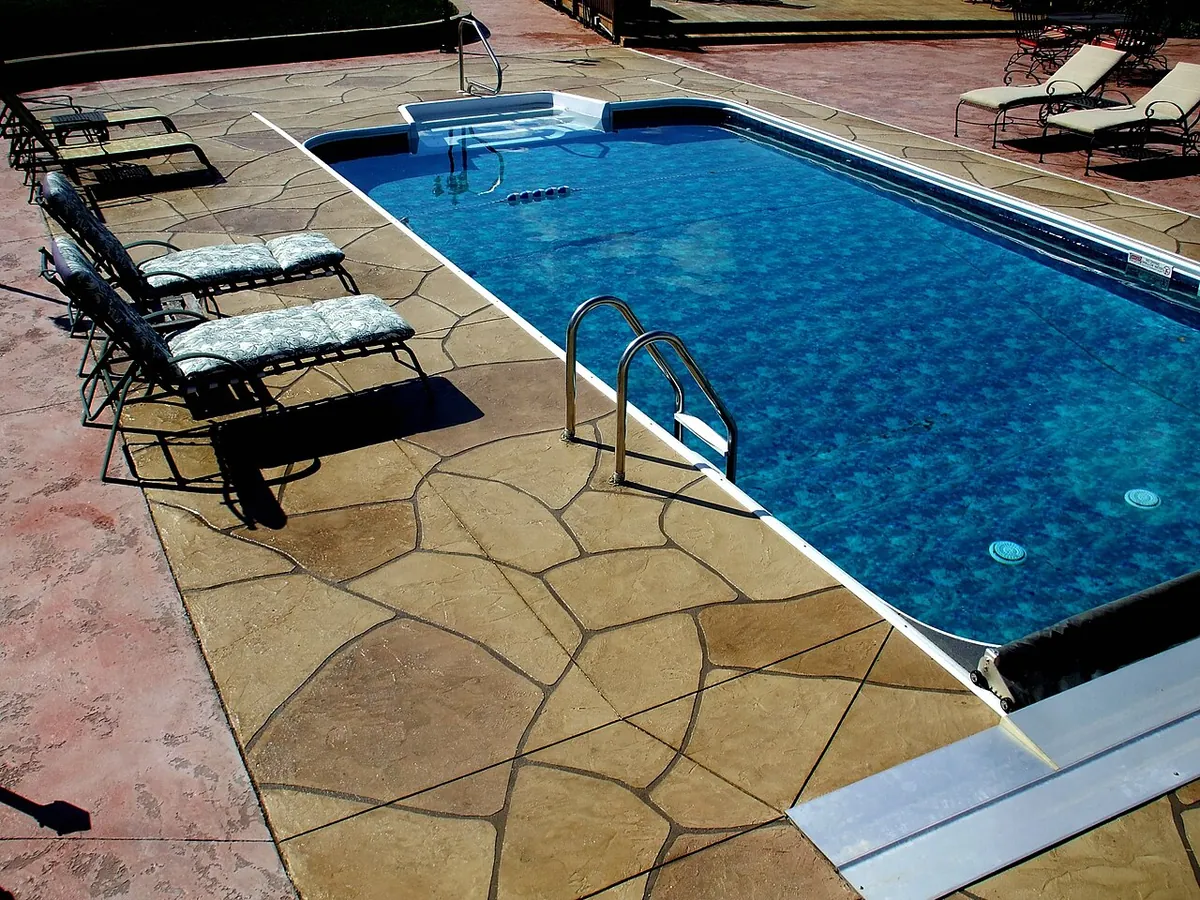
Photo: Decorative Concrete Kingdom, Grand Flagstone Pool Deck, Wikimedia Commons, CC BY 2.0.
Quick Answer
The best way to cover concrete patio slabs depends on what is wrong with them and how much height you can add. If the slab is sound but dull, stain or a tinted sealer is cheapest. If it is pitted or patched, a cement resurfacer (about $3 to $5 per square foot installed) makes it look new. For a stone, slate or tile look, a stamped or stenciled concrete overlay costs about $6 to $10 per square foot. Pavers, outdoor tile or natural stone laid over the slab give the biggest change but add 1 to 3 inches of height and cost more. Interlocking deck tiles and outdoor rugs are quick, removable covers. Before you choose, check that the slab is level and solid, and that the new surface will stay below door sills and still slope away from the house.
An old concrete patio often has good bones but a tired face, and that is good news if you want to cover concrete patio problems instead of replacing the slab. The typical complaints: faded gray, oil and rust stains, a few cracks, rough or pitted spots and patches that do not match. Tearing it out is messy and expensive, and in most cases unnecessary. There are many ways to cover cement patio slabs or refinish them so they look new, from a weekend of staining to a full stone or tile surface.
This guide compares the main ways of covering concrete patio slabs, explains the costs and limits of each, shows how to check whether your patio is a good candidate, and walks through how to refinish a concrete patio with a resurfacer or overlay. It also covers the other kind of patio cover: adding a roof or shade over a concrete patio.
First: Check Your Concrete Patio
Any patio concrete covering is only as good as the slab under it. Before choosing, check:
- Is it level and solid? Sunken or tilted sections, especially toward the house, should be lifted or replaced first. See concrete leveling cost.
- Are the cracks moving? Hairline and stable cracks can be filled and covered. Wide or growing cracks will come back through thin coverings.
- Does it drain? Water should run away from the house. Puddles near the wall mean the slope is wrong.
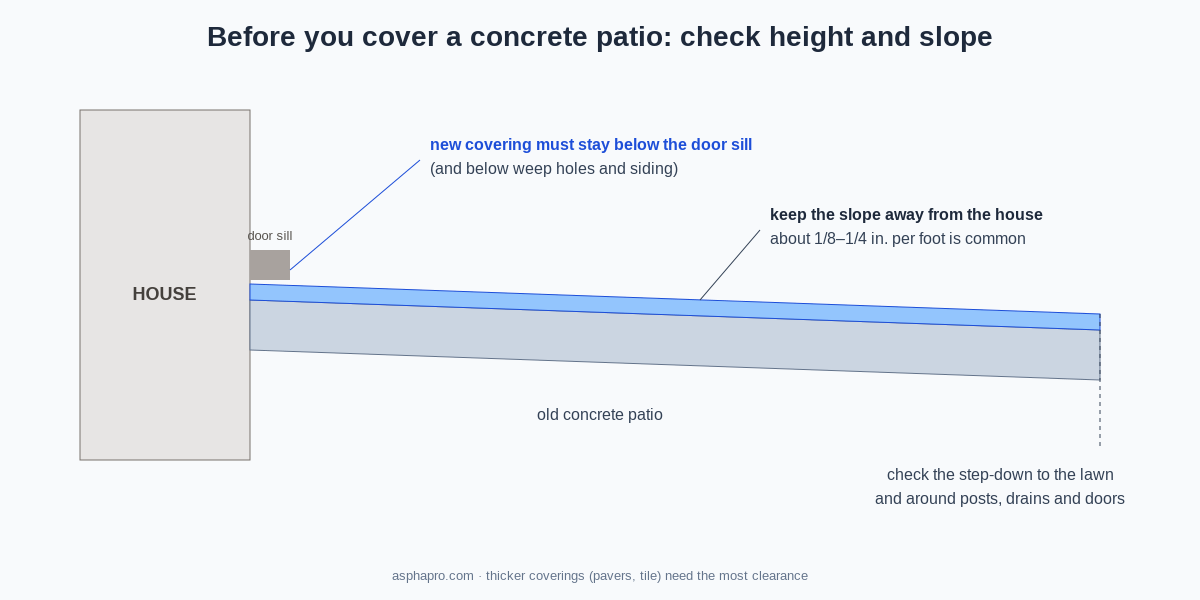
- How much height can you add? Measure from the patio surface to the bottom of the door sill and any siding or weep holes.
- What is the surface like? Pitting, scaling and old paint or sealer affect which coverings will stick. Scrape a few spots with a screwdriver; if the concrete powders or flakes easily, it needs more prep or replacement.
- What will the patio be used for? Dining, a hot tub, a grill, a pool surround or kids' play areas each favor different surfaces, finishes and slip resistance.
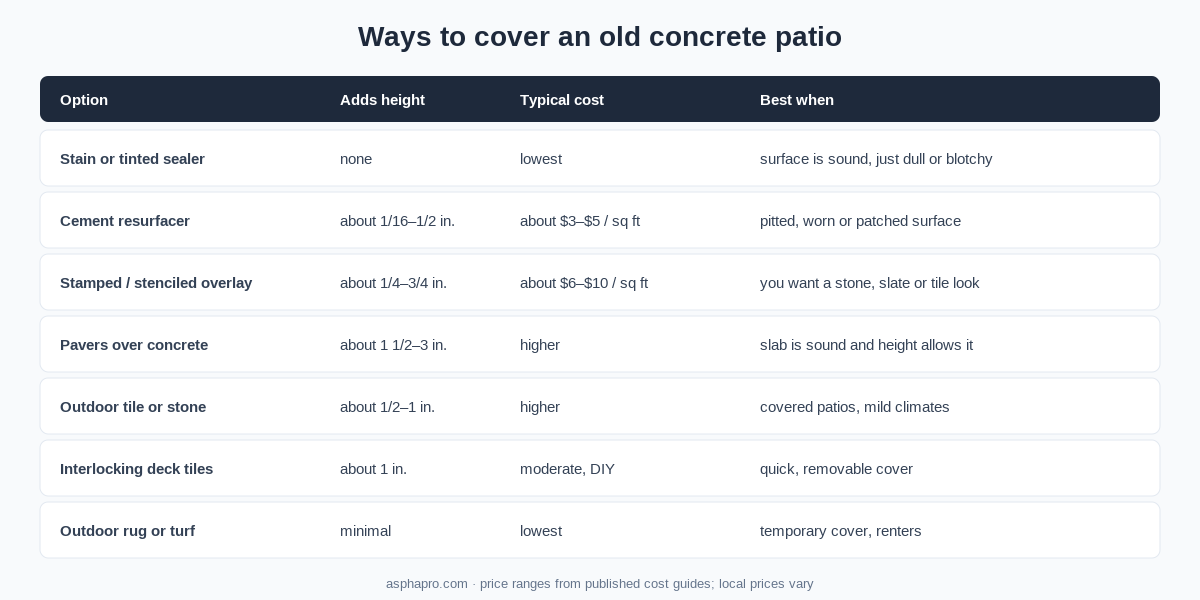
8 Ways to Cover Concrete Patio Slabs
1. Clean, stain and seal
If your patio is structurally fine and only looks dull or blotchy, a deep clean and a concrete stain or tinted sealer can transform it. Acid stains give mottled, earthy tones; water-based stains offer a wider range of colors. This adds no height and is the cheapest way to refresh the look. It will not hide pits, patches or rough areas. See our guide to concrete staining.
2. Paint with a patio coating
Concrete porch and patio paints and coatings can cover stains and add color. Use products made for exterior concrete, with grit for traction, and prepare the surface well. Paint can peel on patios where moisture comes up through the slab, and it needs recoating every few years. See concrete paint.
3. Resurface with a cement overlay
A cement resurfacer is a thin, polymer-modified layer spread over the cleaned slab. It hides pitting, small patches and wear and gives a fresh concrete surface that can be broomed, troweled smooth, colored or sealed. This is the most common way to refinish a concrete patio that is pitted or worn but sound. Pros typically charge about $3 to $5 per square foot. See how to resurface concrete.
4. Stamped or stenciled concrete overlay
Overlays for concrete patio slabs can do more than restore a plain look. A stamped overlay, about 1/4 to 3/4 inch thick, is stamped to look like flagstone, slate, brick or wood plank, then colored and sealed. A stenciled overlay uses paper stencils to create grout lines for a tile or brick pattern. A cement overlay patio can look like an expensive stone patio for less. Expect about $6 to $10 per square foot. See concrete overlay cost.
5. Pavers over concrete
Laying thin pavers or regular pavers over a sound slab, either on a thin sand bed or mortared down, gives a completely new surface. It adds the most height, often 1 1/2 to 3 inches, so check door sills and steps. Drainage must be planned so water does not get trapped. See can you lay pavers over concrete.
6. Outdoor tile or natural stone
Porcelain pavers, outdoor tile and stone such as travertine or slate can be set in thinset mortar over a sound slab. This is a premium look, best for covered patios and mild climates, because freeze-thaw and slab movement can crack tile set directly on concrete. A crack isolation membrane and proper movement joints are important.
7. Interlocking deck tiles
Snap-together wood, composite or plastic deck tiles sit on top of the slab with small feet that let water drain underneath. They are a fast, removable way to cover a concrete patio, ideal for renters and balconies. They add about an inch of height and can trap leaves and dirt underneath, so lift and clean them now and then.
8. Outdoor rugs and artificial turf
For the cheapest, quickest cover, an outdoor rug or a roll of artificial turf hides a stained or cracked patio. Choose materials that drain and dry quickly, and lift them regularly so moisture and mildew do not build up underneath.
How to Refinish Concrete Patio Slabs With a Resurfacer
Refinishing cement patio slabs with a resurfacer is one of the most popular DIY patio projects. Here are the steps:
- Repair first. Fill cracks with a flexible sealant, patch holes and spalls with repair mortar, and lift any sunken sections.
- Clean thoroughly. Pressure-wash the patio, degrease oil spots, and remove old paint or sealer. Let it dry to damp.
- Protect joints and walls. Tape control joints and mask the house wall and door sill.
- Mix the resurfacer with the exact water on the bag, in small batches.
- Spread it with a squeegee over the damp slab, one section at a time.
- Finish it with a broom for grip, or a trowel and later a sealer with grit if you want a smoother look.
- Cure and seal. Mist or shade it while it cures, then seal it after the recommended wait.
The same steps apply to refinishing a cement patio before a stamped or stenciled overlay, though those systems add a base coat, the pattern step, color and a sealer, and most homeowners hire a decorative concrete contractor for them.
Covering Concrete Patio Slabs: Costs Compared
| Option | Typical cost | DIY? |
|---|---|---|
| Clean, stain and seal | Often under $1 per sq ft DIY; more for pro staining | Yes |
| Patio paint or coating | Low DIY cost; recoating needed | Yes |
| Cement resurfacer | About $3 to $5 per sq ft installed | Yes, with help |
| Stamped or stenciled overlay | About $6 to $10 per sq ft | Usually pro |
| Pavers over concrete | Higher; depends on paver type | Yes, with patience |
| Outdoor tile or stone | Higher; tile and setting materials vary widely | Skilled DIY or pro |
| Interlocking deck tiles | Moderate per sq ft, no installation cost | Yes |
| Outdoor rug or turf | Lowest | Yes |
Costs also depend on prep. Lifting sunken sections, grinding off old paint and repairing cracks can add a few hundred dollars or more before any covering goes down. For a 12 × 16 foot patio (192 square feet), a professional resurfacer at $3 to $5 per square foot runs roughly $575 to $960, and a stamped overlay at $6 to $10 roughly $1,150 to $1,920. Overlay prices follow published cost guides from Concrete Network, HomeGuide and HomeAdvisor. Replacing the patio with new plain concrete typically costs about $6 to $14 per square foot including removal.
Concrete Overlays for Patios: What to Know Before You Buy
Concrete overlays for patios come in several systems, and the differences matter:
- Thin resurfacers (often 1/16 to 1/2 inch) renew a plain concrete look and are the easiest to apply.
- Spray textures and knockdown finishes give a cool, slip-resistant texture popular around pools and in hot climates.
- Stampable overlays are thicker mixes that can take the imprint of stamping mats for stone, slate and brick patterns.
- Stencil systems use paper stencils over a base coat to leave grout lines in the color of the original slab or a contrasting base.
- Self-leveling decorative toppings are mostly for interior floors and covered porches.
Ask about the base coat and the sealer before choosing a patio overlay. Concrete overlays are a system: primer or bond coat, the overlay itself, color, and a sealer. Skipping any part to save money usually shortens the life of the job.
Prep Work: The Part That Decides How Long It Lasts
Whichever cement patio covering you choose, prep is where most failures start. A good contractor or careful DIYer will:
- Fix the structure. Lift sunken slabs, replace broken sections, and make sure water drains away from the house.
- Handle the cracks. Clean and seal moving cracks with a flexible sealant; patch stable ones. For tile, add a crack isolation membrane.
- Remove what will not bond. Old paint, sealer, oil and loose material must come off. Pressure washing works for many patios; peeling coatings may need grinding.
- Open the surface if the product calls for it, by grinding or etching, so overlays and coatings can grip.
- Protect joints. Keep control joints open through the new layer, or plan new joints in the pattern.
How to Refinish Concrete Patio Slabs: Weather and Timing
To refinish concrete patio slabs with any cement-based product, pick mild, dry weather. Most resurfacers and overlays need temperatures above about 50°F during application and for at least a day after, and they do not like direct hot sun, wind or rain. Late spring and early fall are ideal in most of the country. Stains and sealers also need dry concrete; many manufacturers ask for a day or more without rain before and after application. Pavers and deck tiles are less weather-sensitive and can be installed in most seasons.
Covering Concrete Patio Slabs in Cold Climates
Freeze-thaw cycles are hard on thin coverings. In cold climates:
- Choose overlays and coatings rated for freeze-thaw exposure.
- Make sure the patio drains well so water does not sit on it and freeze.
- Be cautious with tile set directly on concrete; frost movement and water in grout lines can crack it unless it is installed with the right membrane, joints and freeze-rated materials.
- Avoid rock salt on decorative surfaces; use sand or a gentle deicer.
- Reseal decorative overlays on schedule to keep water out.
Refinishing Cement Patio Slabs Around a Pool
Refinishing cement patio slabs that surround a pool needs extra attention to slip resistance, heat and chemicals. Light colors and textured finishes stay cooler underfoot, sealers should include grit for traction, and products should be rated for pool decks and chlorinated or salt water. Keep the joint between the deck and the pool coping open and sealed with a flexible sealant. Our guides to concrete pool deck resurfacing and concrete pool deck repair cover pool areas in detail.
Decorative Ideas When You Refinish a Concrete Patio
- Borders: a stamped or stained border in a contrasting color frames the patio.
- Saw-cut patterns: shallow decorative cuts in a grid or diamond pattern, then stained, give a tile look for little cost.
- Two-tone stain: a darker stain at the edges and a lighter one in the field adds depth.
- Stamped flagstone or slate: the most popular overlay pattern for patios.
- Wood-plank stamps: make concrete look like decking without the upkeep.
- Inlays: small sections of pavers, tile or stone set into a resurfaced patio.
DIY or Hire a Pro to Cover a Concrete Patio?
Staining, sealing, deck tiles and rugs are easy DIY projects. Plain resurfacing is a reasonable DIY job on a small patio with a helper. Pavers over concrete are doable for a patient DIYer. Stamped and stenciled overlays and outdoor tile are best left to experienced contractors, because timing, color and joint details are unforgiving. When you hire, ask for photos of patios that are at least two or three years old, a written description of prep, and the exact products and sealer they will use.
A Worked Example: Refreshing a 12 × 16 Patio
A 12 × 16 foot concrete patio behind a house is gray, stained and pitted near the steps, with two hairline cracks and one corner that has settled about 1/2 inch. The owners want a flagstone look.
- Lift the settled corner with foam or mudjacking.
- Seal the hairline cracks and patch pits deeper than 1/4 inch.
- Pressure-wash and degrease the slab.
- Have a decorative contractor apply a stamped flagstone overlay with a contrasting border and seal it with grit.
- Reseal every two to three years.
At about $6 to $10 per square foot, the overlay for 192 square feet runs roughly $1,150 to $1,920, plus the lifting. Replacing the patio with new stamped concrete would usually cost noticeably more and take longer.
Caring for a Concrete Patio Overlay
- Sweep regularly and rinse with water; use a mild cleaner for spills, and avoid harsh acids that can dull the sealer and color.
- Reseal every two to three years, or as the sealer maker recommends.
- Use pads under heavy planters and furniture legs so they do not scratch or stain the finish.
- Keep grills on a mat to catch grease, and wipe up food and drink spills before they stain the sealer.
- Check the concrete patio each spring for chips, cracks and worn sealer, and touch up before summer use.
- Touch up chips and small cracks promptly so water does not get under the overlay.
Concrete Covered Patio: Adding a Roof or Shade
"Covering" a concrete patio can also mean putting something over it. A concrete covered patio with a roof or pergola makes the space usable in sun and rain and protects the surface. Common options:
- Pergola: an open frame that gives partial shade; add a fabric or polycarbonate top for more.
- Solid patio roof: an extension of the house roof or a freestanding roof structure, which usually needs footings and a permit.
- Retractable awning: attaches to the house wall and rolls out when needed.
- Shade sails and umbrellas: the cheapest, most flexible options.
Posts for a patio cover should sit on proper footings, not just bolted to a thin patio slab, unless the slab was designed for it. Our guide to concrete footing cost explains footings, and types of concrete anchors covers how post bases attach to concrete. Check local building rules; many areas require permits for roofed patio covers.
Which Concrete Patio Covering Is Right for You?
- Want the cheapest refresh? Clean, stain and seal, or use an outdoor rug.
- Pitted or patched surface? Resurface it.
- Want stone or tile looks for less? A stamped or stenciled concrete overlay.
- Want a completely new material? Pavers, tile or stone over the slab, if height allows.
- Renting or want something removable? Interlocking deck tiles.
- Slab badly cracked or sunken? Repair or replace it first; no covering will hide that for long.
Common Mistakes When You Cover Cement Patio Slabs
- Covering a slab that slopes toward the house, which sends water to the foundation.
- Raising the surface above the door sill or into the siding.
- Ignoring cracks that will telegraph through thin overlays and tile.
- Skipping surface prep, so coatings and overlays peel.
- Setting tile directly on a slab in a freeze-thaw climate without movement joints and a membrane.
- Leaving rugs or deck tiles down for years without lifting them, trapping moisture and mildew.
Cover Concrete Patio Ideas by Budget
Under a few hundred dollars
Clean the concrete patio thoroughly, fix small cracks, and apply a tinted sealer or semi-transparent stain. Add an outdoor rug and planters. This is the fastest way to cover concrete patio flaws on a tight budget, and you can always do more later.
A few hundred to a couple of thousand dollars
Resurface the concrete patio yourself or hire a pro for a plain or colored resurfacer, or lay interlocking deck tiles over part of it. Both make a big visual difference. A resurfaced concrete patio can later get a stain or a stenciled pattern if you want more.
Higher budgets
A stamped or stenciled concrete overlay, pavers over concrete, or outdoor porcelain or stone tile gives the most dramatic change. These are the options to choose when you want the concrete patio to look like a stone or tile terrace. Combine them with a pergola or patio roof for a true outdoor room.
Cover Concrete Patio Checklist
- Concrete patio is level, solid and drains away from the house.
- Moving cracks sealed; holes and spalls patched; sunken areas lifted.
- Height of the new covering checked against door sills, siding and steps.
- Old paint, sealer and oil removed; surface pressure-washed.
- Covering chosen for your climate, sun and use (pool, grill, dining).
- Control joints planned through the new surface.
- Weather window of mild, dry days for cement-based products.
- Sealer and maintenance plan for the finished concrete patio.
Concrete Patio Covering for Renters and Short-Term Fixes
If you rent, or plan to replace the concrete patio in a few years, choose a concrete patio covering you can take with you or remove easily. Interlocking deck tiles, outdoor rugs, artificial turf, large planters and outdoor furniture zones can make a plain concrete patio feel finished without any permanent change. Check your lease before staining, painting or overlaying a concrete patio you do not own. For balconies, also check the weight of the covering and whether drains stay clear.
Covering a Concrete Patio Next to the House
The edge of the concrete patio against the house wall needs the most care. Keep any new covering below the door sill and siding, leave a small joint between the patio and the wall, and seal it with a flexible sealant so water does not run down behind the patio. If the patio currently slopes toward the house, fix the slope before covering concrete patio slabs there; otherwise you will just send water to the foundation under a nicer-looking surface.
When Covering Is Not the Answer
Sometimes the best way to cover concrete patio problems is to replace the patio. If the slab is broken into many pieces, slopes badly toward the house, has heaved from roots or frost, or crumbles when you scrape it, any covering will crack, peel or trap water. Replacing it lets you fix the base, the slope and the size at the same time. Our guides to concrete removal cost and concrete slab cost help you budget for that, and ideas for paving a patio covers other materials.
Frequently Asked Questions
What is the cheapest way to cover concrete patio slabs?
Cleaning and staining or using a tinted sealer is the cheapest permanent option. An outdoor rug or turf is the cheapest temporary cover.
Can you put an overlay on an old concrete patio?
Yes, if the slab is level and sound. Repair cracks and holes first, clean the surface thoroughly, then apply a resurfacer or decorative overlay.
How much does it cost to refinish a concrete patio?
About $3 to $5 per square foot for a basic resurfacer and about $6 to $10 per square foot for a stamped or stenciled overlay, plus repairs.
Can you lay pavers or tile over a concrete patio?
Yes, if the slab is solid and you have room for the added height. Tile needs extra care with cracks and movement joints, especially in freeze-thaw climates.
How long does a concrete overlay patio last?
Often many years when it goes over a sound, clean slab and is resealed every few years. Moving cracks and poor prep shorten its life.
What is a concrete covered patio?
Usually a concrete patio with a roof, pergola or awning over it. The posts should sit on proper footings, and roofed covers often need a permit.
Sources
- Concrete Network: Concrete Overlay Cost
- HomeGuide: Concrete Resurfacing Cost
- HomeAdvisor: Concrete Resurfacing and Overlays Cost
- Angi: How Much Does a Stamped Concrete Patio Cost?
Related Guides
- Concrete deck blocks — sizes, spacing, load and code rules
- Concrete post base guide — anchor 4x4 and 6x6 posts to concrete
- Stamped concrete patios — designs, colors, cost and pool decks
- Stenciled concrete — concrete stencils for patios and pool decks
- Concrete patio ideas — layouts, finishes and features
- Concrete porch — building, repairing and updating porches
- Concrete tile — cement floor tiles, concrete look and outdoor tiles
- How to lay tile on concrete — floors, patios and grouting
- Concrete raised beds — block, poured and beds on concrete
- Concrete disposal — concrete dumpster rental, recycling yards, landfill fees and washout
- Concrete flower pots — sizes, weights, prices and extra large planters for outside