
Concrete Walkway Ideas: Layouts, Finishes, Borders and Building Tips
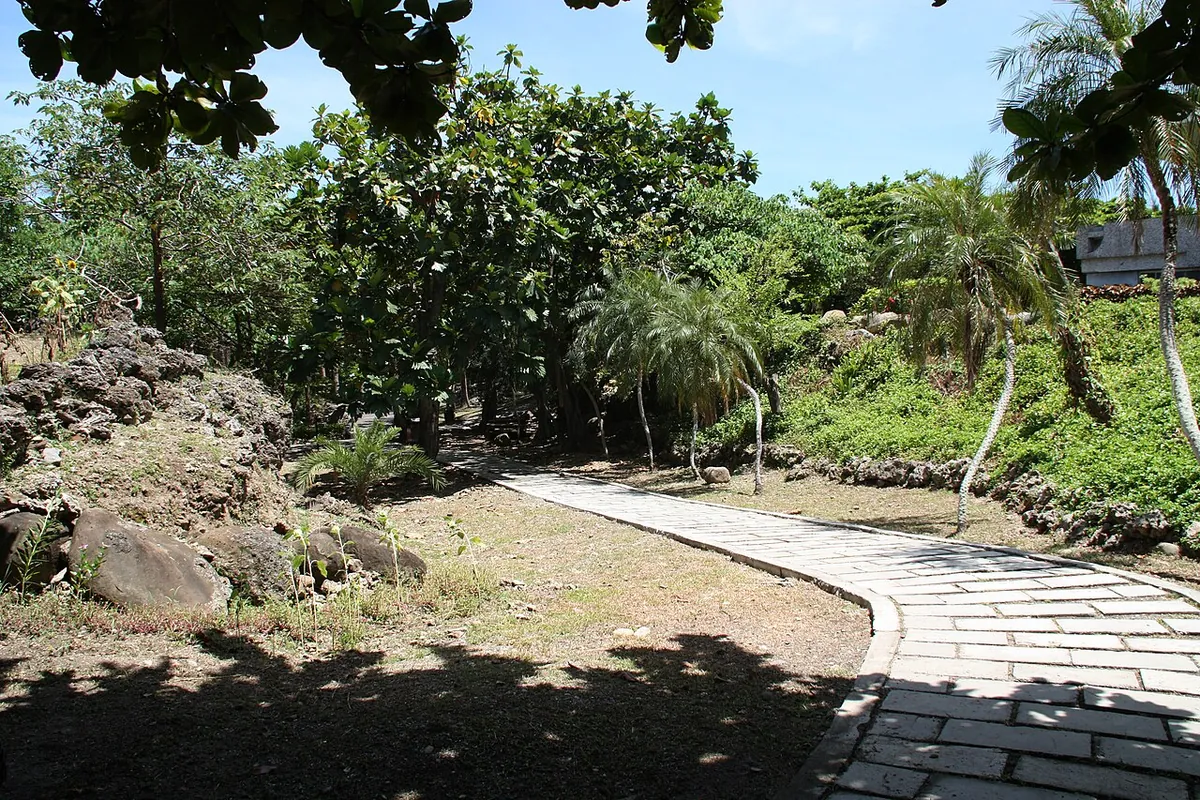
Photo: Lord Koxinga, Wikimedia Commons, CC BY-SA 3.0
Quick Answer
Good concrete walkway ideas start with a sensible layout (straight for front walks, gentle curves for garden paths, stepping slabs for informal routes) and a width of about 3 feet for garden paths, 4 feet for front walks and 5 feet where two people walk side by side. Then choose a finish (broom, exposed aggregate, salt, stamped, stained or stenciled), add borders or edging in a contrasting finish, color or material, and finish with landings, steps, lighting and planting. Budget ideas include saw-cut patterns, colored borders and poured stepping slabs. Build on a compacted gravel base, 4 inches thick, sloped slightly for drainage, with control joints every 4 to 5 feet.
A concrete walkway does more than get you from the driveway to the front door. It sets the first impression of a home, ties together the garden, patio and outbuildings, and guides how people move through a yard. Concrete is the most common walkway material because it is affordable, durable, easy to maintain and accessible for strollers, wheelchairs and wheeled bins. With a few design choices, it can also be one of the most attractive features of a property.
This guide gathers concrete walkway ideas by layout, width, finish, color, borders, steps and landings, lighting and planting, budget, and style, and finishes with practical tips for building a walkway that stays flat and crack-free for decades.
Concrete Walkway Ideas for Layout
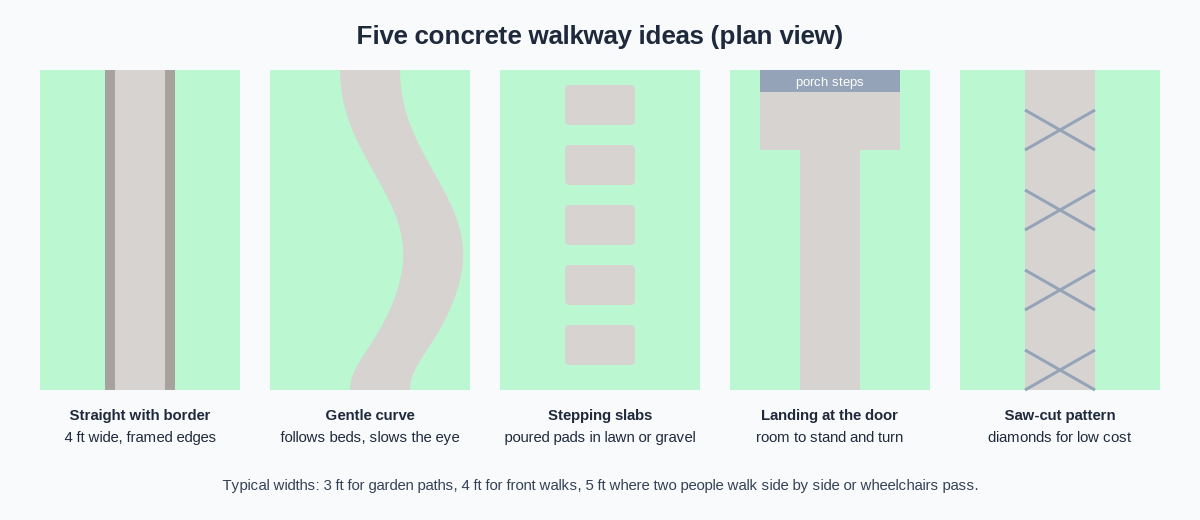
Layout is the first and most important of all concrete walkway ideas. A straight walk from the driveway or street to the front door is direct, formal and easy to shovel, and suits most traditional and modern houses. A gentle curve feels more relaxed, slows the eye, lets planting beds wrap around the path, and can make a short walk seem longer and more interesting; keep curves wide and smooth so they do not feel forced. An angled walk with one or two changes of direction works well on corner lots or to avoid trees. A walk that widens into a landing at the front door gives visitors room to stand while the door opens and makes the entrance feel welcoming. Side-yard paths connect the front to the back yard; a simple straight walk with a gate at one end is usually best in narrow spaces.
Think about how people actually use a concrete walkway. If the path takes a long detour, people will cut across the lawn and wear a trail. Follow the natural route from parking to the door, then refine it with curves or landings. Mark the path with a garden hose or paint and walk it a few times before building.
Walkway Width Ideas
Concrete walkway width affects comfort and looks. Garden and utility paths can be 3 feet wide. Front walks should be at least 4 feet wide so two people can pass and the walk looks in proportion to the house; 5 feet allows two people to walk side by side and makes the entry feel generous. Paths that wheelchairs use should be at least 3 feet wide with passing spaces, and accessible routes need gentle slopes. On a large house or long front yard, a wider walk with a landing looks better than a narrow strip. One of the simplest concrete walkway ideas for a grand look is simply to pour it a foot wider than usual.
Concrete Walkway Ideas for Finishes
Finishes give a concrete walkway its character and grip. A broom finish is the classic, low-cost choice: fine brooming looks neat and gives good traction in rain and snow. A smooth troweled band around a broomed center is a simple upgrade that frames the walk. Exposed aggregate reveals the stones in the concrete, giving a natural, slip-resistant, long-lasting surface that hides dirt well. A salt finish adds small pits for subtle texture, popular near pools. Stamped finishes such as brick, cobble, slate or flagstone turn a plain walk into a decorative feature. Stained or colored concrete adds warmth without changing texture. Stenciled brick or tile patterns give a crisp, flatter surface. Among concrete walkway ideas, broom and exposed aggregate are the most practical for busy front walks in snowy climates, while stamped and stenciled finishes suit garden paths and entries in milder regions. See types of concrete finishes, stamped concrete patterns and stenciled concrete.
Color Ideas for Concrete Walkways
Color is an easy way to make a concrete walkway look intentional. Integral color mixed at the plant colors the full depth of the concrete and wears well. Color hardener gives stronger surface color on stamped work. Stains and tinted sealers add color to existing walks. Warm tans, buffs and sandstone shades suit brick and wood houses; soft grays and charcoal suit modern homes and stone; terracotta works with Spanish and Mediterranean styles. A two-tone walk, with a darker border and lighter field, is one of the most effective concrete walkway ideas for adding detail at low cost. See how to color concrete.
Border and Edging Ideas
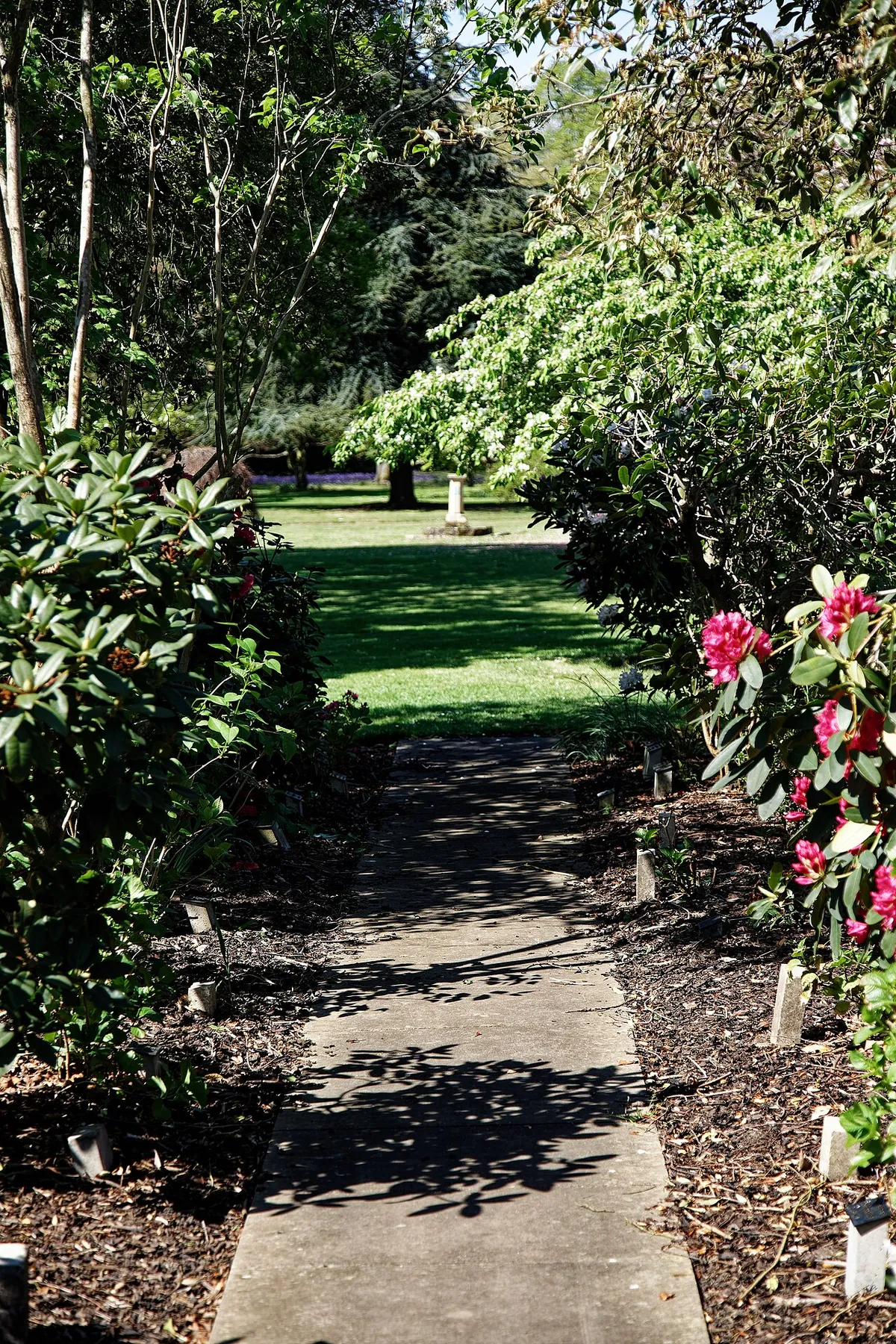
Photo: Acabashi, Wikimedia Commons, CC BY-SA 4.0
Borders frame concrete walkways and hide control joints. Ideas include a smooth troweled band 4 to 6 inches wide on each side of a broomed walk; a colored or stained border; a stamped brick or cobble border along a plain center; a row of real brick or pavers set into the concrete along the edges; a saw-cut line a few inches in from each edge; and steel, stone or brick edging to separate the walk from lawn or mulch. Planting right up to the walk, with low shrubs and perennials, softens the edges as in the garden path pictured above. Keep plants trimmed back so they do not narrow the usable width.
Steps, Landings and Slopes
Many concrete walkways need to handle a change in grade. Gentle slopes up to about 1 in 20 can be handled by the walk itself. Steeper grades need steps, ideally with risers around 6 to 7 inches and treads at least 11 to 12 inches deep, or longer ramped walks with landings. Wide, shallow steps feel generous and safe. A landing at the front door should be at least as wide as the door and deep enough to stand on while the door opens, usually at least 3 to 5 feet. Handrails are wise where there are several steps. See how to pour concrete steps and handrails for concrete steps.
Lighting and Planting Ideas
Lighting makes a concrete walkway safer and more inviting at night. Low-voltage path lights along the edges, lights built into step risers, and uplights on nearby trees are popular. Run conduit under the walk before pouring so wiring can cross it later. Planting softens the hard edges: low hedges, ornamental grasses, perennials and groundcovers along the sides, and small trees near the entry. Leave planting pockets in a wide walk for a tree or planter. These are some of the cheapest concrete walkway ideas, and they make a big difference to how the walk looks and feels.
Budget Concrete Walkway Ideas
You do not need a large budget for an attractive concrete walkway. Saw-cut patterns such as squares, diamonds or a running brick pattern cut into a plain slab cost little but look custom. A smooth border on a broomed walk adds definition for almost nothing. Integral color costs less than stamping. Poured stepping slabs set in lawn or gravel use less concrete than a continuous walk and look modern. DIY stepping stones made in molds are an inexpensive option for garden paths. Recycled broken concrete laid like flagstone makes a rustic path from free material. See how to make concrete stepping stones and crushed concrete.
Concrete Walkway Ideas by Style
Traditional homes suit straight or gently curved concrete walkways with a brick border or stamped brick, often in warm colors. Modern homes suit wide, straight walks with smooth or fine broom finishes, large saw-cut squares, or offset rectangular stepping slabs in gravel. Cottage and garden-style homes suit curving paths with exposed aggregate or stamped flagstone and lots of planting. Mediterranean and Spanish styles suit terracotta-colored concrete with tile patterns. Farmhouse styles suit simple broomed walks with brick or stone edging. Choosing concrete walkway ideas that match the house style makes the walk look like it has always belonged there.
Building a Walkway That Lasts
Even the best concrete walkway ideas fail if the walk is poorly built. Remove sod and topsoil, compact the subgrade, and add about 4 inches of compacted gravel base. Pour the concrete walkway 4 inches thick, thicker where vehicles might cross it. Slope it slightly across its width, about 1/4 inch per foot, or along its length so water runs off. Place control joints every 4 to 5 feet, about one quarter of the slab depth, and isolation joints where the walk meets steps, the house or the driveway. Use air-entrained concrete in freezing climates, cure the walk properly, and seal decorative finishes. See concrete sidewalk cost, control joints in concrete and concrete flatwork.
Front Walk Ideas
The front walk is the most visible concrete walkway on most properties, so it deserves the most attention. Make it wide enough, at least 4 feet, and connect it to where guests actually park, whether that is the driveway or the street. A widened landing at the porch or door adds a welcoming pause. A border in a contrasting color or a band of brick ties the walk to the house. If the walk crosses a slope, wide, shallow steps with lights in the risers look elegant and feel safe. A curve around a planting bed or a tree adds interest without making the route inconvenient. Of all concrete walkway ideas, a well-proportioned front walk with a landing and good lighting adds the most curb appeal for the money.
Garden Path Ideas
Garden paths can be more informal than front walks. A 3 foot wide concrete walkway with gentle curves through planting beds invites strolling. Exposed aggregate or a light broom finish blends with plants. Poured stepping slabs across a lawn or through gravel make a light, modern path that lets grass or groundcover grow between the pads. A path that leads to a destination, such as a bench, a shed, a vegetable garden or a fire pit, gives the garden structure. Edging keeps mulch and soil off the path. These garden concrete walkway ideas work in small city yards as well as large suburban gardens.
Side Yard and Backyard Paths
Side yards are often narrow and shaded, used for bins, hoses and access to the backyard. A simple, straight concrete walkway 3 to 4 feet wide, sloped to drain away from the house, is usually the best choice; it is easy to roll bins over and shovel in winter. Add a gate, a light by the door, and a few planters to make it pleasant. In backyards, walks connect the house, patio, garage, shed, pool and garden. Using the same finish and border across all concrete walkways in the backyard creates a unified look. See concrete patio ideas.
Connecting Driveway, Walk and Patio
Many homes have a driveway, front walk, side path and patio that were built at different times in different finishes. Tying them together is one of the most effective concrete walkway ideas for an older property. Options include staining all of them a common color, adding matching saw-cut borders, resurfacing them with a common overlay, or replacing the walks with a finish that matches the patio. Where a new walk meets an existing driveway or patio, use an isolation joint and match heights carefully so there is no trip edge. See concrete driveway cost.
Accessible Walkways
A concrete walkway is one of the best surfaces for wheelchairs, walkers and strollers, because it is firm, stable and smooth. To make a walk accessible, keep it at least 36 inches wide, preferably wider, with passing spaces; keep the running slope gentle, ideally no steeper than 1 in 20 without being treated as a ramp; keep the cross slope no more than about 2 percent; avoid steps by using gentle grades or ramps; and keep joints and transitions flush, with no lips over about 1/4 inch. Use a broom or other slip-resistant finish, and add good lighting. These accessible concrete walkway ideas also make walks safer for everyone. See concrete sidewalk cost.
Walkways in Cold Climates
In regions with snow and ice, choose concrete walkway ideas with winter in mind. Straight walks are easier to shovel and plow than winding paths. Broom and exposed aggregate finishes give grip on icy days. Use air-entrained concrete with a low water-cement ratio, cure the walk properly, and seal it to resist freeze-thaw and salt damage. Avoid deicers containing ammonium nitrate or ammonium sulfate, and use sand or calcium magnesium acetate where possible. Slope the walk so meltwater drains off instead of refreezing on the surface. Heated walkways with embedded cables or tubes are a premium option for steep or heavily used entries. See does salt damage concrete.
Updating an Old Concrete Walkway
If your existing concrete walkway is structurally sound but dull or stained, many concrete walkway ideas can be applied without tearing it out. Clean and stain it for new color. Add saw-cut patterns or borders. Apply a resurfacer for a fresh, uniform surface, or a stamped or stenciled overlay for a decorative look. Add lighting and planting along the edges. If panels have heaved or sunk, they can be lifted with mudjacking or foam, or replaced individually. If the walk is badly cracked, crumbling or too narrow, replacement is usually the better long-term choice. See how to resurface concrete and concrete leveling cost.
Concrete Walkway Cost
Costs vary by region, finish and site, but a plain broom-finished concrete walkway typically costs about $6 to $12 per square foot installed. Colored or exposed aggregate walks often run about $10 to $16, and stamped or stained decorative walks about $12 to $25 per square foot. A 4 by 40 foot front walk, 160 square feet, might cost roughly $1,000 to $2,000 plain, or $2,000 to $4,000 decorative. Removal of an old walk, steps, and difficult access add to costs. DIY concrete walkways cost much less in materials, but require careful preparation and finishing. See concrete sidewalk cost and concrete removal cost.
DIY or Hire a Pro?
Concrete walkways are among the more DIY-friendly concrete projects, because they are narrow and can be poured in short sections. With good forms, a compacted base, a few helpers and basic tools, a handy homeowner can build a straight, broom-finished walk. Curves, steps, stamped or exposed aggregate finishes, and long walks poured from a ready-mix truck are harder and often worth hiring out. Many homeowners prepare the base and forms themselves and hire a finisher for the pour. See how to build concrete forms and concrete tools.
Concrete Walkway Ideas for Small Yards
In a small front yard, a concrete walkway can dominate the space, so keep it simple and in proportion. A straight walk with a single curve near the door, a light color to keep the yard bright, and planting on both sides works well. Avoid busy stamped patterns that make a small space look cluttered; a broom finish with a smooth border or a few large saw-cut panels looks cleaner. Stepping slabs instead of a continuous walk can let more lawn or groundcover show. Where the walk meets the driveway, a widened apron gives room to step out of a car. These small-yard concrete walkway ideas keep the entry functional without overwhelming it.
Combining Concrete With Other Materials
Some of the most attractive concrete walkway ideas mix materials. Concrete panels with brick or stone pavers set in bands between them look custom and break up long runs. A concrete walkway with natural stone stepping pads at the end that lead into the garden makes a soft transition. Concrete slabs set in gravel or crushed stone look modern and drain well. Wood decking near a concrete walkway adds warmth at a porch or deck entrance. Steel edging along concrete walkways gives a crisp line against lawn. When mixing materials, keep surfaces flush and joints tight to avoid trip hazards, and plan how each will drain.
Planning Your Concrete Walkway
Turn concrete walkway ideas into a plan by sketching the yard to scale, marking doors, gates, driveway, patio and trees, and drawing the routes people use. Decide widths and where landings and steps go. Choose one finish and border idea that fits the house. Plan lighting and any conduit or sleeves for future wiring or irrigation before the pour. Check utility locations and local rules for walks in the public right of way, which may require a permit and specific finishes. Then get quotes from two or three contractors with the same specifications, or plan a DIY build in manageable sections. A clear plan is what turns ideas into concrete walkways that look good and work well for decades.
Maintaining Concrete Walkways
Concrete walkways need little care, but a few habits keep them looking good. Sweep leaves and dirt regularly, because organic debris stains concrete. Wash a concrete walkway once or twice a year with a hose, a stiff broom and a mild cleaner, or a low-pressure washer. Seal decorative concrete walkways every two to three years, and plain ones every few years with a penetrating sealer, especially in climates with snow and salt. Fill cracks early with a flexible sealant so water does not get under the slab. Trim roots and plants that push against the edges. Keep downspouts from discharging onto the walk, which can erode the base and cause settling. With this simple care, concrete walkways can last 30 years or more. See how to clean concrete and how to seal concrete.
Seasonal and Holiday Touches
Small touches change the look of concrete walkways through the year without any construction. Planters with seasonal flowers at the start of a concrete walkway, lanterns along the edges, string lights over an arbor, and a decorative doormat at the landing all add character. For special occasions, removable concrete stencils and washable chalk paints can decorate a concrete walkway temporarily. These ideas cost little, but they keep a front walk welcoming in every season and help a simple concrete walkway feel cared for.
In the end, the best concrete walkway ideas are the ones that fit how you use your yard. Choose a route people will actually follow, make it wide enough, pick a finish that suits your climate, add a border or color for character, and light it well. Build it on a good base with proper joints, and your concrete walkway will be a welcoming part of your home for decades.
Before you settle on one of these concrete walkway ideas, look at walks in your neighborhood that you like, note how they are built and how they have aged, and ask the owners who built them. Real examples in your own climate are the best guide to which concrete walkway designs, finishes and borders will work for your home and last for years. Take photos of the concrete walkways you like and share them with your contractor, so the concrete walkway ideas in your head become a clear, buildable design that everyone understands and agrees on well before the first forms go in the ground. Small changes are easy on paper and costly once concrete is poured.
Common Walkway Mistakes
The most common mistakes are making the concrete walkway too narrow, ignoring the natural route people take, skipping the gravel base, pouring too thin, forgetting a slope so water ponds, spacing control joints too far apart, leaving no isolation joint at steps and the house, choosing a slippery finish for an entry that gets wet, and not planning lighting before the pour. Avoid these, and any of the concrete walkway ideas in this guide will look good and last.
Frequently Asked Questions
How wide should a concrete walkway be?
About 3 feet for garden paths, 4 feet for front walks, and 5 feet where two people walk side by side.
How thick should a concrete walkway be?
Usually 4 inches on a compacted gravel base, thicker where vehicles may cross.
What is the cheapest way to make a concrete walkway look nice?
A smooth border on a broomed walk, saw-cut patterns, integral color, lighting and planting along the edges.
How far apart should joints be in a walkway?
About every 4 to 5 feet for a typical 4 foot wide, 4 inch thick walk.
Sources
- Portland Cement Association: sidewalks, walkways and decorative concrete
- American Concrete Institute: ACI 310R decorative concrete; ACI 332 residential concrete
- U.S. Access Board: ADA accessible route guidance (width and slope)
- National Ready Mixed Concrete Association: CIP 6 (joints)
Related Guides
- Concrete patio ideas — layouts, finishes and features
- Concrete porch — building, repairing and updating porches
- Concrete ramp — slope rules, design and cost
- How to clean moss from concrete — removing moss and stopping regrowth
- Concrete splash blocks — downspout splash blocks and drainage
- How to kill roots under concrete — tree roots lifting slabs
- Concrete bird bath — making, sealing and caring for one
- Concrete garden statues — painting, sealing and care
- Concrete bench — outdoor benches, DIY and costs
- Concrete curb machine — landscape curbing and edging
- Exposed aggregate concrete — how it's made, sealing and cost
- Brushed concrete — broom finish and concrete brushes
- Concrete raised beds — block, poured and beds on concrete
- Concrete stakes — wood and steel form stakes
- Concrete flower pots — sizes, weights, prices and extra large planters for outside