
Brushed Concrete: Broom Finish, Textured Concrete and Concrete Brushes
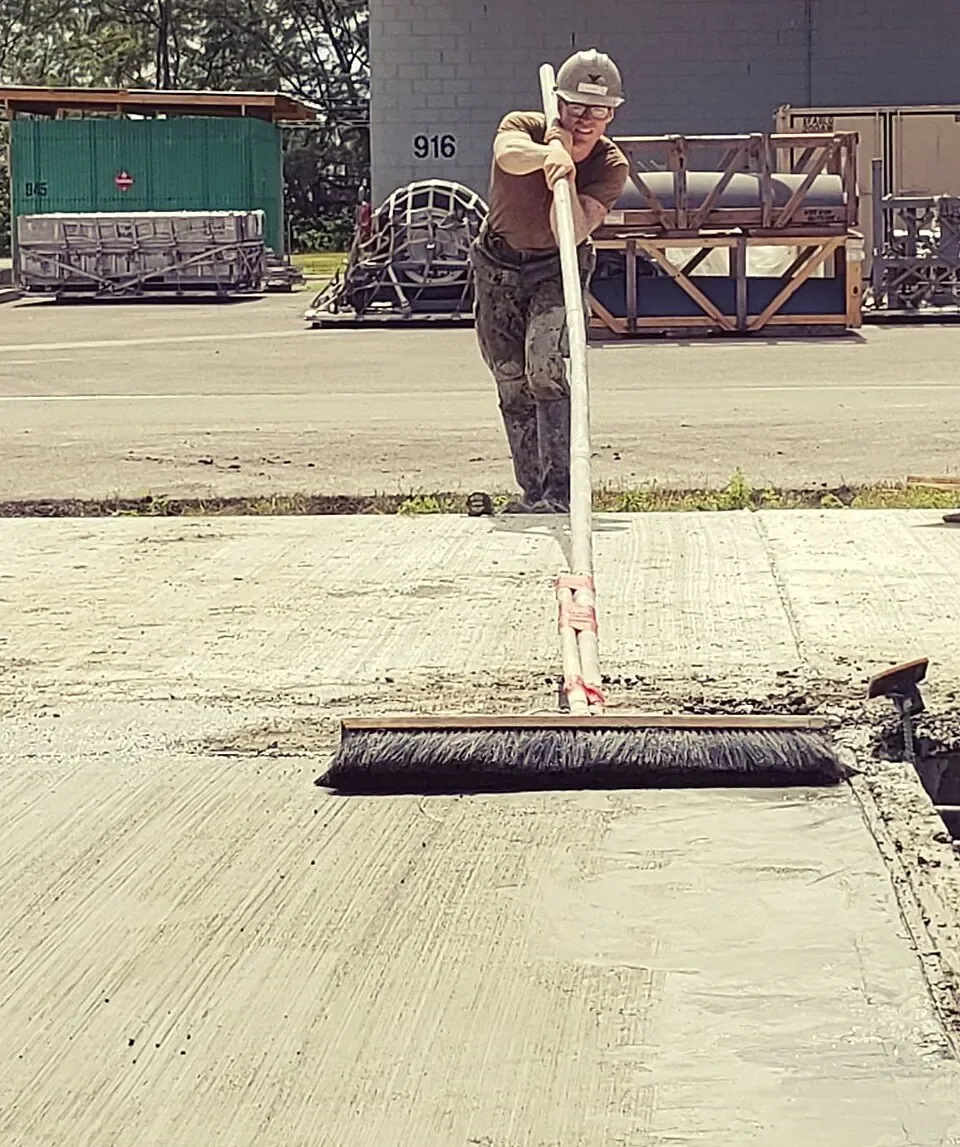
Photo: US Navy (public domain), Wikimedia Commons (cropped)
Quick Answer
Brushed concrete, also called a broom finish, is concrete that has been lightly textured by dragging a concrete brush across the surface after floating and troweling, while the concrete is still plastic. The fine ridges give grip underfoot and under tires, which is why brushed concrete is the standard finish for driveways, sidewalks, patios, ramps and pool decks. A soft-bristle brush gives a light, fine texture; a stiff brush gives a coarse, heavy texture for steep or icy areas. It is the cheapest decorative option, adding little or nothing to the cost of a slab, typically $6 to $12 per square foot installed for a plain brushed concrete patio or driveway. Other textured concrete options include swirl, salt, stamped and exposed aggregate finishes.
Look down at almost any sidewalk, driveway or garage apron in North America and you will see the faint parallel lines of brushed concrete. It is the most common finish on outdoor concrete for a simple reason: smooth troweled concrete is slippery when wet, and a broom finish fixes that cheaply and quickly. The photo above shows the job in progress on a new slab, with a finisher pulling a wide broom across the surface, leaving fine grooves behind.
This guide explains what brushed concrete is, how and when to apply a broom finish, how to choose a concrete brush, light, medium and heavy textures and patterns, other methods of concrete texturing, slip resistance, sealing and maintenance, common problems and costs.
What Is Brushed Concrete?
Brushed concrete is concrete whose surface has been textured with a broom or brush while the concrete is still soft enough to mark but firm enough to hold the marks. The bristles drag small ridges and grooves into the cement paste on the surface, perpendicular to the direction of travel. The result is a uniform, slightly rough, matte surface. Brushed concrete is a finishing technique, not a different type of concrete: the same mix used for a smooth troweled slab can be given a broom finish.
The texture serves three purposes. First and most important, it improves traction for people and vehicles, especially when the surface is wet, icy or covered in leaves. Second, it hides small surface imperfections, trowel marks and color variations that would show on smooth concrete. Third, it helps water drain off by giving it small channels to follow, especially when the brush lines run in the direction of the slope. For an overview of finishes, see types of concrete finishes.
Where Brushed Concrete Is Used
Brushed concrete is the default finish for most exterior flatwork: driveways, sidewalks, walkways, patios, porches, steps, garage aprons, ramps, pool decks, parking lots, loading docks and roads. Many building codes, accessibility guidelines and municipal specifications require a broom finish or another slip-resistant texture on public sidewalks, ramps and curb ramps. Indoors, smooth troweled or polished concrete is more common, but brushed concrete is used in garages, workshops, barns, commercial kitchens, car washes and other wet or greasy areas where traction matters. See concrete flatwork, concrete ramp and pool deck concrete.
How to Brush Concrete: Step by Step
Brushing is the last step in finishing a slab. The steps before it set up the surface so the broom finish comes out even.
1. Place, screed and bull float. After the concrete is placed and screeded to the forms, the surface is bull floated to level it, push down the stones and bring up cement paste. See concrete screed and concrete bull float.
2. Wait for the bleed water. Water rises to the surface after floating. Do not work the concrete while bleed water is present, or the surface will be weak, dusty and prone to scaling. Wait until the sheen disappears.
3. Edge and joint. Run an edger along the forms to round the edges, and tool control joints with a groover if they will not be saw cut later.
4. Float and trowel. Float the surface with a magnesium or wood hand float, or a power float on large slabs, to close it and make it uniform. Many finishers follow with one pass of a steel trowel to smooth it, which gives a finer, more even brushed concrete texture. Do not hard trowel exterior air-entrained concrete; one light pass at most. See concrete trowel and concrete finishing tools.
5. Brush. When the surface has stiffened enough that the bristles leave crisp marks without tearing the surface or pulling up stones, set the concrete brush on the far side of the slab and pull it toward you in one smooth, continuous stroke across the full width, holding the handle low with light, even pressure. Lift the brush at the end of the stroke, rinse or tap it clean, and start the next stroke, overlapping the previous one slightly. Keep the strokes straight and parallel.
6. Re-edge and touch up. Many finishers run the edger and groover once more after brushing to give crisp, smooth borders around the brushed concrete panels, sometimes called a picture frame border.
7. Cure. Cure the concrete by keeping it moist or applying a curing compound, starting as soon as the surface can be walked on without marking. Curing is as important on brushed concrete as any other finish. See concrete curing compound.
Timing the Broom Finish
Timing is the hardest part of making brushed concrete look good. Brush too early, when the concrete is too wet, and the bristles tear the surface, leave deep, ragged grooves, pull up sand and small stones, and leave paste on the brush. Brush too late, when the concrete has stiffened, and the brush barely marks the surface, leaving faint, uneven lines. The right moment is usually when the surface has lost its sheen and you can press a finger in and leave only a slight impression, roughly 30 minutes to 2 hours after placement in mild weather, but much less in hot, dry, windy weather and much more in cold weather. Experienced finishers test a corner first. On large pours, the slab sets unevenly, so the crew brushes sections as they become ready. See pouring concrete in cold weather and concrete slump.
Choosing a Concrete Brush
A concrete brush, or finishing broom, is different from a household or shop broom. It is wide, usually 24 to 48 inches, with a long handle, often 6 to 20 feet with extensions, and a bracket that lets you adjust the angle so the head stays flat on the surface as you pull it across a wide slab. Concrete brushes come in several bristle types.
Soft bristles of horsehair or fine synthetic fibers give a light, fine texture with shallow lines. They are used for patios, pool decks, walkways and decorative work where a smoother look and gentle feel on bare feet are wanted.
Medium bristles of nylon or polypropylene give a standard sidewalk and driveway texture, the most common broom finish.
Stiff bristles of coarse polypropylene or wire-reinforced fibers give a deep, heavy texture for steep ramps, loading docks, roads and areas exposed to ice and heavy traffic.
Many finishers keep several concrete brushes for different jobs. Clean brushes immediately after use by rinsing with water, because hardened paste ruins the bristles. Replace concrete brushes when the bristles become bent, matted or worn unevenly, since a worn brush leaves streaks. Brush heads cost about $30 to $150 and handles and brackets $40 to $150. Some contractors also use texture rollers, tined rakes or burlap drags for different effects.
Light, Medium and Heavy Brushed Concrete
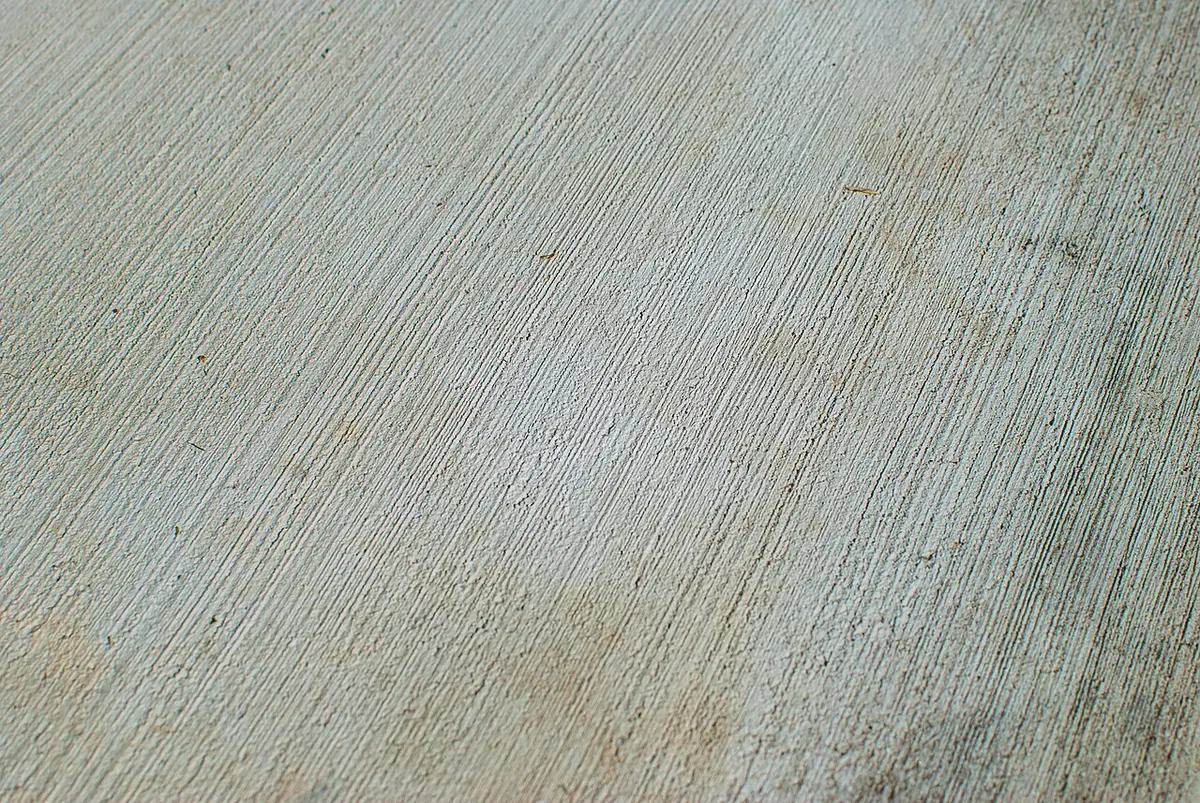
Photo: Shadowmeld Photography, Wikimedia Commons, CC BY-SA 4.0
The depth of the texture depends on the brush, the timing and the pressure. A light broom finish, like the sidewalk close-up above, has fine, shallow, closely spaced lines. It is comfortable to walk and sit on, easy to sweep, and suits patios, porches, pool decks and residential walkways. A medium broom finish is the standard for driveways and public sidewalks, with clearly visible grooves that give reliable grip. A heavy broom finish has deep, coarse grooves for maximum traction on steep driveways, ramps, loading areas, cattle and livestock areas, and roads. Heavy textures are harder to clean, collect dirt and can feel rough on bare feet.
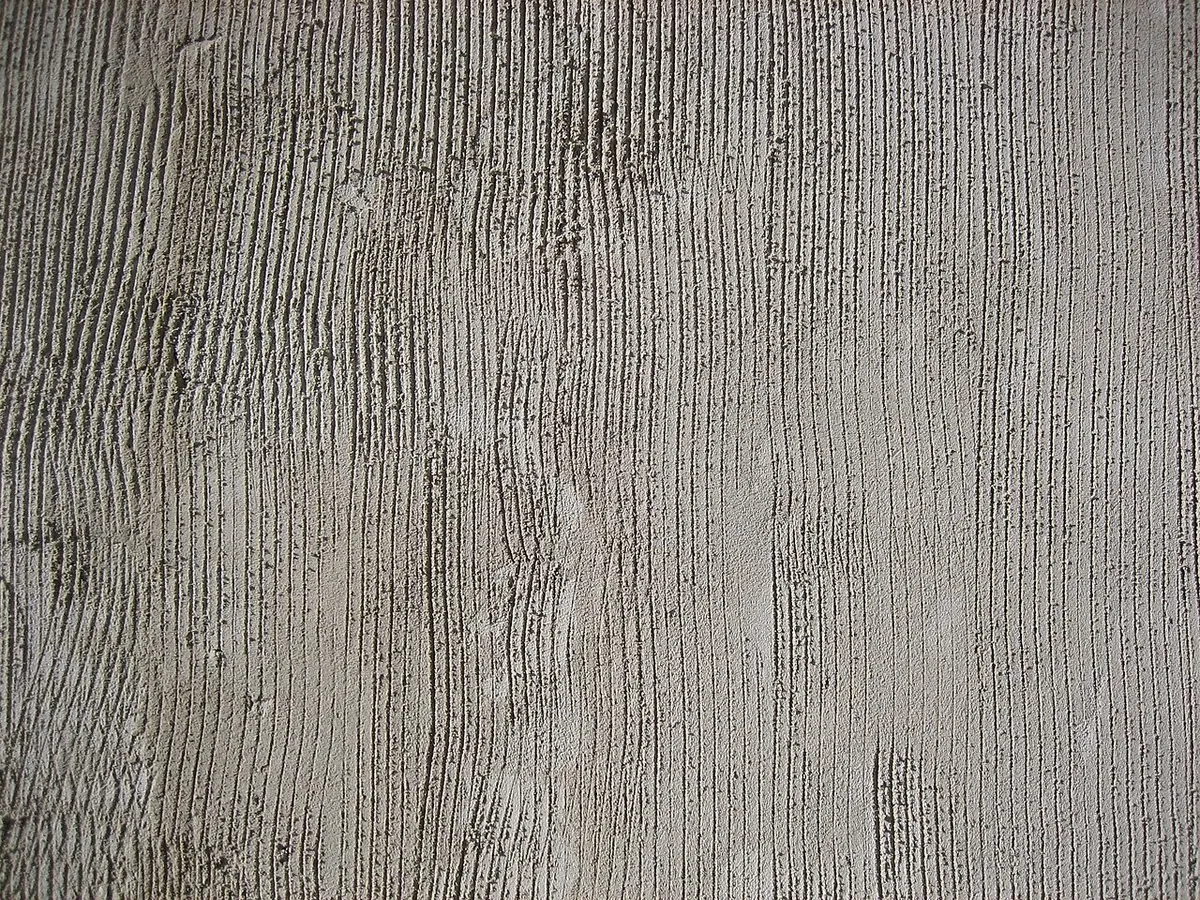
Photo: Titus Tscharntke (public domain), Wikimedia Commons
The coarser surface above shows what a stiff brush or an early stroke produces: deep, irregular furrows. This much texture gives excellent grip but holds dirt and water, so it is usually reserved for steep or heavy-duty surfaces. On a driveway or sidewalk, a light to medium brushed concrete texture is usually the best balance.
Brush Direction and Patterns
The standard rule is to brush perpendicular to the direction of travel, across a sidewalk or driveway, so feet and tires meet the ridges head on for the best traction. On sloped surfaces, brushing across the slope also gives water small channels to run across the surface, which can help drainage in some layouts. For decorative effects, finishers sometimes brush in alternating directions in each panel to create a checkerboard look, brush in wavy or curved lines, or brush the center of each panel and leave a smooth troweled border around the edges. Combined with control joints laid out in a neat grid, these patterns make plain brushed concrete look more finished at almost no extra cost. See control joints in concrete and concrete walkway ideas.
Other Textured Concrete Options
A broom finish is the simplest form of concrete texturing, but there are many other ways to create textured concrete.
Swirl or float finish. A float or trowel is moved in overlapping arcs to create a circular pattern. It gives moderate grip and a softer look than straight brushed lines.
Salt finish. Coarse rock salt is pressed into the fresh surface and washed out after it hardens, leaving small pits. It is popular around pools in warm climates. See rock salt finish concrete.
Exposed aggregate. The top layer of paste is washed away to reveal the stones, giving a very rough, natural texture. See exposed aggregate concrete.
Stamped concrete. Patterned mats imprint the texture of stone, brick, slate or wood into the surface. See stamped concrete patterns.
Texture mats and skins. Flexible rubber skins add the texture of stone or slate without a pattern of joints, sometimes over colored concrete.
Spray and knockdown textures. Thin cement-based coatings applied over existing concrete with a hopper gun and knocked down with a trowel, common on pool decks and patios. See concrete pool deck resurfacing.
Sandblasted and acid-etched textures. Applied to hardened concrete to roughen and expose sand or fine aggregate.
Each method adds texture and slip resistance in a different way and at a different cost, but plain brushed concrete remains the most economical. See decorative concrete.
Slip Resistance of Brushed Concrete
Brushed concrete is one of the most slip-resistant common surfaces, especially when wet. A medium broom finish typically gives a high coefficient of friction, well above the levels generally recommended for wet walking surfaces. The texture wears down over many years of traffic, especially on busy commercial sidewalks and driveways where tires scrub the surface, and film-forming sealers can fill in the grooves and reduce grip. For older or polished-smooth concrete, slip resistance can be restored by grinding, shot blasting, acid etching or applying a textured coating. Algae, moss and mildew on shaded surfaces also make any concrete slippery, so keep brushed concrete clean. See how to clean moss off concrete.
Sealing Brushed Concrete
Sealing protects brushed concrete from water, deicing salts, oil and stains. Penetrating sealers, such as silanes and siloxanes, are usually the best choice because they soak in and protect the concrete without filling the brush lines or making the surface slippery. Film-forming acrylic sealers enhance color and give a slight sheen, but they can reduce traction and fill in a light broom finish, so add an anti-skid grit if you use one. Wait until the concrete has cured, typically 28 days, before sealing, and reseal every few years. See concrete sealer, how to seal concrete and does salt damage concrete.
Common Problems With Brushed Concrete
Uneven or blotchy texture. Caused by brushing at the wrong time, inconsistent pressure, or a worn brush. Different parts of a slab set at different times, so brush each area when it is ready.
Torn surface and loose stones. Brushing too early or too hard. Wait longer and use lighter pressure.
Wavy or crooked lines. Usually from walking the brush instead of pulling it in one straight stroke. Use a guide string or follow a form board.
Scaling and flaking. Often caused by working bleed water into the surface, adding water during finishing, poor curing or early exposure to deicing salt. See concrete pitting and flaking.
Dust or paste on the brush. The concrete is too wet, or the brush needs cleaning between strokes.
Dark lap marks. Overlapping strokes at different times or pressures. Keep strokes consistent and overlap slightly.
Brush marks in the edges. Pulling the brush over the tooled edges and joints roughens them. Lift the brush just before the edge, or re-run the edger after brushing for a clean frame around each brushed concrete panel.
Brushing a Small DIY Pour
Homeowners pouring a small pad, a shed floor, a path or a set of steps can achieve good brushed concrete with simple tools. A standard 24 inch push broom with medium bristles works on small areas, though a real concrete brush with an adjustable bracket gives straighter lines. For steps and narrow areas, a hand brush or a stiff paintbrush works on risers and edges. Work in small sections, mix only what you can finish, and do not try to pour and finish a large area alone, because the concrete will set before you can brush it all. On a hot day, mist the air above the slab or use an evaporation retarder to slow surface drying so you have time to float and brush. Practice the stroke on a scrap board first, and keep a bucket of water nearby to rinse the broom between strokes. A neat brushed concrete finish on a small DIY project looks professional and is far safer underfoot than smooth concrete. See how to pour a concrete patio and how to pour concrete steps.
Brushed Concrete in Cold Climates
In climates with freezing winters and deicing salt, the way brushed concrete is finished affects how long it lasts. The surface paste is the part most exposed to freeze-thaw damage and salt, so it must be strong and dense. Use air-entrained concrete with the right air content, avoid adding water at the truck or sprinkling water on the surface while finishing, and never finish while bleed water is present. Do not hard trowel air-entrained concrete before brushing; one light pass, or brushing straight after floating, keeps the air bubbles that protect the surface intact. Cure carefully, keep salt off new brushed concrete through its first winter, and seal it with a penetrating sealer before the first freeze. A medium broom finish also gives better grip on icy mornings than a light one. See best ice melt for concrete and concrete spalling.
Coloring Brushed Concrete
Brushed concrete does not have to be plain gray. Integral color, mixed into the concrete at the plant, gives an even tone throughout the slab, from light buff and sand to terracotta, charcoal and earth tones. Color hardeners broadcast onto the fresh surface before floating give stronger, more durable color at the top. After curing, acid stains, water-based stains and tinted sealers can add color to existing brushed concrete. Color is often combined with a smooth troweled border around brushed panels for a two-texture look that costs little more than a standard slab. Keep in mind that a heavy broom texture makes color look darker and less uniform because of the shadows in the grooves, while a light texture shows color more evenly. See how to color concrete and concrete staining.
Refreshing Worn or Damaged Brushed Concrete
Over many years, brushed concrete on busy sidewalks and driveways wears smooth in the traffic paths, scales in patches, or gets stained. Several options restore it. Pressure washing and cleaning remove dirt that fills the grooves and makes the surface look dull. Light grinding or shot blasting can re-roughen worn areas. Scaled or flaking areas can be repaired with a thin cement-based resurfacer, which can itself be given a new broom finish while it is fresh, renewing the texture across the whole slab. Stains can be cleaned or covered with a penetrating stain. Cracks should be routed and filled. If the slab is badly broken or settling, replacement may be more economical. See how to resurface concrete, concrete driveway resurfacing and how to clean a concrete driveway.
Brushed Concrete for Common Projects
Driveways. A medium broom finish across the width of the driveway gives grip for tires and feet in rain and snow. On steep driveways, a heavier texture or grooves are worth considering. Brushed concrete driveways are the most affordable concrete driveway option and the easiest to repair in matching sections.
Sidewalks and walkways. Most cities require a broom finish on public sidewalks, brushed across the walk, with tooled edges and joints. For garden paths, a lighter texture with smooth borders looks more refined.
Patios. A light broom finish is comfortable for bare feet and furniture, and it is easy to sweep. Many homeowners add color or a border to dress up a brushed concrete patio.
Steps and porches. Brush the treads across their width for traction, and finish the risers smooth or with a light vertical brush. Add a nosing edge on each tread so the brushed concrete does not chip at the front.
Ramps. Ramps need a heavier texture or grooves because of the slope. Accessibility rules require firm, stable and slip-resistant surfaces on ramps.
Garages and workshops. A light broom finish improves traction in wet or oily garages, though it is harder to sweep and coat than a smooth troweled floor. Many owners prefer smooth floors indoors and textured concrete only on the apron outside. See concrete driveway apron.
Brushed Concrete Cost
Because the broom finish takes only a few minutes per section and a brush that costs under $200, brushed concrete adds little or nothing to the price of a slab. Typical installed prices in the US are about $6 to $12 per square foot for a plain brushed concrete patio, sidewalk or driveway, depending on thickness, reinforcement, site preparation and local labor. Decorative borders, color and patterns raise the price modestly. Other textured concrete finishes cost more: salt finishes add about $1 to $2 per square foot, exposed aggregate $2 to $6, and stamped concrete $8 to $18 or more over the base price. See concrete cost per square foot, concrete driveway cost and concrete sidewalk cost.
Brushed Concrete vs Smooth Concrete
Smooth troweled concrete looks sleek and is easy to clean, which is why it is used indoors on garage and basement floors and is the base for polished concrete. Outdoors, however, smooth concrete becomes dangerously slippery when wet, icy or covered in leaves, and it shows trowel marks, color variations and small blemishes. Brushed concrete gives up a little of the sleek look in return for traction and a forgiving, uniform appearance. For most outdoor surfaces, brushed concrete or another textured concrete finish is the right choice; smooth finishes belong under roofs or indoors. A common compromise is a smooth troweled band around the edges of each panel with a broom finish in the middle, which gives the clean look of smooth concrete at the borders and the safety of brushed concrete where people actually walk. See concrete floors in homes.
Frequently Asked Questions
What is a broom finish on concrete?
A light texture made by pulling a concrete brush across the fresh surface after floating and troweling. It is the most common finish on driveways and sidewalks.
When should you brush concrete?
When the bleed water has gone and the surface is firm enough to hold crisp marks without tearing, usually 30 minutes to 2 hours after placing in mild weather.
Which direction should brushed concrete go?
Across the direction of travel, perpendicular to the way people walk or cars drive, for the best traction.
Is brushed concrete slippery?
No. A broom finish is one of the most slip-resistant common surfaces, though film-forming sealers and algae can reduce grip.
Can you broom finish existing concrete?
Not directly, since the texture must be made while the concrete is fresh. Old smooth concrete can be roughened by grinding or etching, or covered with a textured overlay.
Sources
- American Concrete Institute: ACI 302.1R guide to concrete floor and slab construction
- Portland Cement Association: finishing concrete flatwork
- US Access Board: ADA standards for firm, stable, slip-resistant surfaces
- National Ready Mixed Concrete Association: Concrete in Practice series
Related Guides
- How to smooth concrete — troweling and smoothing hardened concrete
- Concrete stair treads — precast and poured treads
- Rock salt finish concrete — pitted decorative finish for pool decks and patios