
Concrete Floor Coverings: Best Options, How to Prepare the Slab, and Cost
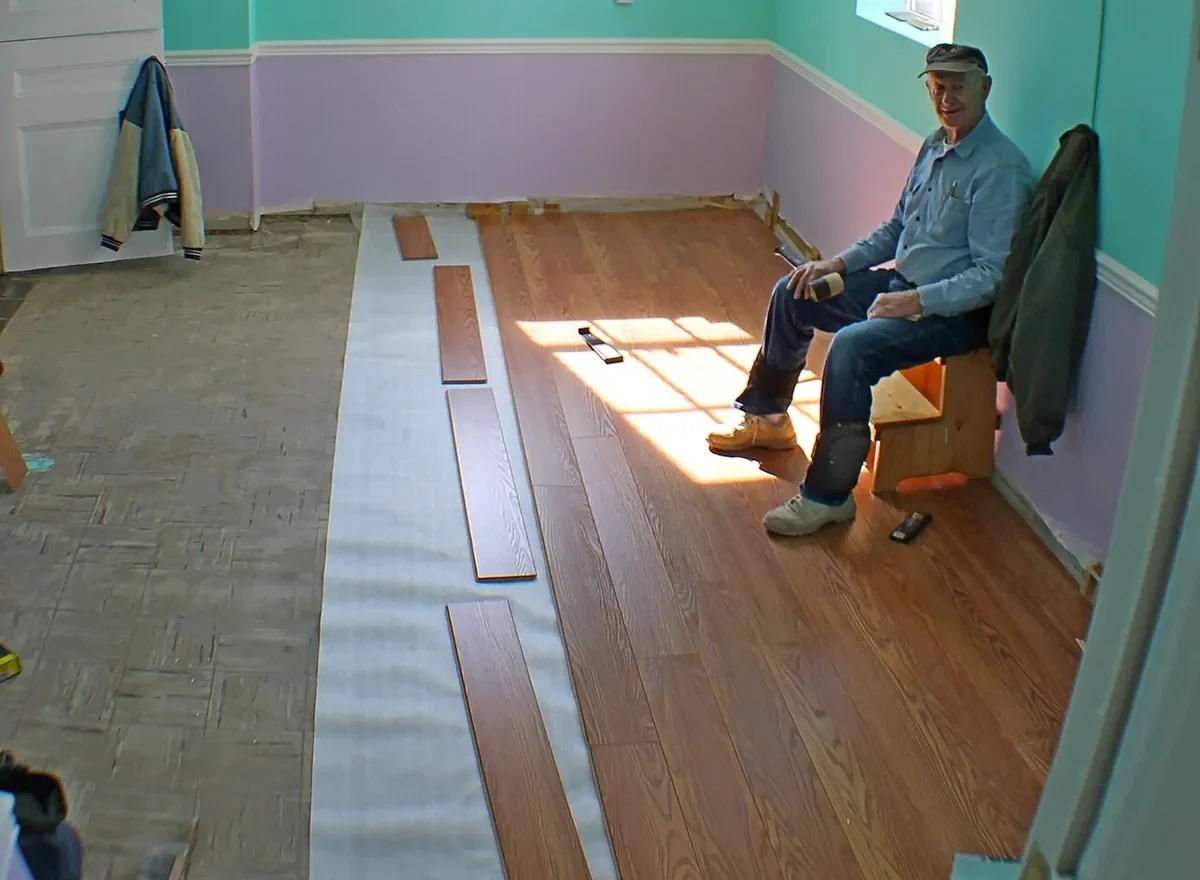
Photo: Wasrts, Wikimedia Commons, CC BY-SA 4.0 (cropped)
Quick Answer
The best concrete floor coverings are the ones that tolerate moisture and a hard, flat base. Luxury vinyl plank (LVP) and porcelain tile are the most reliable choices for basements, slab homes and kitchens; carpet, laminate and engineered wood also work over concrete with a proper moisture barrier and underlayment; and epoxy, polished concrete and rubber flooring suit garages, gyms and workshops. Before installing any concrete floor covering, test the slab for moisture, fill cracks, and level it to about 3/16 inch in 10 feet. Typical installed costs range from about $3 to $8 per square foot for carpet, laminate and basic LVP to $8 to $20 for tile and engineered wood.
Millions of homes sit on concrete slabs, and almost every basement, garage and many kitchens, sunrooms and commercial spaces have a concrete floor underneath. Bare concrete can be cold, hard, dusty and plain, so most people cover it. The right concrete floor coverings make a slab feel warm and finished, while the wrong one, installed over a damp or uneven slab, can warp, mold, peel or crack within months. The photo above shows a common approach: laminate planks clicked together over a roll of foam underlayment laid on the concrete.
This guide compares the main concrete floor coverings, explains how to test and prepare the slab, covers installation tips for each type, lists common mistakes, and gives typical costs, so you can choose the best cement floor covering for each room.
What to Consider Before Choosing
Moisture. Concrete slabs, especially basement floors and slabs on grade without a vapor barrier, allow moisture vapor to pass upward. Coverings that trap moisture, such as carpet with a dense pad, glued wood and some adhesives, can grow mold or fail. Water-resistant concrete floor coverings such as vinyl and tile are much more forgiving. See vapor barrier under concrete and is concrete waterproof.
Flatness. Floating floors such as laminate and click vinyl need a flat base, typically within about 3/16 inch over 10 feet, or they flex, click and separate. Tile needs a flat base to avoid lippage and cracking.
Comfort and warmth. Concrete is hard and cool. Carpet, cork, rubber and floors with underlayment feel softer and warmer; tile and polished concrete stay hard and cool, which is welcome in hot climates.
Use. Garages need oil-resistant coverings; kitchens and bathrooms need water resistance; basements need moisture tolerance; gyms need impact absorption; living areas need comfort and looks.
Height. Every covering adds height, from about 1/8 inch for sheet vinyl to 3/4 inch or more for tile on a membrane or wood with underlayment, affecting door clearances and transitions.
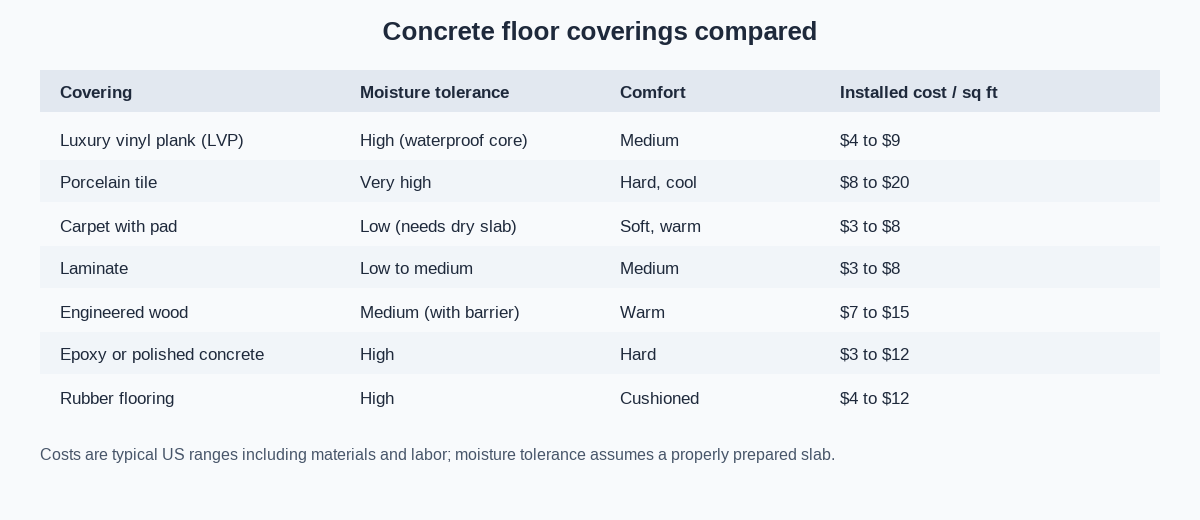
Budget. Costs vary widely, as the comparison below shows.
Concrete Floor Coverings Compared
Luxury vinyl plank and tile
Luxury vinyl plank and luxury vinyl tile are the most popular concrete floor coverings today. Rigid core products, called SPC (stone plastic composite) and WPC (wood plastic composite), are waterproof, click together as a floating floor over the slab, and realistically imitate wood and stone. They tolerate some moisture and minor slab imperfections, are comfortable underfoot, and install quickly. Glue-down vinyl is thinner and very stable, good for commercial spaces. Use a vapor barrier underlayment if the slab has moisture, and leave expansion gaps at walls.
Porcelain and ceramic tile
Tile is one of the most durable concrete floor coverings. Porcelain tile is unaffected by water, lasts for decades, and bonds directly to a clean, flat slab with thin set mortar. Crack isolation or uncoupling membranes protect the tile from slab cracks. Tile is hard and cool, but pairs well with radiant floor heating. See how to lay tile on concrete and heated concrete floor.
Carpet
Carpet is the warmest and softest cement floor covering and the least expensive per square foot. Over concrete, use a moisture barrier and a pad suitable for slabs, or carpet tiles with built-in backing, which can be replaced individually if damaged. Carpet is a poor choice where the slab is damp or flooding is possible.
Laminate
Laminate is an affordable wood-look floating floor with a fiberboard core. Over concrete it needs a 6 mil polyethylene vapor barrier or an underlayment with a built-in barrier, as in the photo above. Standard laminate swells if it gets wet, so newer water-resistant laminates are better for basements.
Engineered wood
Engineered wood, a real wood wear layer on a stable plywood core, can be floated, glued or nailed to a plywood subfloor over concrete. It is far more stable than solid hardwood, which is generally not recommended directly on concrete, especially below grade. Moisture testing and a vapor barrier are essential.
Rubber and cork
Rubber flooring in tiles, rolls or interlocking mats is excellent for home gyms, playrooms and workshops: durable, cushioned, slip resistant and moisture tolerant. Cork is warm and soft but needs a dry slab and sealing.
Coatings and polished concrete
Sometimes the best concrete floor covering is a coating or treatment rather than a separate floor. Epoxy, polyurethane and polyaspartic coatings, often with color flakes, are popular for garages and basements. Polished concrete turns the slab itself into a durable, glossy finished floor. Stains and dyes add color. See epoxy for concrete, polished concrete cost and concrete staining.
Preparing the Slab for a Concrete Floor Covering
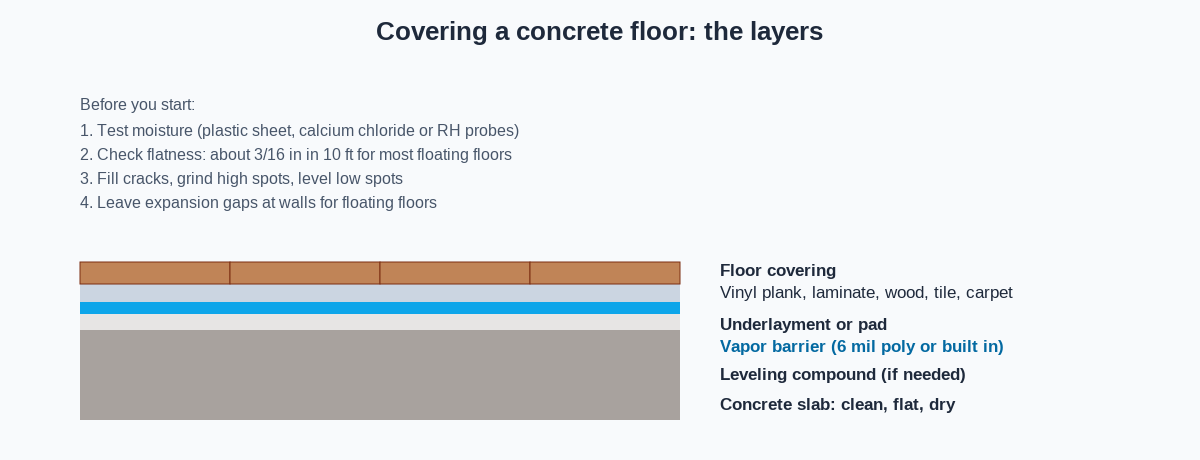
1. Test for moisture. Tape an 18 inch square of plastic sheet to the slab for 24 hours; condensation or darkening under it means moisture is coming through. For glue-down floors and wood, follow the flooring maker's required tests, typically calcium chloride (ASTM F1869) or relative humidity probes (ASTM F2170), and its limits.
2. Clean. Remove dirt, paint, adhesive, oil, sealers and curing compounds that would block adhesives or trap moisture. See how to clean concrete floors.
3. Repair. Fill cracks and holes with a patching compound. Address active cracks or settlement before covering the floor. See how to fix cracks in concrete and concrete patching compound.
4. Level. Grind down high spots and fill low spots with a floor patch or self-leveling underlayment to meet the flatness the flooring requires. See concrete grinding and self-leveling concrete.
5. Add a vapor barrier or underlayment. For floating floors, lay 6 mil poly with taped, overlapped seams, or a combined underlayment with a barrier. For glue-down floors, use a moisture-tolerant adhesive or a moisture mitigation primer if tests require it. See concrete primer.
6. Acclimate the flooring. Store flooring in the room for the time the manufacturer specifies so it adjusts to temperature and humidity, usually 24 to 72 hours with the heating or cooling running.
Best Concrete Floor Coverings by Room
Basements. Waterproof rigid core vinyl plank or porcelain tile are the safest concrete floor coverings below grade. Carpet tiles and rubber work in dry basements; avoid solid wood and standard laminate. See concrete floors in homes.
Garages. Epoxy, polyaspartic coatings, interlocking PVC or rubber garage tiles, and polished or sealed concrete stand up to tires, oil and salt. See concrete garage floor repair.
Kitchens and bathrooms. Tile and luxury vinyl handle water and spills best.
Living rooms and bedrooms on slabs. Engineered wood, LVP, laminate or carpet give warmth and comfort.
Home gyms. Rubber flooring absorbs impact, reduces noise and protects the slab.
Sunrooms and porches. Tile, stamped or stained concrete, or outdoor-rated vinyl.
Installing Floating Concrete Floor Coverings
Floating floors, including click vinyl plank, laminate and many engineered wood products, are the easiest concrete floor coverings for DIY installation because they are not glued or nailed to the slab. After the slab is clean, dry and flat, roll out the vapor barrier or underlayment, overlapping and taping seams as the maker directs and running it a few inches up the walls. Start along the longest straight wall, with spacers to leave a 1/4 to 1/2 inch expansion gap at all walls, pipes and door frames. Click the planks together row by row, staggering the end joints by at least 6 to 12 inches so seams do not line up. Cut the last row to width, install transition strips at doorways, and cover the expansion gap with baseboard or quarter round nailed to the wall, never to the floor. Floating concrete floor coverings should be able to move slightly with temperature and humidity; pinning them down with heavy cabinets or trim leads to buckling. In large rooms, follow the maker's limits on maximum run lengths, which may require expansion joints in doorways.
Installing Glue-Down Concrete Floor Coverings
Glue-down vinyl, some engineered wood, carpet tiles and rubber flooring are bonded directly to the slab. They are very stable and quiet underfoot but depend completely on the slab being clean, sound and within the adhesive's moisture limits. Remove any old adhesive residue, paint and sealers, often by grinding, and patch and level the floor. Prime the slab if the adhesive maker requires it, especially over porous concrete or self-leveling underlayment. Spread the adhesive with the specified trowel notch, respect the open time before laying the flooring, and roll the flooring with a heavy roller to ensure full contact. For slabs with higher moisture, use a moisture-tolerant adhesive or apply a moisture mitigation system first. Glue-down concrete floor coverings are more work to remove later, so they are best where a long-lasting, stable floor is wanted.
Building a Subfloor Over Concrete
Sometimes the best foundation for concrete floor coverings is a raised subfloor. In basements that are cold or slightly damp, a subfloor of interlocking panels with a plastic dimple membrane or foam on the bottom, or plywood over sleepers and rigid foam insulation, creates an air gap or insulation layer between the slab and the finished floor. That makes the floor warmer, more comfortable and better protected from minor moisture, and it allows nail-down wood or carpet with a standard pad. Subfloor systems add about 3/4 to 1.5 inches of height and cost about $1.50 to $4 per square foot. They are not a fix for flooding or standing water, which must be solved with drainage. See is concrete waterproof.
Cement Floor Covering for Older Homes
Older homes and buildings often have concrete floors in basements, enclosed porches, utility rooms and additions that were never meant to be finished. These slabs may be uneven, cracked, painted, stained with oil, or covered with old tile or adhesive. Before installing a new cement floor covering, check whether old floor tiles or black adhesive might contain asbestos, which was common in floor products before the 1980s; test them before sanding, grinding or scraping, and leave them undisturbed or have them removed by professionals if positive. Many old floors can be covered right over intact old tile with a floating floor, avoiding the need to remove it. Uneven old slabs usually need grinding or self-leveling underlayment. Damp older basements need moisture control before any concrete floor covering goes down. See how to remove paint from concrete.
Concrete Floor Coverings Over Radiant Heat
Radiant floor heating in a concrete slab works best with concrete floor coverings that conduct heat well. Tile and stone are ideal, followed by polished or stained concrete. Luxury vinyl and engineered wood can be used if the maker approves them for radiant heat and surface temperatures stay within limits, usually about 80 to 85 degrees Fahrenheit. Carpet and thick pads insulate the floor and reduce heat output, so choose low-resistance carpet and pad if you must use them. Avoid solid hardwood, which can shrink and gap over heated slabs. See heated concrete floor.
Concrete Floor Coverings for Basements in Detail
Basements are where concrete floor coverings are most likely to fail and where choosing well matters most. Basement slabs are in contact with the ground, often lack a vapor barrier in older homes, and can see occasional water from leaks, sump failures or high groundwater. The best concrete floor covering for most basements is waterproof rigid core luxury vinyl plank over a thin underlayment, because it shrugs off moisture and can be lifted and dried or replaced if the basement floods. Porcelain tile is equally water tolerant and even more durable but colder underfoot. Carpet tiles let you replace only damaged squares after a leak and are warmer than broadloom carpet over a damp slab. Rubber flooring is ideal for basement gyms and playrooms. Before choosing any concrete floor covering for a basement, fix exterior drainage, gutters and grading, run a dehumidifier to keep humidity around 50 percent, and do a moisture test on the slab. A concrete floor covering cannot solve a wet basement, but the right one will survive the occasional damp season. See efflorescence on concrete and mold on concrete.
Concrete Floor Coverings for Garages and Workshops
Garage and workshop floors take hot tires, oil, road salt, dropped tools and heavy loads, so the best concrete floor coverings there are tough and easy to clean. Epoxy and polyaspartic coatings bond to the ground slab and create a seamless, glossy, stain-resistant surface; they need careful prep and a dry slab. Interlocking PVC or polypropylene garage tiles float over the concrete, hide cracks and stains, install in a few hours without prep beyond cleaning, and can be lifted if needed. Rubber roll-out mats protect the slab under cars and workbenches. Sealed or densified bare concrete is the simplest and cheapest option. For workshops where people stand for long hours, anti-fatigue rubber mats in work areas add comfort. Avoid carpet, laminate and wood in garages. See concrete densifier and concrete coating cost.
Choosing Concrete Floor Coverings for Comfort
If comfort underfoot is the priority, there are several ways to soften concrete floor coverings. A quality underlayment under vinyl plank, laminate or engineered wood adds cushioning, reduces sound and slightly warms the floor. Cork-backed underlayments and cork flooring are especially warm and quiet. Carpet over a good pad is the softest option, and area rugs on tile or vinyl add warmth where people sit and stand. Insulated subfloor panels or rigid foam under a plywood subfloor make a dramatic difference in cold basements. Radiant floor heating, built into the slab or added under tile or vinyl, makes even hard concrete floor coverings feel warm. For standing work in kitchens and shops, anti-fatigue mats reduce leg and back strain on hard floors.
How Long Concrete Floor Coverings Last
The lifespan of concrete floor coverings depends on the material, the quality of installation and how dry the slab stays. Porcelain tile can last 50 years or more. Epoxy and polyaspartic coatings typically last 10 to 20 years in garages with recoating. Luxury vinyl plank lasts about 15 to 25 years, engineered wood 20 to 40 years with refinishing, laminate 15 to 25 years, rubber flooring 20 years or more, and carpet 5 to 15 years. Polished concrete can last indefinitely with periodic burnishing. Any concrete floor covering installed over a damp or uneven slab will fail sooner, which is why preparation is so important.
DIY vs Professional Installation
Many concrete floor coverings are DIY friendly. Floating vinyl plank, laminate, carpet tiles and interlocking garage tiles can be installed by a handy homeowner with basic tools. Glue-down floors, tile, engineered wood glued to concrete, self-leveling underlayment, epoxy coatings and polished concrete are more demanding, and professional installation is often worth the cost, especially because errors in prep or adhesive can cause the whole concrete floor covering to fail. Professionals also carry moisture meters, grinders and leveling equipment, and their work is usually warrantied. Even if you hire out the installation, you can save money by removing old flooring, baseboards and furniture yourself.
Removing Old Floor Coverings From Concrete
Before installing new concrete floor coverings, old flooring often has to come up. Carpet and pad pull up easily, followed by tack strips nailed to the concrete. Floating floors unclick. Glued vinyl, linoleum and carpet leave adhesive that must be scraped or ground off, especially under new glue-down floors; check old black adhesive and tiles for asbestos first. Ceramic tile is broken out with a chisel or rotary hammer, and thinset ridges are ground flat. After removal, clean, patch and level the slab as described above. See concrete chisel and concrete grinding.
Quick Guide to Picking Concrete Floor Coverings
If you are unsure which of the concrete floor coverings to choose, work through four questions. Is the slab ever damp? If yes, choose waterproof vinyl plank, porcelain tile, rubber or a coating, and fix the moisture source. Does the room need to feel warm and soft? If yes, choose carpet, cork or a floating floor over a cushioned underlayment, or add radiant heat. Will the floor see water, grease or tires? If yes, choose tile, vinyl, epoxy or garage tiles. Is budget the main concern? If yes, choose carpet, laminate, basic vinyl or a sealed or painted slab. Most homeowners end up with luxury vinyl plank in basements and living areas, tile in kitchens and baths, and a coating or garage tiles in the garage, a combination of concrete floor coverings that balances cost, comfort and durability. Whatever you choose, the slab preparation is what makes any concrete floor covering last.
Concrete Cover and Concrete Covering: Other Meanings
The phrases concrete cover and concrete covering are also used in other ways in construction. In structural engineering, concrete cover is the thickness of concrete between the surface and the reinforcing steel, which protects the steel from corrosion and fire; typical minimum concrete cover is 3/4 to 1.5 inches for interior slabs and beams and 1.5 to 3 inches for exterior and ground-contact concrete. Concrete covering can also mean covering fresh concrete with plastic sheeting, wet burlap or insulated blankets to cure it and protect it from cold or rain, or covering an old outdoor slab with pavers, tile or an overlay to refresh it. See rebar in concrete, concrete blankets and how to cover an old concrete patio.
Common Mistakes
Skipping moisture testing. The most common cause of failed concrete floor coverings, leading to mold, warping and adhesive failure. A simple plastic sheet test costs almost nothing and should be done before any concrete floor covering goes down, even in rooms that seem dry.
Ignoring flatness. Floating floors flex and separate on uneven slabs, and tile cracks. Check the slab with a long straightedge and level it before installing concrete floor coverings.
Installing over sealers or old adhesive. New adhesives may not bond, and old adhesive can react with new vinyl and stain it. Grind or strip the slab first.
No expansion gap. Floating floors need gaps at walls and fixed objects, hidden under baseboards, so concrete floor coverings can move with the seasons without buckling. Heavy kitchen islands should sit on the slab, not on a floating floor.
Wrong product for the space. Solid hardwood in a basement or standard laminate in a bathroom invite problems. Match the concrete floor covering to the moisture, traffic and use of each room, and read the warranty conditions before buying.
Concrete Floor Covering Cost
Typical installed costs in the US per square foot are about $3 to $8 for carpet and pad, $3 to $8 for laminate, $4 to $9 for luxury vinyl plank, $7 to $15 for engineered wood, $8 to $20 for porcelain tile, $4 to $12 for rubber flooring, and $3 to $12 for epoxy and polished concrete. Slab preparation adds cost: moisture testing $100 to $500, crack repair and patching $1 to $3 per square foot, grinding $1 to $3, and self-leveling underlayment $2 to $6 per square foot. A 500 square foot basement typically costs $2,500 to $6,000 for LVP including basic prep. See concrete cost per square foot.
Frequently Asked Questions
What is the best floor covering for concrete?
Luxury vinyl plank and porcelain tile are the most reliable because they tolerate moisture. Carpet, laminate and engineered wood work with proper moisture barriers.
Do I need a vapor barrier over concrete?
For most floating floors, carpet and wood, yes. Many vinyl and tile products do not need one but still require moisture testing.
Can I put flooring directly on concrete?
Yes, if the slab is clean, dry and flat enough for the product. Many floors float over an underlayment; tile and glue-down vinyl bond directly.
What is the cheapest concrete floor covering?
Carpet, laminate, basic vinyl, paint or a sealer are the lowest-cost options.
What does concrete cover mean?
In construction, it usually means the thickness of concrete protecting the reinforcing steel. It can also mean any covering placed over concrete.
Sources
- ASTM F1869: moisture vapor emission rate of concrete subfloors
- ASTM F2170: relative humidity in concrete floor slabs
- National Wood Flooring Association: installation over concrete
- Tile Council of North America: tile over concrete slabs
Related Guides
- Concrete stair treads — precast and poured treads
- Concrete polisher — planetary grinders, hand polishers, pads and rental prices
- Stamped concrete floors — indoor patterns, overlays vs new slabs, sealers and cost
- Concrete board — backer board for shower walls and tile floors, installation and waterproofing