
Concrete Coffee Table Guide: DIY, Dining, Outdoor and Picnic Concrete Tables
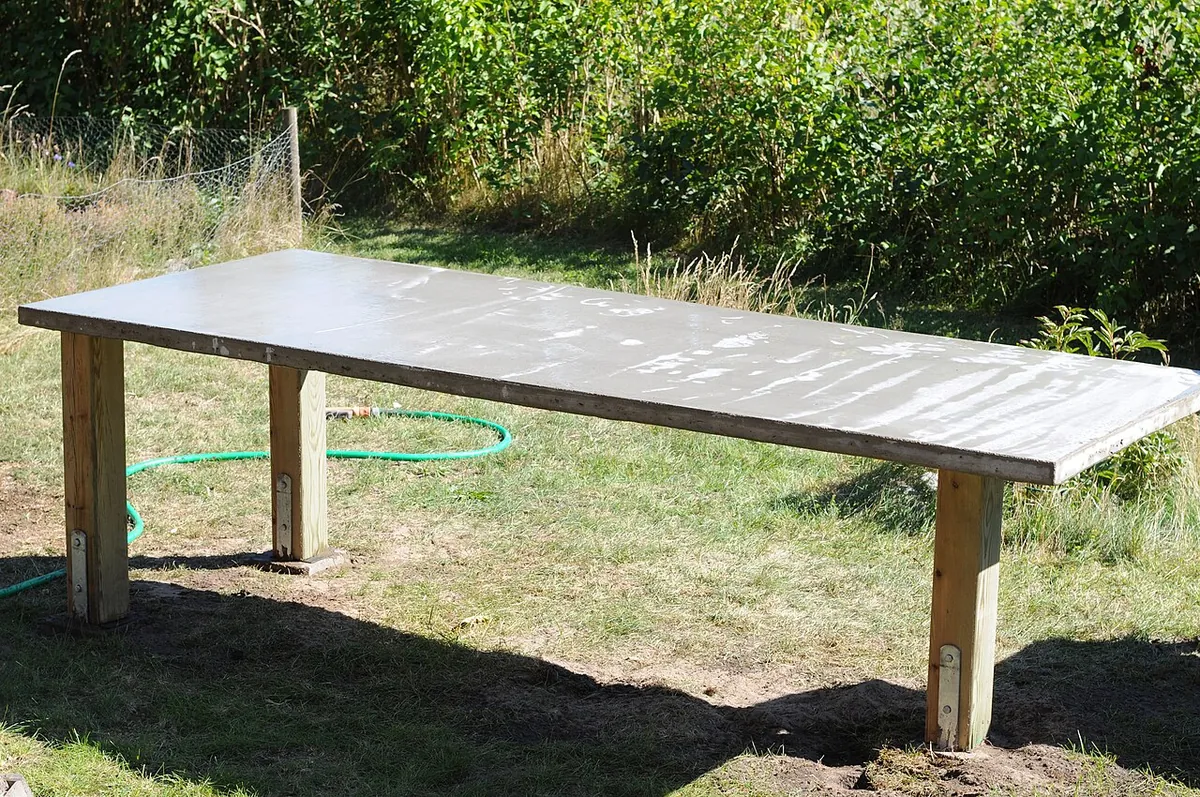
Photo: ADFSGL, Wikimedia Commons, public domain
Quick Answer
A concrete coffee table is usually a cast concrete top about 1.5 inches thick on a wood, steel or concrete base, standing 16 to 18 inches tall. A 24 by 48 inch top takes about 1 cubic foot of mix and weighs roughly 150 pounds, or about half that in thin glass-fiber reinforced concrete (GFRC). A concrete dining table is 29 to 30 inches tall with a 1.5 to 2 inch top that can weigh 330 to 450 pounds, so the base and floor must carry it. DIY tops cost about $100 to $300 in materials; finished concrete tables sell for about $600 to $4,000. Seal every concrete table with a food-safe, stain-resistant sealer, and choose air-entrained or GFRC mixes for an outdoor concrete table.
Concrete furniture has moved from parks and campgrounds into living rooms and patios. A concrete coffee table gives a room a solid, modern center. A concrete dining table seats a family for decades. An outdoor concrete table or concrete patio table does not blow over, rot, or fade like wood and plastic. And the classic concrete picnic table still fills public parks because it lasts for generations with no care at all.
This guide covers the main types of concrete tables, how to make a concrete coffee table yourself step by step, what changes for a concrete dining table and outdoor concrete tables, how much they weigh, how to choose a base, how to seal and care for them, and what they cost to build or buy. It uses the same methods as concrete countertops, scaled to furniture.
Types of Concrete Tables
Concrete tables come in four main forms:
- Concrete coffee table: a low table for living rooms and patios, often a thin concrete top on a steel, wood or concrete base, or a solid concrete block or drum. Size is usually 20 to 30 inches wide and 36 to 60 inches long.
- Concrete dining table: a full-height table, usually 36 to 42 inches wide and 60 to 96 inches long, with a thicker top and a strong base. Indoor and outdoor versions exist.
- Concrete side table: a small end table, often a cylinder, a cube or a small round top on a metal frame. Easy as a first project.
- Concrete picnic table: a heavy one-piece or multi-piece table with attached benches, made from precast concrete, used in parks, campgrounds, schools and rest areas.
Outdoor versions of each, including the outdoor concrete coffee table and the concrete outdoor dining table, use the same methods with stronger attention to freeze-thaw, water and sun.
Why Choose a Concrete Table?
Concrete tables are durable, heavy, and hard to damage. They do not warp, rot or fade. Outdoors, a concrete patio table stays put in wind that would flip aluminum furniture. Concrete can be cast in almost any shape, colored with pigments, polished to show aggregate, or left raw for an industrial look. A well-sealed concrete table is easy to clean. The downsides are weight, which makes moving hard, the risk of stains and etching from acids like wine and lemon juice if the sealer is poor, and the possibility of hairline cracks. Concrete can also chip at sharp edges if hit. Good design handles all of these. See types of concrete finishes and how to color concrete.
Concrete Coffee Table Sizes and Weight
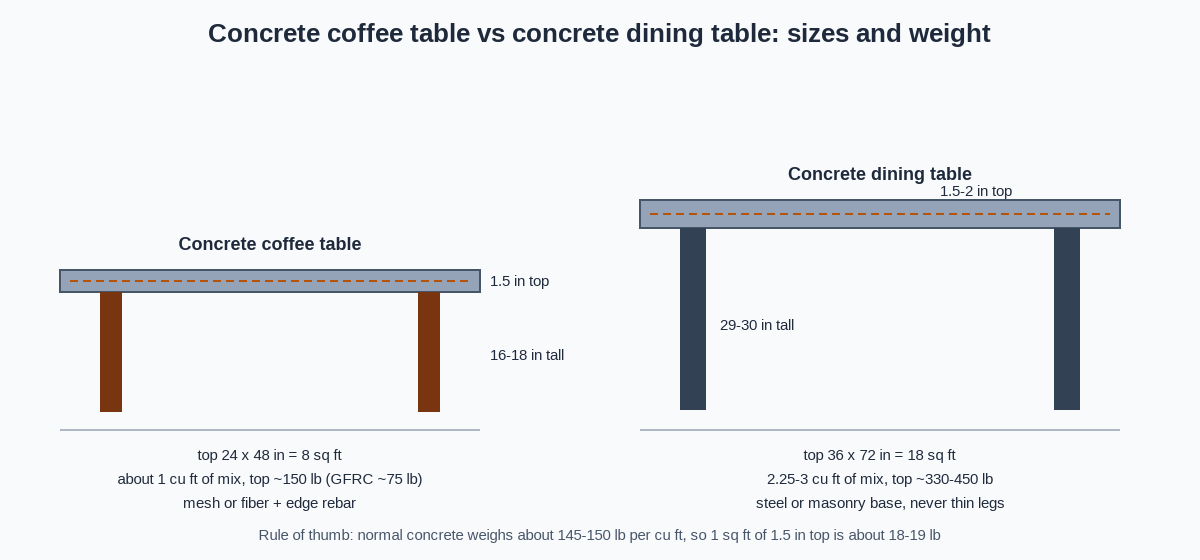
Weight drives every decision about concrete furniture. Normal concrete weighs about 145 to 150 pounds per cubic foot, so each square foot of a 1.5 inch thick top weighs about 18 to 19 pounds. As the diagram above shows, a 24 by 48 inch concrete coffee table top (8 square feet) at 1.5 inches thick weighs about 150 pounds, before the base. A 36 by 72 inch concrete dining table top (18 square feet) weighs about 330 pounds at 1.5 inches and 450 pounds at 2 inches. GFRC, a glass-fiber reinforced mix sprayed or packed in thin layers, allows tops as thin as 3/4 inch, cutting weight roughly in half. For a living room on a wood-framed floor, a GFRC concrete coffee table or a thin top on a light base is easier to move and kinder to the floor. See glass fiber reinforced concrete and how much a yard of concrete weighs.
Standard heights: coffee tables 16 to 18 inches, side tables 20 to 26 inches, and dining tables 29 to 30 inches. Leave about 10 to 12 inches of legroom height between the underside of a dining table top and the seat, and at least 24 inches of width per diner.
Materials and Tools for a DIY Concrete Table
To make a concrete coffee table or concrete side table at home, you need:
- Concrete mix: a countertop mix, a high-strength sand mix, or a bagged concrete mix with small aggregate. Countertop mixes flow well, have less shrinkage, and give smoother surfaces. See high-strength concrete and how much is a bag of concrete.
- Mold: melamine-coated particle board for flat tops, with sides screwed on and joints caulked with silicone for crisp edges.
- Reinforcement: welded wire mesh, fiberglass mesh, steel rebar near the edges, or fibers in the mix. See wire mesh for concrete and fiber-reinforced concrete.
- Tools: a bucket mixer or paddle drill, trowel, screed board, vibration source (an orbital sander held against the mold works), level, gloves, eye protection and a dust mask.
- Finishing: wet sanding pads or a polisher, slurry for filling pinholes, and a concrete sealer.
How to Make a Concrete Coffee Table Step by Step
- Design. Choose the size and base. Decide whether the concrete is cast face down in the mold, for a glass-smooth top, or face up, for a troweled look. Most DIY tables cast face down.
- Build the mold. Cut a melamine base to the top size plus the side thickness, then screw on melamine side strips the height of the top thickness. Run a thin bead of silicone in the inside corners and smooth it with a finger for a slightly rounded edge, which resists chipping.
- Prepare reinforcement. Cut wire mesh or rebar to sit in the middle of the slab thickness, at least 3/4 inch from every edge. Support it on small spacers or place it halfway through the pour.
- Mix. Mix the concrete to a thick but workable consistency, following the bag. Avoid adding extra water, which weakens the mix and increases shrinkage cracks. A water reducer or plasticizer helps flow. See how to mix concrete and concrete admixtures.
- Fill and vibrate. Fill the mold halfway, vibrate to release air bubbles, place the mesh, fill to the top, and vibrate again. Tap the sides with a rubber mallet. Screed the back flat.
- Cure. Cover with plastic and keep the slab moist for at least 3 to 7 days. Slow curing makes stronger concrete with fewer cracks. See how long concrete takes to cure.
- Demold and flip. Unscrew the sides, lift the top carefully with helpers, and flip it onto padded supports. The face that was down is now the finished top.
- Finish. Fill pinholes with a cement slurry, wet sand or polish to the look you want, and clean thoroughly.
- Seal. Apply a sealer suited to tabletops, following the product's cure and recoat times.
- Attach the base. Fasten the top with construction adhesive, brackets or threaded inserts cast into the underside.
Many builders cast inserts or bolts into the underside so the base screws on cleanly. A concrete side table or small round concrete coffee table can be cast in a plastic planter or bucket as a mold, which is an easy first project.
Making a Concrete Side Table
A concrete side table is the best first project before a full concrete coffee table, because it uses one or two bags of mix and a simple mold. For a drum table, use a smooth plastic bucket or planter as the outer mold and a smaller one, weighted with sand, as the inner core to cut weight; the gap between them becomes a wall about 1 to 1.5 inches thick. For a cube, build a melamine box. For a round top on legs, use a cake pan, a plastic plant saucer or a cut section of large cardboard tube on a melamine base. Coat the mold with release agent or cooking spray, fill and vibrate as for a larger top, and cure under plastic for several days. Seal it like any concrete table. Small tops 16 to 20 inches across, 1 to 1.5 inches thick, weigh about 25 to 40 pounds and can sit on hairpin legs or a slim steel frame. Once you have made a concrete side table and seen how the mix, vibration and sealer behave, a larger concrete coffee table or concrete dining table becomes much less risky. See how to make concrete stepping stones.
Building a Concrete Dining Table
A concrete dining table uses the same process at a larger scale, but weight and span change the design. A 6 to 8 foot top spans between legs, so it needs real reinforcement: rebar or heavy mesh, or a GFRC mix designed for flexural strength. Many builders split a long top into two pieces, or use a strong steel frame under the full top. The base must carry several hundred pounds without racking: steel frames, heavy timber trestles, or concrete pedestals work. Thin hairpin legs suit only small concrete coffee table tops. Make sure the floor can carry the load, particularly on upper floors, and plan for four or more strong people to move the top. A concrete dining table needs the best sealer you can find, since food, oil, wine and citrus will all land on it. See concrete sealer.
Outdoor Concrete Tables

Photo: SharonPapierdreams, Wikimedia Commons, CC BY-SA 4.0
An outdoor concrete table faces rain, sun, freeze-thaw and sometimes salt and chlorine. Outdoors, use a strong mix with low water content, air entrainment in freezing climates, and reinforcement well covered by concrete so it cannot rust. Slope the top very slightly or use a sealer that sheds water, and keep water from sitting under the base. UV-stable penetrating sealers outlast film-forming sealers in sun. A concrete outdoor dining table or concrete patio table can sit directly on a patio or deck if the surface is strong enough; heavy tables on decks need to sit over joists or beams. See concrete patio ideas and how to seal concrete.
An outdoor concrete coffee table for a fire pit area or lounge is one of the most popular DIY patio projects. Cast it low and wide, with rounded edges, and add a hole or tray for a fire bowl if you want. Many outdoor concrete coffee table designs also double as footrests. See concrete fire pit.
Concrete Picnic Tables
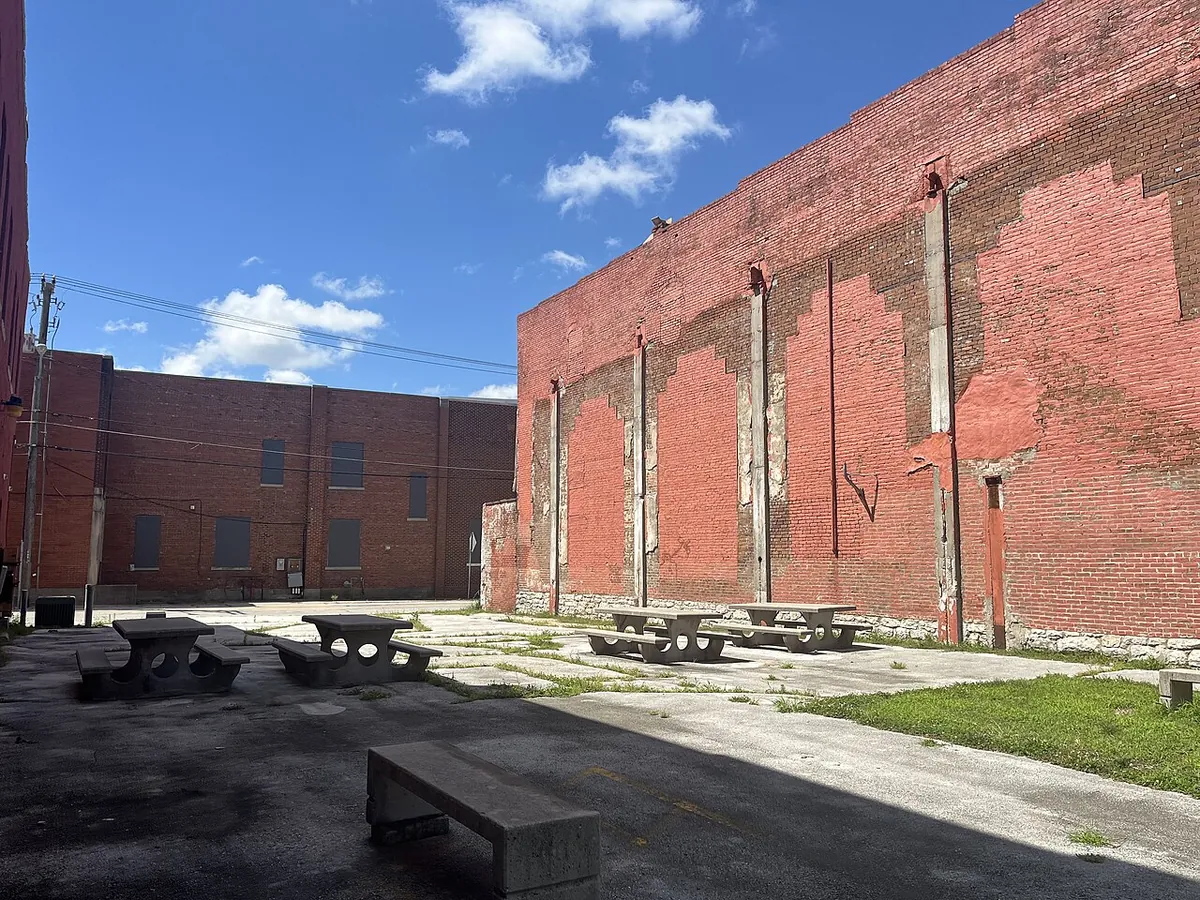
Photo: Theodore Christopher, Wikimedia Commons, CC0
A concrete picnic table is the heavy-duty standard for public spaces. Precast concrete picnic tables are cast in steel molds at precast plants, usually in one piece or as a top and two benches joined to concrete pedestals. They weigh from about 1,200 to more than 3,000 pounds, which is why vandals cannot carry them away. Older park tables from the Civilian Conservation Corps era were often cast in place on a concrete pad. Concrete picnic tables need no paint or replacement boards and last for decades. For homeowners, a smaller precast set with a concrete table and benches makes a permanent backyard dining area. Delivery needs a truck with a crane or forklift and a level pad to set it on. See precast concrete and concrete slab cost.
Choosing the Right Mix for Concrete Furniture
The mix decides how a concrete table looks and how long it lasts. Standard bagged concrete with 3/8 to 3/4 inch gravel is strong and cheap, but the stones make thin edges weak and the surface coarse; it suits a concrete picnic table, a thick slab bench or a chunky outdoor concrete table. Sand mixes and countertop mixes have only fine aggregate, so they fill thin molds and give a smooth face; they are the usual choice for a concrete coffee table or concrete side table. High-strength mixes rated 5,000 psi or more resist cracking and wear. GFRC uses a cement-rich mortar with alkali-resistant glass fibers and polymer, sprayed or hand-packed in a thin face coat and a fiber-rich backer; it is how most professional concrete dining table tops reach 3/4 to 1 inch thickness while staying strong. Whatever you choose, keep the water low, use a plasticizer if you need more flow, and cure slowly. A test slab poured from the same batch lets you try finishes and sealers before working on the real top. See concrete mix ratio and concrete slump.
Outdoor Coffee Tables and Patio Tables
The concrete outdoor coffee table is the most common patio concrete project, because it is small, low and heavy enough to stay in place in wind. A good size is about 24 by 40 to 30 by 48 inches and 14 to 18 inches tall, close to the height of deep lounge seating. Build it as a solid block, as a top on two concrete slab legs, or as a thin top on a powder-coated steel frame. Drill a small drain hole if the top has a recessed tray. For concrete patio tables used for dining, 29 to 30 inches tall and 36 to 42 inches wide suits most chairs. An outdoor concrete dining table should have enough overhang, about 10 to 12 inches at the ends, so people at the head do not hit the base. Concrete patio tables near pools need non-slip, cool-colored finishes, since dark concrete gets hot in sun, and the sealer should handle chlorine splash. See concrete pool deck repair.
Placement matters outdoors. Set heavy tables on a level, solid surface such as a concrete patio, pavers on a compacted base, or a gravel pad. On grass, heavy table legs sink and the top tips. On wood decks, check that the deck framing can take a few hundred pounds in one spot. Covering the table in winter, or at least keeping snow off it, extends sealer life.
Moving and Installing a Heavy Concrete Table
Plan the move before you pour. Measure doorways, stairs and turns. A concrete dining table top often cannot be carried by two people; use four, or rent a furniture dolly, a panel cart or an engine hoist. Many builders cast the top in the room where it will stay, or bring it in on its edge, padded, like a slab of granite. Lift with straps rather than gripping edges, which can chip. Set the base first, level it with shims or adjustable feet, then lower the top onto it. Use silicone or construction adhesive dots between the base and top to stop sliding, and brackets or cast-in inserts for a secure connection. For precast concrete picnic tables and heavy outdoor sets, the supplier usually delivers with a boom truck and sets the pieces on a prepared pad; make sure there is a clear, firm path for the truck and that no overhead lines are in the way. See concrete slab thickness.
Choosing a Base
The base carries the top and decides the look. Common choices:
- Steel frames: welded square tube or flat bar, strong and slim. Best for a concrete dining table.
- Wood: solid timber legs or trestles, as on the garden table in the top photo. Use heavy sections and cross bracing.
- Concrete: cast pedestals or slab legs, for a monolithic look. Very heavy.
- Hairpin legs: fine for a light concrete coffee table or concrete side table, not for large tops.
- Reclaimed materials: old machine bases, sewing machine stands and stone blocks.
Put felt pads or rubber feet under the base to protect floors and stop rocking. A rocking concrete table can crack itself over time, because the top flexes slightly every time someone leans on the high corner. Check the base with a level when you set the table, and again after a few weeks, since wood bases can shrink and floors can settle slightly under the weight.
Finishing and Sealing a Concrete Table
Finish options include a smooth cast face straight from the melamine, light sanding for a soft matte look, or full grinding and polishing to expose sand or stone. Polished tops show aggregate like terrazzo. Pinholes are filled with a cement slurry tinted to match. After finishing, seal. Penetrating sealers protect from water and look natural but do not stop acid etching. Topical sealers, such as two-part epoxies, polyurethanes and specialized countertop sealers, resist stains and etching better but can scratch and need care around heat. For a concrete dining table, pick a sealer made for countertops and food contact, and test it with lemon juice, wine, oil and coffee on a sample. Reapply penetrating sealers every one to three years. See polished concrete cost and concrete staining.
Caring for Concrete Tables
Wipe spills quickly, especially acids like wine, juice, vinegar and tomato sauce. Use coasters, trivets and placemats. Clean with mild pH-neutral soap and water; avoid bleach, vinegar and harsh cleaners that strip sealers. Do not place hot pans directly on the surface. Re-seal when water stops beading. Small chips can be filled with a cement repair or epoxy. Hairline cracks are common in concrete and usually only cosmetic; they can be filled with tinted slurry or epoxy. Outdoors, clean off leaves and bird droppings and keep the top dry in winter. See how to clean concrete and how to fix cracks in concrete.
Concrete Table Costs
- DIY concrete coffee table: about $100 to $300 for mix, mold, mesh, sealer and a simple base.
- DIY concrete dining table: about $250 to $700, more with a welded steel base.
- Store-bought concrete coffee tables: about $300 to $1,500, often GFRC or concrete-look composite.
- Custom concrete dining table: about $1,500 to $5,000 or more.
- Precast concrete picnic table: about $800 to $2,500 plus delivery and placement.
- Outdoor concrete table and bench sets: about $1,000 to $4,000 installed.
Many products sold as concrete tables are actually fiberglass, resin or fiber-cement with a concrete look, which are lighter and cheaper but less durable. Check the material and weight before buying. See concrete cost per square foot.
Common Mistakes
- Too much water in the mix. Weak, dusty tops with shrinkage cracks.
- No reinforcement. Long tops crack across the middle when lifted or loaded.
- Mesh too close to the surface. It shows through, rusts or causes cracks.
- Rushing the cure. Demolding or loading before the concrete is strong enough.
- Weak sealer. Red wine and lemon juice will stain and etch.
- Base too light. A heavy concrete top on a light base racks and wobbles.
- Sharp edges. They chip; ease edges with silicone in the mold or sanding.
Design Ideas for Concrete Tables
Concrete tables can be much more than gray slabs. Pigments give charcoal, white, sand and terracotta tones. Embedded glass, stone, shells or brass inlays add detail. A waterfall-edge concrete coffee table, where the top folds down into thick ends, looks carved from one block. Wood and concrete combinations soften the look, with a concrete top on a warm oak base or a wood top on concrete legs. Round concrete side tables cast in buckets pair well with outdoor chairs. A long concrete dining table with a live-edge wood bench makes a striking indoor-outdoor set. Built-in features such as an ice trough down the middle of a concrete outdoor dining table, a planter strip, or a fire bowl in an outdoor concrete coffee table make good conversation pieces.
Frequently Asked Questions
How heavy is a concrete coffee table?
A 24 by 48 inch top 1.5 inches thick weighs about 150 pounds before the base. GFRC tops weigh roughly half that.
Can a concrete table stay outside in winter?
Yes, if it is made with a strong, low-water mix, sealed well, and does not hold water. Air-entrained or GFRC mixes perform best in freeze-thaw climates.
How thick should a concrete dining table be?
Usually 1.5 to 2 inches for reinforced concrete, or 3/4 to 1 inch for GFRC, with a strong base under it.
Do concrete tables stain?
Unsealed concrete absorbs oil and wine. A good sealer resists most stains, but acids can still etch some sealers, so wipe spills quickly.
How long does a concrete picnic table last?
Precast concrete picnic tables often last 30 to 50 years or more with little care.
Sources
- Portland Cement Association: concrete basics and durability
- American Concrete Institute: concrete properties and curing
- National Precast Concrete Association: precast site furnishings
- Quikrete: countertop mix and project guides
Related Guides
- Concrete bird bath — making, sealing and caring for one
- Concrete garden statues — painting, sealing and care
- Concrete bench — outdoor benches, DIY and costs
- Concrete tub — concrete bathtubs and bathrooms
- Concrete fountain — tiered fountains, pumps and care
- Concrete sink — vessel, integral and kitchen sinks
- Concrete release agents — form oil and reactive release for forms and molds